Summary Pakistan received the TB Champion Award 2016 in the US capital, Washington D.C.
Dunya News Report (Humaira Sajid)
ISLAMABAD - Pakistan and the United States are closely cooperating in the health sector to enhance Pakistan’s capability to prevent, detect and counter infectious diseases, said the Ambassador, Jalil Abbas Jilani, in an award ceremony held in Washington.
The Ambassador said that bilateral health cooperation was discussed at the highest level between the Prime Minister of Pakistan Muhammad Nawaz Sharif and President of US Barrack Obama in Oct, 2015 and the two countries have affirmed their commitment to fully implement the Global Health Security Agenda, with a view to advance global cooperation across sectors to counter the biological threats.
At a ceremony organized by the USAID in Washington D.C., Ambassasor Jalil Abbas Jillani received the (TB) Champion Award 2016 on behalf of Pakistan for his commitment and the achievements made in managing multidrug-resistant tuberculosis (MDR TB). Currently, Pakistan ranks fifth amongst TB high-burden countries worldwide. It accounts for 61% of the TB burden in the World Health Organization (WHO) Eastern Mediterranean Region with elevated burdens of both TB and MDR-TB.
The Ambassador, Abbas Jillani, pointed out that Pakistan as a result of its concerted efforts, has one of the highest treatment success rates in the world. “Under the National TB Control Programme more than 3 million TB cases have been diagnosed & treated free of cost in 1,300 public sector TB care facilities during 2001-2015,” he said.
According to figures given by the Ministry of Health Services, Regulations and Coordination, 582,110 TB patients were treated in Punjab, 124,410 in Khyber Pakhtoonkhwa, 179,167 in Sindh, 23,151 in Baluchistan, 4976 in Gilgit Baltistan, 16,518 in Azad Jammu and Kashmir and 11,557 patients in Federally Administered Tribal Areas (FATA) in the year 2015.
In a report by World Health Organization, tuberculosis kills 4,400 people daily, a number that remains "unacceptably high" and it is a leading cause of death globally alongside HIV. The disease killed 1.5 million people last year, despite big strides in treatment and prevention over the past 25 years, said the UN health agency´s Global Tuberculosis Report 2015. More than half of the world´s TB cases were in China, India, Indonesia, Nigeria and Pakistan, the report added.
According to a ‘disease prevalence survey’ held in 2011-12, every year around 420,000 people are infected with TB. Dr Ejaz Qadeer, the national manager for the TB Control Programme said that Pakistan has achieved progress in detection of the disease. In 2014 there were 300,000 cases of TB detected however, the number increased in 2015 and reached 315,000 TB cases. “We are providing free of cost treatment of the disease, but the number of its patients are increasing because TB is often not detected on early stage and its patients start transferring the virus to other people.”
As stated by World Health Organization (WHO) report, there should be a 70 per cent detection rate of this disease, which Pakistan had achieved in 2015 and now the country stands among nations having highest MDR-TB success rate. Dr Qadeer said that a strategy has been adopted through which the detection rate would be taken to 80 per cent by 2020.He said efforts were being made for the availability of improved diagnostic machines and for this purpose, the federal and provincial government would allocate funds.
An official from Pakistan Institute of Medical Sciences (PIMS), Dr. Wasim Khawaja , said that tuberculosis (TB) is an infectious bacterial disease caused by mycobacterium tuberculosis, which most commonly affects the lungs. He was of the view that the disease is transmitted from person to person via droplets from throat and lungs of people with the active respiratory disease.
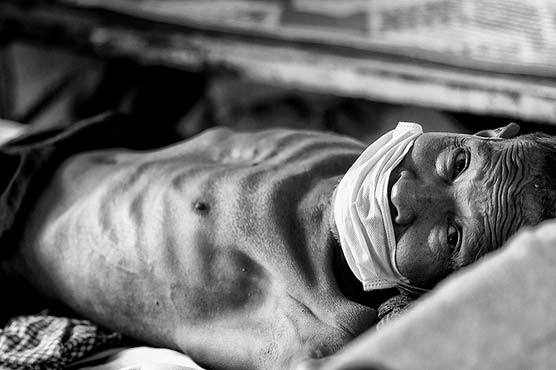
In healthy people, infection with mycobacterium tuberculosis often causes no symptoms because their immune system acts to wall off the bacteria. He further said that the symptoms of active TB of the lung are coughing, sometimes with sputum or blood, chest pains, weakness, weight loss, fever and night sweats.