Summary Pakistan's involvement in an All-Sunni alliance could pose serious ramifications for the region.
Dunya News report (Madiha Fareed)
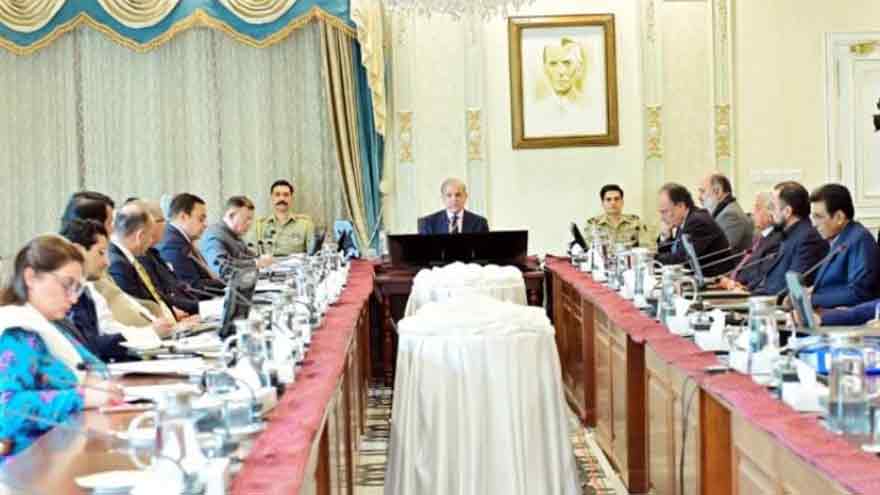
Pakistan Tehreek-e-Insaf (PTI) lawmakers on Friday, during a parliament’s session, criticized the government for being tight-lipped regarding Pakistan’s role in the 34-nation military coalition that Saudi Arabia has put together.
PTI has time and again sought an explanation from the government regarding Pakistan’s role in the Saudi-led alliance. PTI parliamentarian Shireen Mazari accused the government of not being upfront regarding the extent of Pakistan’s involvement in the Saudi-led alliance and expressed concerns if Pakistan has indeed decided to join the Saudis.
Ms. Mazari accused the government for keeping the house in dark over the matters of national security and for making important decisions out of parliament, “the key diplomatic decisions are being taken on the basis of personal ties and without taking parliament in confidence”.
Dr. Arif Alvi expressed concern that Pakistan’s involvement in an All-Sunni alliance could pose serious ramifications for the region as the alliance divides the Muslim world into Sunni and Non-Sunni factions.
Pakistan Muslim League-Nawaz’s (PML-N) Khurram Dastagir defended the government maintaining that the government cannot explain its role at the moment as the details are still under discussion and no consensus or decision has been reached yet as to what Pakistan’s exact role will be in the coalition. He added that the alliance seeks to fight terrorism and is not against any country. He went on to say that the situation in Middle-East is complicated and Pakistan is only being “careful” in its approach.
Earlier, Prime Minister’s Advisor on Foreign Affairs Sartaj Aziz had given a similar statement regarding government’s “cautious” approach regarding the recent Saudi-Iran confrontation over execution of a Shiite cleric which prompted a strong reaction from Shiite states and led to the suspension of diplomatic ties between Saudi and Iran. Pakistan refrained from taking sides and resorted to the role of a mediator. The Prime Minister Nawaz Shareef and Chief of Army Staff (COAS) visited Saudi Arabia and Iran in order to ease the tensions.
Yesterday, Iran’s ambassador to Pakistan Mehdi Hobardoost criticized the Saud-led 34 nation military alliance to fight terrorism in the Muslim World, terming it as “ridiculous”.
“If they are so serious in the fight against terrorism then why Iran, Iraq and Syria are kept out of this alliance,” questioned the Iranian envoy while addressing a press briefing in Islamabad.
Questions and speculations have been circulating regarding the 34-nation alliance, which does not include any Shiite nation. The Islamic Military Alliance of 34 Muslim nations, envisioned and put together by Saudi Arabia, was established with the mission to fight terrorism in Iraq, Syria, Libya, Egypt and Afghanistan. The command centre of the 34-nation military bloc will be based in Riyadh. The announcement was met with surprise from Pakistan and many other countries. The initial reaction from Pakistani officials confirmed that Pakistan’s consent and consultation was not taken into account while forming this coalition. Later, Pakistani government welcomed the initiative and confirmed its participation in the “anti-terror’” alliance. Many viewed it as an attempt to mend the earlier rift caused by Pakistan’s snub to fight Saudi’s proxy war in Yemen.
Pakistan agreed to share military expertise with the participating nations of the 34-nation alliance but did not commit to sending troops in other countries to fight terrorism.
In 2015, Saudi had asked Pakistan to help fight Houthi rebels in Yemen who pose a threat to the Kingdom’s sovereignty, but the request was denied from Pakistan. This was an unprecedented step by Pakistan as Pakistan has always stood by Saudi Arabia. Pakistan made it crystal clear that it will not deploy its forces outside its borders except for United Nations’ Peace Keeping missions. Political analysts around the globe speculated that Pakistan’s refusal could cause irreparable damage to Saudi-Pak historic relations.
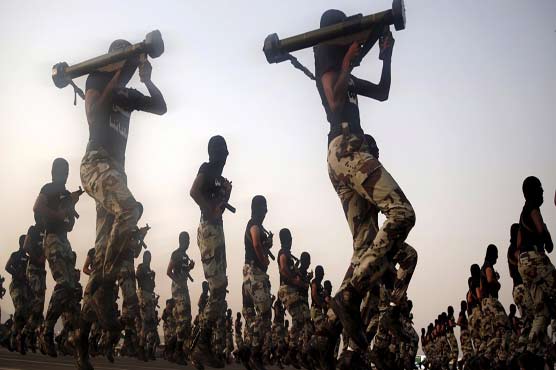
Recently, Pakistan’s Prime Minister and Chief of Army Staff (COAS) visited Saudi Arabia to witness the closing ceremony of the joint military exercise in which troops from 21 nations participated. It was reported that Saudi is pushing Pakistan’s General Raheel Shareef to take command of the 34-nations military alliance upon his retirement from his current post.
This is no secret that KSA seeks an active participation of Pakistan in the All-Sunni alliance. Recently KSA agreed to give Pakistan $122 million in aid and soft loan in an attempt to lure Pakistan into playing a more vital role.
The Government of Pakistan has time and again affirmed that it will always stand shoulder to shoulder with Saudi Arabia against any threat to its territorial integrity and sovereignty, “the attack on Saudi Arabia will be considered an attack on Pakistan”. However Iran is also a neighbor and Pakistan cannot take sides with one against the other. The relations between Saudi and Iran have never been comfortable; KSA has been an outspoken critic of Iran’s nuclear program and even hinted to side with Israel against Iran.
Pakistan has to take a clear position regarding its involvement in the alliance. If Pakistan does have to play an active role, then it should lobby for the inclusion of the Shiite states in the alliance. It is also important to note that Iranian President is expected to visit Pakistan in the last week of March.