Summary Marvi Memon pays a visit to Oxford University.
Dunya News Report (Yaruq Malik)
ISLAMABAD: Chairperson for the Benazir Income Support Programme (BISP) Marvi Memon visited Oxford University and briefed the institute on the progress BISP has made in order to eradicate extremism and to bring financial stability to 5.2 million women and their families all over Pakistan.
According to a press release, the BISP chairperson met Dr. Woods, the dean of Blavatnik School of Government, in order to exchange ideas to eradicate poverty in Pakistan. Marvi Memon also suggested that the school should collaborate with the BISP scheme officials in order to train and to introduce new ways of creating effective methods of implementation through the BISP.
The chairperson (BISP) insisted that the federal government of Pakistan is dedicated towards bringing economic stability in the region and to implement intelligent policies that tackle the growing count of poverty.
Previously, the federal government ‘doubled’ the funds for the BISP beneficiaries in order to tackle the increasing poverty in Pakistan.
Another aspect of the BISP is the accusation of major corruption scandals that it has faced in recent times. In 2015, the Auditor General of Pakistan detected financial corruption while citing the audit report for fiscal years 2013 and 2014.
According to the audit report, an amount of Rs. 2,049.703 million was paid to 683,235 beneficiaries who either did not have a Computerized National Identity Card (CNIC) or the thumb impressions on the CNIC’s were not updated. Moreover, the report stated that the BISP paid Rs. 4,413.925 million to five commercial banks for onward distribution which was seen as an ‘undue favor’.
The total number of ‘ineligible’ beneficiaries across the country, according to the audit report, has reached 683,235. The payments were made by Bank Al-Falah, Habib Bank Ltd, Tameer Bank, Summit Bank and United Bank Ltd. The Departmental Accounts Committee (DAC), in 2013, directed the BISP management to provide the complete list of the ineligible beneficiaries within a week.
However, the BISP management failed to provide the list which established the ineligibility reported by the audit report. The audit ordered an inquiry, however, no compliance report was provided by the BISP management.
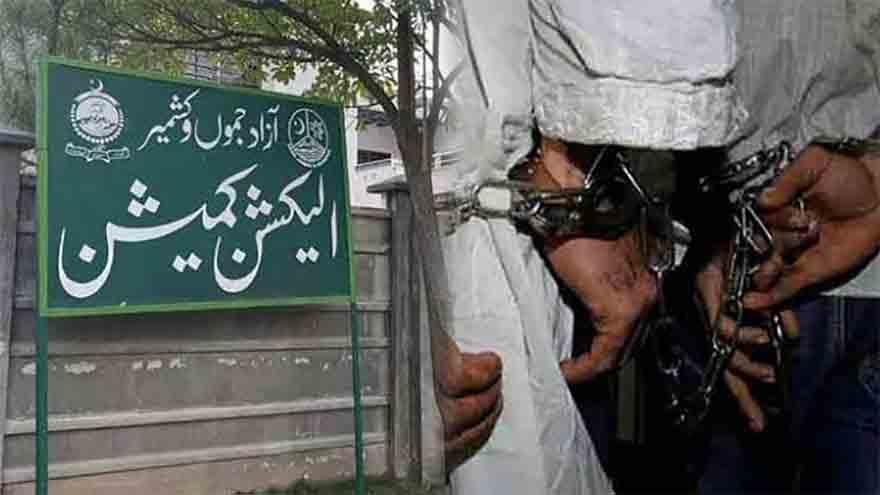
In November 12, 2015, the Federal Investigation Agency (FIA) arrested three people who were accused of corruption in the BISP cards and illegal withdrawal of cash from the accounts of poor women in Okara.
In the wake of the FIA investigation, Marvi Memon launched an internal investigation that confirmed the existence of hundreds of BISP employees who were embezzling funds through fake accounts. According to a statement, Marvi has issued show cause notices to 75 employees at the BISP for alleged fraud.
Furthermore, the BISP chairperson plans to update its current debit card system to a biometric system of identification in order to increase the efficiency of providing financial assistance to beneficiaries. With the biometric system of identification, financial assistance will only be provided through fingerprints.
The BISP was launched in 2008 aimed at providing financial aid to deserving families all over the country. Initially, the cash transfer amount was Rs. 1000 per month which was later increased to Rs. 1500 per month for eligible families that require financial assistance.
The Nationwide Poverty Scorecard Survey reported that more than 7.7 million families in Pakistan were living below the cut-off score of 16.17 (below poverty line). The BISP was developed with the objective of providing support to the deserving families in Pakistan during the economic recession.
With the biometric up-gradation, the BISP management wishes to cleanse the process of providing funds to the eligible beneficiaries so that the transfer becomes transparent and the chances of corruption or illegal withdrawal of cash are minimized.