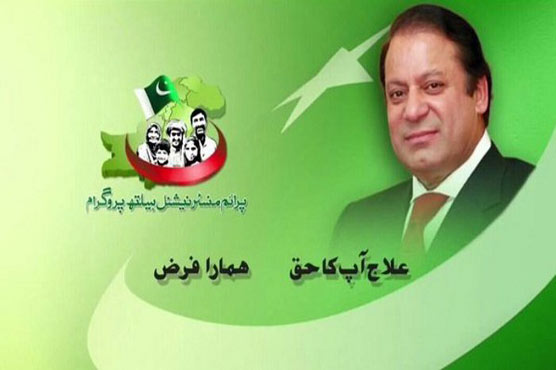
Summary PM Nawaz Sharif will visit Quetta to inaugurate the National Health Programme.
Dunya News Report (Humaira Sajid)
ISLAMABAD - Prime Minister’s National Health Insurance Programme is all set to be launched in the provincial capital of Baluchistan, Quetta. The Federal Health Secretary Muhammad Ayyub Sheikh has said that the Prime Minister (PM) Nawaz Sharif would visit Quetta to inaugurate the National Health Programme.
According to a handout issued during the meeting in connection with Prime Minister’s National Health Programme (NHP), 23 districts were to be covered and later expanded to all districts of the country. “Quetta, Lasbela, Loralai and Kech will be the districts of Baluchistan, where first phase of the programme is being started,” the federal secretary for health said.
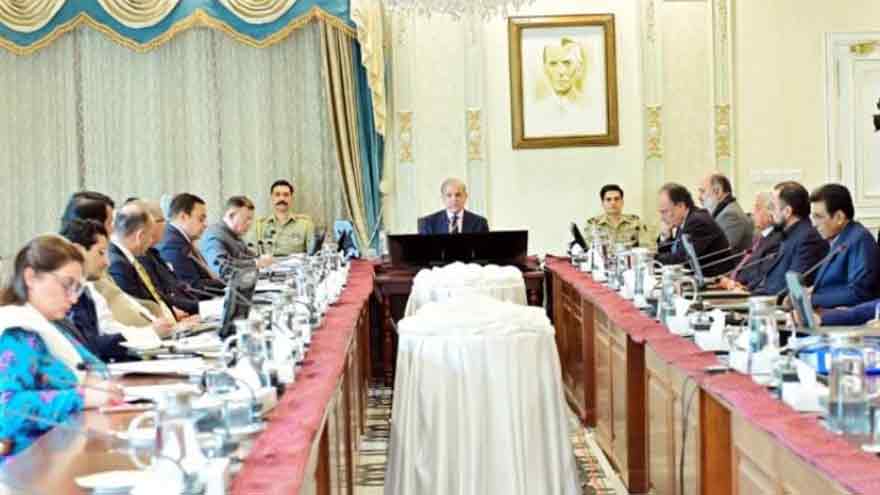
The meeting was also attended by Chief Secretary Baluchistan, Saifullah Chattah, IG Plice Baluchistan, Ahsan Mehboob, Baluchistan Heath Secretary, Dr Muhammad Omar Baloch, Provincial secretary Finance, Mushtaq Ahmed Raisani and other officials.
Chief Secretary Baluchistan, Saifullah Chattah informed the members of the meeting that under this scheme free of cost medical treatment will be offered which would benefit 242,000 people.
He said the government had been using all available resources to provide health facilities to people. “It is the responsibility of the government to provide health facilities to people,” he said, adding that the Baluchistan government had been fulfilling its responsibilities in this regard.
PM Nawaz Sharif launched the first national health insurance programme on 31st December, the first of its kind, for providing free of cost medical treatment in Pakistan. Under this programme treatments are provided for the ailments such as cardiovascular diseases, Diabetes Mellitus, Burma and RTA (life and limb saving treatment, implants, prosthesis). It also covers end-stage renal diseases and dialysis, chronic infections (Hepatitis), organ failure (Hepatic, Renal, and Cardiopulmonary) and cancer treatment (Chemo, Radio and Surgery).
In its initial stage, the programme is providing 63,000 people with health cards through 300 centers in Islamabad and Lahore which have been initially established for the distribution of health cards. Every card holder will be able to avail health facilities worth Rs0.3 million per year; however, in case of exceeding the card limit the patient will be provided financial assistance by Baitul Mal.
Every year a large number of people in Pakistan suffer from various non-communicable diseases. Due to poverty they are unable to afford treatment cost and most of them die. While Pakistan has a multi-tiered and mixed health care system its growth has been exponential during the past three decades.
According to World Health Organization, Pakistan ranks number sixth in terms of the patients effected by tuberculosis. The incidence of tuberculosis is estimated at 231 cases per 100,000 per year, thus making the projects such as NHP as the need of an hour.
It’s been more than a decade that Pakistan is facing poor financial conditions due to low foreign investment, high budget deficit and low GDP growth. In order to cover the expenses in budget, cuts have been made in other sectors and unfortunately, in Pakistan, these sectors are mostly education and health.
In 2015, only 102.3 billion have been invested out of Rs.3.945 trillion by the government on improvement of the health sector. According to the statistics from “Pakistan Economic Survey 2014-2015,” the total number of hospitals in the country equal to 1096. This means with a population of 182.1 million about 1.7 million people are dependent upon on a single hospital.
Addressing the provincial health departments’ representatives, Maryam Nawaz Sharif, who played a key role in health programme’s groundwork said: “launching of this scheme (national health insurance) would materialize another vision of cash free medical coverage for the down-trodden sections of the society in order to make Pakistan a truly social welfare state”.
Maryam Nawaz further said that the Prime Minister’s top priority is the welfare of under-privileged segments of society and his government is making strenuous efforts for their care and uplift.