Summary Jhagra calls for expediting work on FATA uplift projects.
Dunya News Report (Humaira Sajid)
ISLAMABAD – The newly appointed Khyber Pakhtoonkhwa (KPK) Governor Iqbal Zafar Jhagra directed officials to expedite work on the development projects in the Federally Administered Tribal Areas and to make the best use of the available resources to facilitate the government in bringing its tribal areas into the mainstream.
An official handout stated that the Pakistan Tehreek-e-Insaf (PTI) Chief Imran Khan and Chief Minister KPK Pervez Khattak had called onto the Governor Jhagra to discuss the matters of mutual interest with particular reference to the wellbeing of the people of the province and issues confronting FATA.
Following this meeting, the governor KPK called upon its officials stressing the need for taking concrete measures for the welfare of FATA and the province.
Speaking in a meeting at the FATA Secretariat on Tuesday, the governor said that tribesmen have rendered great sacrifices for the peace of entire region and now the time has come to resolve their problems. The governor apprised them about the steps to be taken for ensuring peace that lasts and dignified return and rehabilitation of displaced persons to native areas. Iqbal Zafar Jhagra said that the socio-economic uplift and wellbeing of the people of Fata would continue to remain a top priority.
Earlier in December, the Ex-Governor KPK Sardar Mehtab Ahmad Khan had approved Rs. 1609.455 million for various developmental and support projects in the tribal areas. The funds released by the governor were granted for the infrastructure related projects including construction of Barra-Tirah Road, rehabilitation of Zakakhel Bazar Road and the expansion of Dawatoa-Sheen Qamar Road.
KPK Governor had also approved Rs.361.191 million for the provision of basic amenities and construction of Municipal Committee in Bara Bazar. An estimated amount of Rs.369.671 million was approved as an additional grant for Wana Cadet College besides allocation of of Rs.216.632 million for the training of Levies Force and construction of a Sports Stadium in Jani Khel area of FR Bannu.
The problems in Fata are countless and diverse in nature – everything from justice and healthcare to education; all the issues are of an administrative nature which can be quickly resolved. Unfortunately, the previous ruling governments did not seem to be concerned about these issues. The time has come that the tribal people of Pakistan who left their homes for the country should be facilitated and result oriented steps must be taken for the development of their land. The provincial government needs to emphasize its energies for the repatriation of tribal people to their native areas.
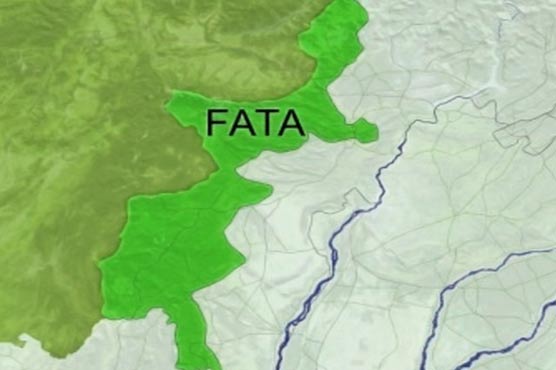
The history of violence and the ambiguous governance structure in FATA has neglected and deprived the people of the region for far too long. The need of administrative reforms in the tribal regions has now gone from whisper to chatter. The political leaders from FATA are asking for the amendments in the article 247 of the constitution and a proper legal status for FATA so that the doors to prosperity open for the tribal residents. This is an uncontested fact that the poor legislation and the seclusion of this region from the rest of the country played a role in depriving the people of FATA from their basic fundamental rights.
Article 247 of the constitution of Pakistan outlines the administrative structure of FATA. The Section 1 of the Article states that the authority of federation shall extend to FATA and Section 3 blatantly states that No Law of the country shall apply in FATA region.
FATA is generally referred in other areas of the country as “Ilaqa Ghair” (No Go Area). According to sources, the contact of the FATA region with other parts of the country has been minimal to nothing since the communication networks have not been developed in the region.
People of FATA have bore the brunt of terrorism and have braved the hardest living conditions unaided. A Qatar based news website quoted that the FATA Development Indicator Household survey 2013-14 states ‘71 percent of the FATA residents solely rely on radio for information. ‘The radio channels available in FATA are either foreign stations or militant-owned stations. This indicates a rather outrageous fact that no measures have been taken to bridge the communication gaps between FATA and other parts of the country as they do not even have access to the national radio channels.
In May 2014, Mehtab Abbasi Governor Khyber PakhtunKhawa had set up a FATA Reforms Committee. However, the committee does not include any local representative which demonstrates the government’s seriousness in performing the reforms in Fata. The task is too gigantic, full of complexities, and too momentous for negligence. However, it remains a well-intentioned approach. The government is required to stop posturing and get down to Fata reforms earnestly.
The five-member committee led by Sartaj Aziz determines the political fate of FATA, whether it should be merged into KPK, given the status of Provincially Administered Tribal Areas (PATA) or make a separate province altogether. Although, no clear consensus seems to be in the picture as the tribal leaders emphasize no decision should be made contradicting to tribal values and culture. However, one unanimous demand is that peace and rehabilitation of IDPs must be made a priority.