Summary Plan drafted for 100 pc enrollment in schools: Ahsan Iqbal
Dunya News Report (Humaira Sajid)
ISLAMABAD – The Federal Minister for Planning, Development and Reforms Ahsan Iqbal said that the federal government in cooperation with provincial governments is going to launch an intensive campaign on April 1, 2016 which will ensure the enrollment of every child in school by 2018 and educate the population.
The framework for the plan will be prepared by March 22; the minister said this while addressing a news conference after a meeting with provincial representatives on national enrollment drive. He said that the government is determined to spend 4 percent of Gross Domestic Product (GDP) on education by 2018 which is currently at 3 per cent of GDP.
The launch of this campaign has arrived right about time when the United Nation has mentioned in one of its report that 49% of the population of Pakistan lives in poverty and it has one of the lowest investments in terms of education and health — “Pakistan spends 0.8% of its GDP on health and 1.8% on education,” the statistics included. The report ranked Pakistan 146 out of 187 countries on a human development index, equal to Bangladesh and just ahead of Angola and Myanmar.
The Federal Minister stated that 100 percent enrollment of children in school at primary level would be ensured through Education Campaign 2016. He said that for this purpose not only federal and provincial governments but the whole nation needs to work collectively to accomplish this goal.
"In this campaign, federal and provincial education ministers, Higher Education Commission, students of universities, media and civil society would play their role,” the minster added.
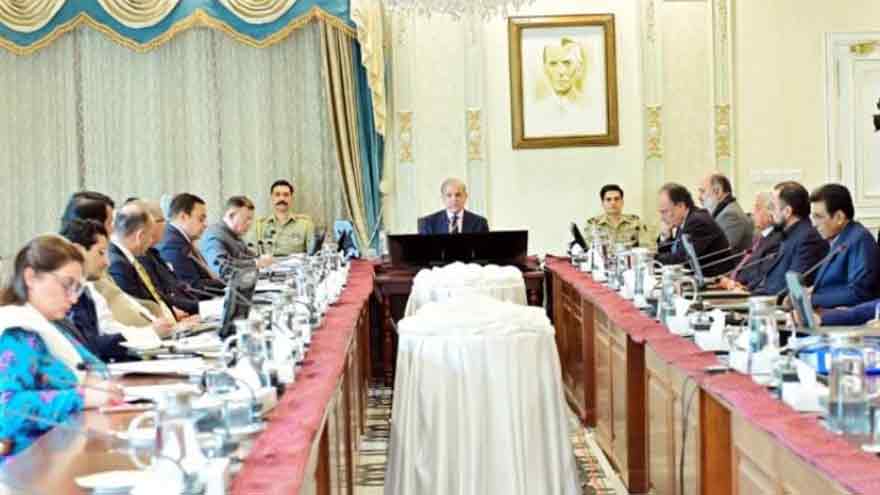
The students of universities will go to rural areas to educate the students, we should also involve National Database and Registration Authority (NADRA) in the campaign," Ahsan Iqbal said. The minister said that very soon, the Prime Minister will hold a meeting with the chief ministers on this issue in which the members of opposition parties should also participate to give their proposals.
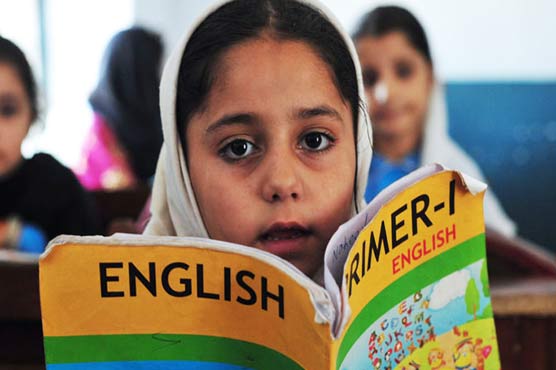
Pakistan is facing tremendous challenges in the education sector, with 5.5 million children not attending schools at all. UNESCO’s Official record shows that this figure has remained mostly unchanged since 2005. The situation is especially alarming in rural areas due to social and cultural obstacles. One of the most deplorable aspects is that in some places, particularly northern tribal areas, the education of girls is strictly prohibited on religious grounds. This is a gross misinterpretation of Islam, the dominant religion in Pakistan (96 per cent of the population), which like all religions urges men and women to acquire education.
Saman Naz, the data and evidence campaign manager at non-profit Alif Ailan, a campaign to uplift education in Pakistan, says there is no authentic data regime in the country due to which officials are in a state of denial as far as the number of out-of-school children is concerned.
She adds that successive governments have failed to take any concrete steps due to which the alarming figure has not subsided. The few small initiatives, taken particularly after the devolution of education to provinces, were also unable to ensure any significant change.
Pakistan can follow the example of The Hermann Gmeiner School in Arusha, Tanzania that has enabled students, teachers and co-workers to use computers to further the cause of education to that segment of its population which has certain restrictions because of which they are unable to reach educational institutes.
In the far fledged areas of NWFP and Baluchistan where the situation is much critical, these measures can be helpful since the female literacy rate stands between 3 per cent and 8 per cent. Some government organizations and non-governmental organizations have tried to open formal and informal schools in these areas, but the local landlords, even when they have little or nothing to do with religion or religious parties, oppose such measures, apparently out of fear that people who become literate will cease to follow them with blind faith. Unfortunately, the government has not so far taken any steps to promote literacy or education for girls in these areas. It is even reluctant to help NGOs or other small political or religious parties do the job, because in order to maintain control, it needs the support of these landlords and chieftains who, as members of the two major political parties, are regularly elected to the national assembly.