Summary Siachen disengagement is a high return no cost option
Dunya News Report (Shahzad Badar)
Despite the ceasefire since November 2003, a Pakistani solider dies every fourth day while an Indian soldier dies every day on the Siachen glacier not due to exchange of hostile gun fire but by the freezing temperature which dips down to minus 60 degree Celsius.
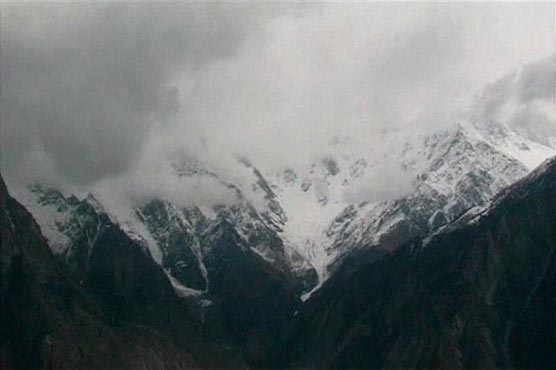
Siachen glacier also known as the Third pole receives an annual snowfall of 35 feet with winds of 125 miles per hours, blizzards can last 20 days on the glacier. The glacier has melted down to half of its original size due to military activities. The glacier would completely disappear by 2035 if it continues to melt at the present day rate.
This is the highest battle ground in the world and till 1984 was just a reference point NJ 9842 on the boundary map a “ no man land” as agreed by the two countries till India decided to take advantage of the absence of military troops and occupied all the strategic heights on the glacier. The terrain was left unattended and not demarcated till 1984 by both side due to the inhospitable terrain and climate on top of the glacier.
Opinion on both sides favor withdrawal of all troops from the glacier and in 1989 India and Pakistan were close to demilitarize the zone. So far both Prime Minister Nawaz Sharif and Modi have met this Christmas in Lahore vowing to pursue peace in the region but with little or no will to remove troops from the killing ice fields.
Just recently 10 Indian soldiers were buried under an avalanche while nine froze in the minus 45 degree Celsius temperature - only one soldier was rescued alive after six days.
Indian defense minister Manohar Parriker has refused to withdraw troops despite the fact that the Indian side loses more men to the weather than Pakistan. According to Sajjad Paddar only 3% of the Indian casualties have been caused by hostile firing and the remaining 97% fall prey to the altitude, weather, and terrain.
According to estimates, it costs Indian taxpayer’s one million dollars per day to station troops on the glacier. According to Indian estimates India could have build 1,72,000 schools in 30 years if it had not stationed troops on the Siachen and diverted the money for education. A roti that costs Rs 2 to make, in India reportedly costs Rs 200 to transport to Siachen. The Indians have built a helipad for transportation of goods while the Pakistani’s depend mostly on their land routes.
The Pakistani’s are also paying a heavy price for stationing the troops. In 2012, 129 Pakistan army men got buried in an avalanche. Chief of Army Staff, General Kayani, while visiting Skardu in Northern Pakistan to monitor the rescue operation on April 18, 2012 made a call for withdrawal of troops from the world’s highest battlefield. While Pakistan understands the futility of stationing troops there the Indians have shown reluctance to agree to a total demilitarization of the Siachen glacier.
Siachen disengagement is a high return no cost option but with a big trust deficit after the Pathankot incidence it would be best to withdraw troops from the Siachen sector first and restore the trust deficit and replicate the action on the LOC and other zones of conflict. END