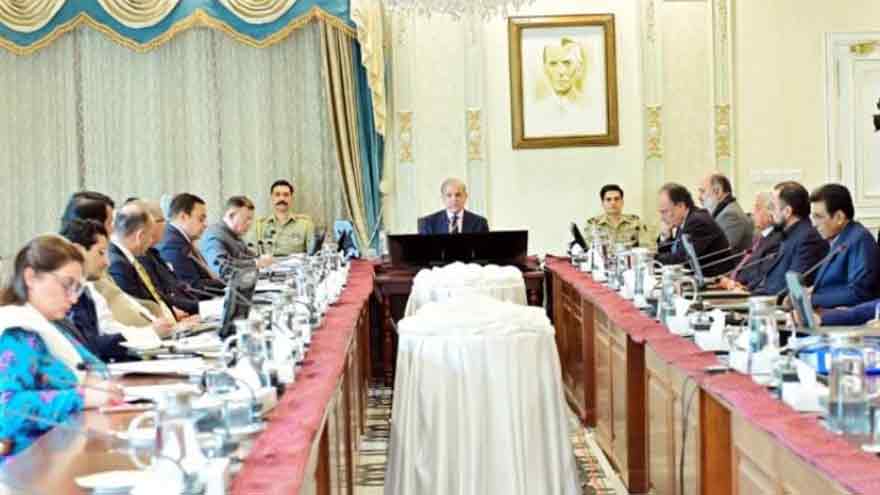
Summary CII under influence of religious parties have been resisting any amendment in the law.
Dunya News Report (Shahzad Badar)
Islamabad – Maulana ruling the Council of Islamic Ideology(CII), Mohammad Khan Sheerani has agreed to review the controversial blasphemy law but categorically stated that it would not be changed to suit any agenda.
The Council of Islamic Ideology is mandated to assess and review any law and advice the government on conforming laws in accordance with Islamic rules. The CII is under pressure from civil society and government to review the blasphemy law and its abuse.
Since 1987 to 2014, 1300 people have been accused of committing Blasphemy while 60 have been killed before trials in the court by militants. Most of the accused are Muslims.
CII under influence of religious parties have been resisting any amendment in the law. Council members are of the view that the only way to prevent abuse of the blasphemy is to strengthen laws related to false evidence and lodging a false report. The CII want the government to improve and strengthen Section 193 of the Pakistan Penal Code dealing with provision of false evidence.
Mumtaz Qadri the self confessed murderer of the former governor of Punjab Salman Taseer, is now seeking to escape the judicial death sentence by appealing for a presidential pardon. Qadri a member of the police commando force had assassinated former Punjab governor Salman Taseer outside his residence in Islamabad on Jan 4, 2011 for requesting a presidential pardon for a blasphemy accused. Qadri was a member of the governor’s security team.
The Supreme Court in its 14th December 2016 decision had refused to suspend the death penalty imposed on Qadri. Qadri’s family has filed a mercy petition to President Mamnoon Hussain in hope of seeking pardon for their son.
Qadri unlike other accused has not yet seen the gallows due to intense pressure on the government and might even escape the death penalty to prevent a backlash from militants and religious parties.
On October 7, a three-judge bench headed by Justice Asif Saeed Khosa had restored the October 1, 2011 capital sentence awarded by an anti-terrorism court to Mumtaz Qadri.
The blasphemy law according to researchers has been misused by people for vested interests. Over the last few years the use of Section 295-C has become a weapon in the hands of sectarian mullahs.
While cases against non-Muslim citizens are still filed, in most of the cases the accused are Muslims, including prayer leaders.
The government faces acute international criticism for not amending the 295-C. The governments of Benazir Bhutto, Nawaz Sharif and Pervez Musharraf have all moved in the direction to take up the matter in the parliament but so far no progress has been made due to the highly controversial nature of the issue.
According to information, cases against 434 offenders under blasphemy laws were registered in Pakistan from 1953 to July 2012.
Among them 258 were Muslims (Sunni/Shia), 114 Christians, 57 Ahmadis and four Hindus. Since 1990, 52 people have been extra-judicially murdered for having been implicated in blasphemy cases. Among them were 25 Muslims, 15 Christians, five Ahmadis and one each Buddhist and Hindu.
During 2013, the court revealed 34 new cases were registered under the blasphemy laws. While one death sentence for blasphemy was overturned during the year, at least another 17 people were awaiting execution for blasphemy and at least 20 others were serving life sentences.
Militant and clerics have been the main force pressurizing the courts and administrations to pursue cases and award death penalties to accused.
Maulana Yousaf Qureshi, the Khateeb of the historic Masjid Mohabaat Khan in Peshawar, offered a Rs500,000 reward for anyone who killed Aasia , a Christian teenager in Islamabad who was falsely accused by a mullah for blasphemy.
Qureshi also warned the government against any move to abolish or change the blasphemy law.
No president, no parliament and no government has the right to interfere in the tenets of Islam he said.
Jamia Binoria in Karachi is a major madrassah and its head, Mufti Naeem, made regular media appearances defending the law and criticising Salman Taseer for requesting presidential pardon for Asia Bibi.
Mufti Rafi Usmani the most authoritative Islamic Jurist in Pakistan in 2003, gave a step-by-step procedure for obtaining pardon for blasphemy in the Council of Islamic Ideology Annual Report, 2003. This was done in response to a query by the state on the acceptability of pardon for those charged under 295-C.
Step by step procedure for obtaining pardon from blasphemy
1- The offender has to renew his faith in front of Ulema
2- The offender will renew his nikah with his wife
3- The offender will remain regretful for the offense
4- The offender will ask forgiveness from god
5- The offender will make a promise not to repeat such an offense
6- If blasphemy is in form of print all such material must be destroyed
The controversial law of Blasphemy section 295 C was drafted by a senior advocate of the Supreme Court Ismail Qureshi in 1986. Qureshi drafted Section 295-C providing the death sentence as the only punishment for blasphemy and got it tabled in the National Assembly in 1986 through MNA Apa Nisar Fatima of the Jamaat-i-Islami. Most parliamentarians and ulemas have disagreed to including the death plenty as the only punishment to blasphemy.
According to Javed Ahmed Ghamidi, Qureshi’s argument for a death sentence, based on some Islamic sources, is not valid. Ahmad Ghamidi has stated that the death sentence can only be given to a person who has killed someone or to someone who is guilty of spreading disorder in a society. No other person can be punished by death.
According to human right association of Pakistan in many cases the law was invoked to deal with a business rival, to grab property or to settle a personal score. Courts under mob pressures had even convicted an illiterate child for writing blasphemous notes.
Qadri’ case is a litmus test for the government – pardoning murders would not help eradicate fanaticism and terrorism from the country.
The government is trying to promote its soft image abroad while religious fanatics murder and harass minorities at home without any fear of government action. The government needs to take serious decision and ensure that its citizens particularly minorities don’t fall prey to false accusations and murder by religious fanatics – only the CII has a remedy for resolving the issues of abuse. END