Summary The Child Marriage Restraint (Amendment) Bill got rejected by National Assembly and CII.
Dunya News Report (Humaira Sajid)
ISLAMABAD - Intensive efforts to prevent the practice of child marriage are vital to ensure that the fundamental rights of adolescent girls are fulfilled. At a parliamentary committee held yesterday the proposed legislation for enhancing the girls’ marriage age from 16 to 18 years was rejected.
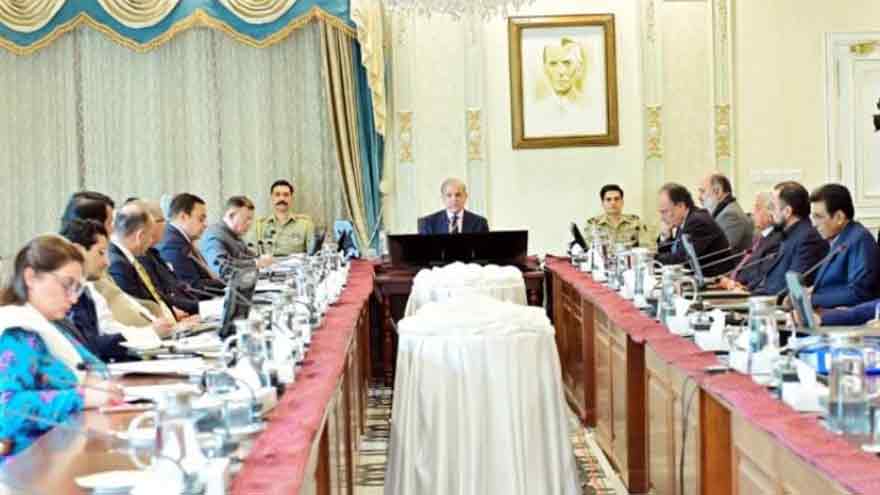
The presented Child Marriage Restraint (Amendment) Bill got rejected by the majority members of the National Assembly Standing Committee on Religious Affairs and Inter-Faith Harmony after the Council of Islamic Ideology (CII) declared it un-Islamic.
The bill was moved by PML-N’s MNA Marvi Memon in the National Assembly in 2014 and referred to the committee for discussion. The bill was primarily formed on the argument that early marriage lead to early conception, which ultimately affects the health of the teenage girls. The purpose of this amendment was to enhance punishments/fine on those entering conjugal contracts with minors. Highlighting the proposed amendments, Marvi Memon said that apart from limiting the minimum age of marriage to 18 years, the new bill called for rigorous imprisonment up to two years and a fine of Rs 100,000 for violators.
However, the committee’s Chairman Hafiz Abdul Karim unanimously rejected the bill on purely religious grounds and invited the Council of Islamic Ideology (CII) officials to provide their opinions as well.
“Girls can be eligible for marriage after the age of nine years, if they attain puberty and the same is usually 12 years for boys,” Inamullah, CII’s chief research officer, read out the decisiCIIon of the council.
“Anything contrary to the life of the Holy Prophet (Peace Be Upon Him) is unacceptable. He married Hazrat Ayesha when she was six years old and her ‘rukhsati’ was held at the age of nine,” he added.
While Ms Memon’s opinions were met by an extreme resistance from different party MNAs, she remained persistent about her views saying if this suggestion is so anti-Islam how are these opposing parties going to respond to the recently passed law in Sindh Assembly which has set 18 years as the minimum age for marriage.
The only support for Ms Memon came from Mautahidda Qaumi Movement’s (MQM) MNA Kishwar Zehra and a few other MNA’s who voted for the bill. However, the meeting was suspended by the committee chairman and he announced end of discussion following CII’s analysis of the situation.
Last week, lawmakers in the Gilgit-Baltistan Assembly had also blocked a bill seeking ban on child marriages over similar concerns.
The Khyber Pakhtoon-Khwa government also proposed a law to fix 18 years age for a girl’s marriage and bind the “nikah” registrar to check the national identity card of the bride with the “nikah” form. However, the non-governmental organizations and civil society members lashed out at the provincial government for preparing a “flawed-draft” of the K-P Child Marriage Restraint Bill 2016. The members of civil society expressed their concern and recommended several modifications to the draft presented in order to make it effective.
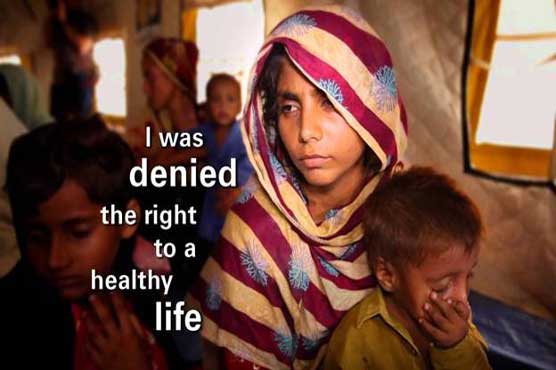
Early marriage is a widespread and an ancient phenomenon in Pakistan, most if not all of us; know an underage girl who is married. The UNICEF Representative in Pakistan, Dan Rohrmann, emphasized that early marriage violates the right to health, education, recreation, protection and other social and economic rights of girls and young women.
Human Rights Director Ghulam Ali said child marriage is closely associated with schooling for girls as poverty leads many families to withdraw their daughters from school and marry them at young ages. “These girls are denied the proven benefits of education, which include improved health, balanced fertility and increased economic productivity,” he said.
According to UNICEF’s State of the World’s Children Report 2014 seven per cent of Pakistani girls are married off under the age of 15. Of the cases of child marriage reported in 2012, 43 per cent of child brides were 11 to 15 years of age and 32 per cent from age six to 10. The Pakistan Demographic and Health Survey (2006-7) recorded that almost one-third of young women in the country are married before the age of 18 years. One out of ten girls between the ages of 15 to 19 years is already a mother or is pregnant.
In forced child marriages the possibility of mismatch is high. Often, child wives fall ill and lots of times die which explains one of the highest maternal mortality rates in Pakistan. Infants born to the child mothers are many times feeble. The marital lives remain unhappy and child wives lack happiness due to their life-time inability to support their lot. A report recently released by Save the Children said “Maternal Mortality Ratio” (MMR) in Pakistan has crossed from 147th to 149 last year.