Updated on
Summary Undue raise in price of CNG by OGRA was challenged in the Lahore High Court on Friday.
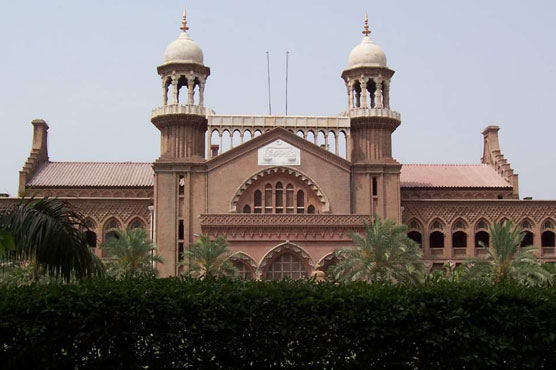
Sardar Allah Bux Laghari Advocate filed a writ petition in the LHC making respondents to the Chairman OGRA, Federal Ministry for Oil and Gas and Sui Northern Gas Pipelines Limited.The learned counsel argued that above-mentioned institutions were violating their own rules and regulations. Moreover, that the way by which price of CNG was being increased without keeping in view the very consequences of this irresponsible action was deplorable.A two-member bench of the LHC conducted hearing of the case and issued notices to the respondents to submit their stance on due date.The learned counsel offered strong arguments in favour of his stance and put record of some other countries where CNG was going to be used in light and heavy vehicles as well without piling undue pressure on masses.The petitioner argued that CNG sector was launched as environment-friendly fuel with the investment of billions of rupees is now on the verge of collapse due to the wrong and short-term planning of the policymakers/respondents.The government promoted the CNG sector initially declaring it as an environment-friendly fuel by encouraging the manufactures to launch CNG fitted vehicles and the public response was also positive due to its low prices.The dire need of CNG can be gauged from the fact that many public transports (especially mini buses and coaches) have made changes in their fuel transmission system and started running their vehicles on CNG to make huge saving. Almost all the four stroke three wheeler rickshaws are also running on this cheap fuel.That now the respondents planned to restrict the CNG sector by taking plea of shortage of gas due to their own poor policies in this regard, which marred the consumer of CNG. It is also relevant to mention here that despite ban on new CNG licenses, the issuance of new gas connections by Sui Northern Gas Pipelines Limited for CNG stations are commonly seen and admitted fact which is regularly reported by the national press and electronic media. Copy of news in this regard is attached as Annex B.That it is relevant to mention here that it was also agreed between CNG associations and Government of Pakistan that the government will not increase CNG prices as it had already ensured under a pricing formula to maintain a 50 percent difference between the prices of petrol and CNG .But despite this commitment the rates are increased continuously without any justification during last five years. Three different notifications of increase in prices are attached as Annex.CThat respondent no.3/OGRA (Oil and Gas Regulatory authority) is regulating oil and gas in the country. Oil and Gas Regulatory Authority (OGRA) was established under the Oil and Gas Regulatory Authority Ordinance dated 28th March 2002. The objectives for establishment of OGRA were to foster competition, increase private investment and ownership in the midstream and downstream petroleum industry and to protect public interest while respecting individual rights and provide effective and efficient regulations.This is crystal clear that respondent no.3/OGRA and respondent no.4 have failed to perform their functions according to their objectives and their only focus is to increase the prices and load shedding of CNG sector to close this sector with malafide and vested interests without watching public interest and individual rights.That actually the Poor policies of respondents has created severe energy crisis in the country as they have not only issued licenses of CNG stations in abundance to their blue-eyed but also overlooked the policy in this regard.“According to rules, any fuel station or CNG station must be constructed with a distance of not less than 25 to 30 miles on highways and also with a reasonable distance in the urban areas” and non implementation of rules has caused the crisis due to lack of planning and inability of the respondents.The authorities concerned ignored balance in demand and supply during previous ten years which not only caused severe crisis of gas but also affected the domestic consumer besides damaging other sectors in the country.According to the media reports the government has been trying hard to bring the CNG rates at par with the petrol and diesel aimed at either destroying this sector to make a ground for increasing import of liquefied natural gas (LNG) or pocketing more revenue from the thriving business of CNG by putting up more pressure on the common man/consumers and existing stakeholders .The ministry of petroleum/ respondent no.2 is determined to bridge the widening demand and supply gap on a fast track basis through LNG import. Influential persons with vested interests including oil marketing companies are lobbying against CNG sector. The National Assembly Standing Committee on Petroleum and Natural Resources also expressed serious concerns over the appointment of OGRA chief as he was appointed without the required experience and qualification in the relevant field. This also clearly speaks the volume of poor functioning and inability of the respondents.That the crisis has led to worsen the economic condition of the country.There are hardly any consumer friendly steps that have ever been taken in the last three and half years. No serious steps have ever been taken to resolve the issues hurting the industry and consumers and as a result the burning issues continue to become more alarming for the people. Actually gas shortage is caused by gas utilities and due to mismanagement of the respondents. The CNG sector consumes less gas (only 7%) as compared to power plants and industrial units.That in case government closes the sector it would have to purchase petrol from other countries by spending huge amount which will create more burdens on economy and consumer. How the government would manage the petrol availability when people will shift towards it after removing the price difference? In case it happens then the billions of rupee investment made by stakeholders and even general public in their vehicles will go in drain. The closure of CNG stations will virtually kill CNG industry as 2.5 million vehicles have been converted to CNG in the country. It has been estimated that Rs.235 billion have been invested in CNG sector which is directly or indirectly providing employment to 500,000 people in the country.Pakistan currently has the highest number of vehicles running on CNG in the world followed by Iran, Argentina, and Brazil. Pakistan also has the highest number of CNG stations in the world numbering more than 3600. Majority of private vehicles have converted to CNG because of cheaper price as compared to petrol. Only luxury cars and official vehicles now run on petrol. In last few years, CNG Buses and auto rickshaws had been introduced in Karachi, Lahore and all other cities.Almost all car manufacturers in Pakistan (except Honda) now produce company fitted CNG kit versions. CNG has grown into one of the major fuel sources used in car engines in India and Bangladesh as well. The use of CNG is mandated for the public transport system of Indias capital New Delhi as well as for the city of Ahmedabad in the state of Gujarat.The Delhi Transport Corporation operates the worlds largest fleet of CNG buses. Today many rickshaws as well as personal vehicles in India and Bangladesh are being converted to CNG powered technology, the cost of which is in the range of $800–$1000. In the Bangladesh capital of Dhaka not a single auto rickshaw without CNG has been permitted since 2003. In India, CNG costs are at Rs 31.50 per kg compared with Rs. 70.00 per litre of petrol (prices as of June 2011 in Bangalore, India). In Thailand, CNG costs are at Thb 10.4 per kg (US$0.35) per kg compared with Thb 40.00 (US$1.35) per litre of petrol (prices as of March 2011 in Bangkok, Thailand).There is no crisis of gas in these countries despite the fact that some countries did not produce CNG and the prices in these countries are also low as compared to our country.