Updated on
Summary Hillary Clinton says Dr. Shakeel Afridi's action was in Pakistan-US joint interest.
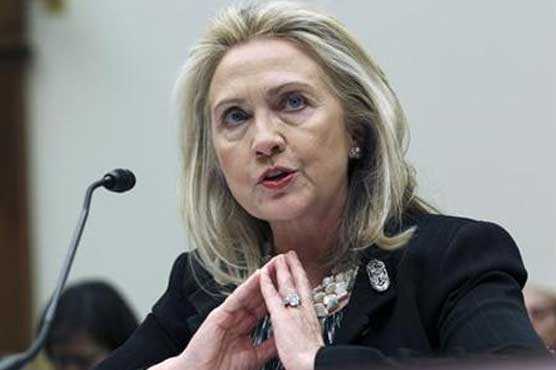
The US Secretary of State, Hillary Clinton has said that Pakistan has no basis for holding Dr. Afridi or any of his staff. In fact, I think his work on behalf of the effort to take down bin Laden was in Pakistans interest, as well as the United States interest, she said during a hearing of the House Foreign Affairs Committee on Assessing U.S. Foreign Policy Priorities Amidst Economic Challenges:She said that US had made that view very well known to Pakistan. We will continue to press it. And you know, it is going to be taken into account as we move forward, she said when asked what the US administration was doing to ensure release of Dr. Afridi, detained in Pakistan for running a fake vaccination campaign in Abbottabad to help reach Osama bin Ladens compund.Earlier, Congressman Dana Rohrabacher, Republican from California, said that Pakistan was not cooperating with the US in case of Dr. Afridi. Well, if they do not let Dr. Afridi go -- let me just put everybody on notice here and I believe that were going to be watching this closely -- there is nothing that could suggest that Pakistan is cooperating with us in the fight against terrorism when they have Dr. Afridi -- the man who helped us get Osama bin Laden -- in prison and are treating him this way, he emphasised.Rohrabacher, chairman of the Subcommittee on Oversight and Investigations, termed Pakistans decision to detain Dr. Afridi as their decision of non-cooperation. It is now illegal for Pakistan to receive any aid money from the United States unless you, as the secretary of state, certify that Pakistan is cooperating with the US in counterterrorism efforts and preventing terrorists from basing their operations in Pakistan, he opined.The Chairperson of the Committee, Ileana Ros-Lehtinen, Republican from Florida, said that Pakistans level of cooperation was not satisfactory. In Pakistan, the level of cooperation that we get from the government continues to fall short. Serious questions persist about whether elements of the Pakistani government support prominent insurgent groups fighting against our troops in Afghanistan, she alleged.Congressman Michael McCaul, Republican from Texas, who recently led a delegation to Pakistan, said President Zardari had told him that he had no knowledge about Osama bin Ladens presence in Abbottabad. But we do know its probably likely that lower-level officials knew of his presence in Pakistan, he questioned.Then we had Dr. Afridi, who helped us over there. Now hes in prison for treason, as was pointed out earlier. They gave Chinese -- the Chinese access to the helicopter that was left behind at the compound. And then, finally, the Haqqani Network; we talked about the Haqqani Network. And I asked for his support, as you have very strongly in the past asked for his support, to go after the Haqqani Network. And he said he doesnt play -- he goes after all terrorist organizations, not just the Haqqani, he went on regarding his discussion with president Zardari.Were giving all this foreign aid to a country that is complicit in working with the terrorists who are killing Americans. I understand all the implications. He -- Zardari referred to our relationship as like a bad marriage, but divorce is not an option, Congressman McCaul mentioned. He also expressed his opinion that Pakistani president Zardari probably had no control over the armed forces of the countrty.Secretary Clinton also appreciated the riole played by president Zardari. He has been a good partner in going after terrorism that threatens his country and Afghanistan and our troops, she said while denying any high-level involvement in keeping Osama bin Laden in Abbottabad. But, like you, I have to assume that lower-level people, you know, had to have known something. But we havent proven that. It could be asserted, but not yet proven, she stated.On the relationship with Pakistan generally, she tyermed it a complicated, difficult relationship. What we are doing now is making it very clear what our expectations have to be going forward. And there is no doubt in my mind that certain elements of the Pakistani government are more ambivalent about cracking down on terrorism than other elements, she stated.Whats unique now is that this democratically elected government has survived longer than any other democratically elected government. For the first time in the parliament, you have questions being asked of the military and the ISI. You have the Supreme Court asking questions about actions of the military and the ISI, she remarked on the wrangling underway in Pakistan.On the civilian-military relationship in Pakistan, she said you see the strains and stresses of trying to have a civilian government in a democracy assert control over all elements of the government. And we want to continue to support the democratic trend inside Pakistan. So, you know, walking this line, trying to make sure what the levers we can pull are, where we can really put pressure, is basically how I spend a lot of my time, she revealed.- Contributed by Awais Saleem, Dunya News correspondent in Washington, DC