Summary Pakistan warns that an attack on a stranded oil tanker near Saudi Arabia’s East-West Pipeline would be an “act of war” as Islamabad weighs alternative fuel routes.
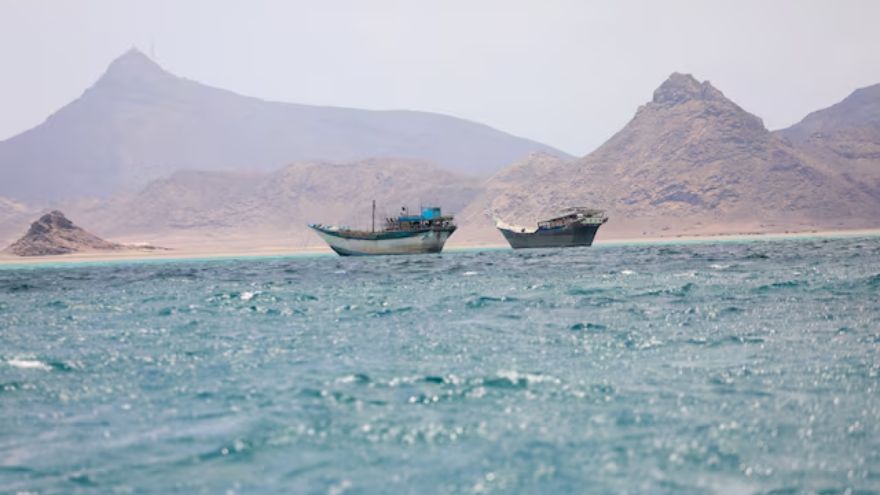
ISLAMABAD (Web Desk) – Pakistan has warned that any attack on an empty oil tanker stranded in the Red Sea near Saudi Arabia’s East-West Pipeline would be treated as an “act of war”, as Islamabad weighs how to move the vessel amid mounting disruption to regional shipping routes.
The warning comes as Pakistan assesses its fuel supply position against continuing instability around the Strait of Hormuz and Bab al-Mandab. Federal Petroleum Minister Ali Pervaiz Malik has said the tanker must ultimately be moved, while Saudi authorities have asked for it to remain on standby for now.
The vessel has become a focal point in Pakistan’s efforts to keep fuel supplies moving through an increasingly difficult regional maritime environment. Malik said Islamabad was considering several options, including moving the tanker through Oman or the United Arab Emirates, while another possibility would be sourcing crude from Libya.
“We will have to move it one way or another,” Malik said while speaking to a private news channel, adding that Saudi authorities had requested the vessel remain on standby for the time being.
The minister’s warning reflects the growing security concerns surrounding commercial shipping in the Red Sea. Pakistan has made clear that an attack on a vessel flying its flag would carry serious consequences, with Malik describing such an assault as an “act of war”. The government is simultaneously examining alternative routes to prevent disruption to the country’s fuel supply chain.
The situation has been complicated by the shutdown of Saudi Arabia’s East-West Pipeline, a major route designed to transport crude from the kingdom’s eastern oilfields to its Red Sea coast while bypassing the Strait of Hormuz. Reuters reported that the 1,200-kilometre pipeline was temporarily closed after an aerial attack and had been carrying around 4 million to 5 million barrels of oil per day.
The pipeline had assumed greater importance after shipping through the Strait of Hormuz was severely disrupted by the wider US-Iran conflict. Its closure has therefore added another pressure point to an already strained energy network.
Saudi Arabia’s pipeline could remain out of service for several weeks, according to reports, leaving Pakistan to consider whether to wait for the route to reopen or redirect the tanker through alternative waters. Reports have put the potential repair period at several weeks, although the exact timeline remains subject to operational and security conditions.
Fuel pressure
For Islamabad, the shipping disruption has a direct bearing on domestic fuel security. Malik has warned that Pakistan’s planning for diesel supplies is becoming increasingly important as the regional conflict threatens established routes for energy imports.
The minister separately said Pakistan had sufficient petrol stocks for September and had completed planning for October, while arrangements for November supplies were being worked on as disruptions continued across major maritime routes. He also said a Pakistani vessel had already successfully passed through Bab al-Mandab.
Bab al-Mandab has become another critical pressure point. The narrow waterway connects the Red Sea with the Gulf of Aden and forms a key link between Asian, Middle Eastern and European shipping routes. Growing Houthi control around parts of Yemen’s Red Sea coast and attacks on Saudi targets have heightened concerns over the security of commercial vessels.
The conflict has also affected global oil markets. Saudi Arabia remains one of the world’s largest crude exporters, while the East-West Pipeline provides an important alternative route to Red Sea terminals when shipments through Hormuz face disruption. The pipeline’s shutdown has consequently raised concerns about the resilience of regional oil flows.
At the same time, the Houthis have intensified attacks on Saudi Arabia, while Saudi forces have continued operations against targets in Yemen. The escalation has revived a conflict that had remained largely dormant since a 2022 truce and has brought the security of both the Red Sea and Bab al-Mandab back to the centre of regional concerns.
Makkah drone attack
The latest escalation has also triggered a strong response from Islamabad after Saudi Arabia reported that its air defences intercepted and destroyed a Houthi drone south of Makkah before it entered restricted airspace over the holy city. The Saudi-led coalition described the security of Makkah, the Two Holy Mosques and pilgrims as a “red line” and warned of deterrent action. The Houthis have denied targeting Makkah.
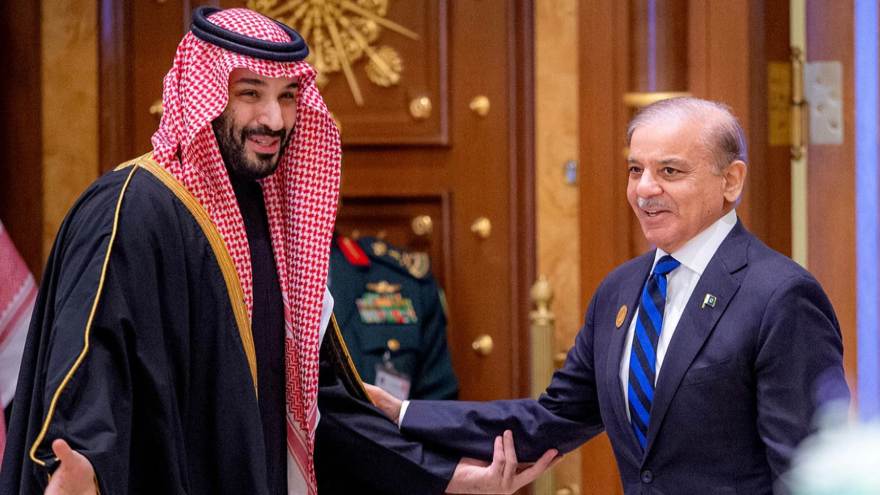
Prime Minister Shehbaz Sharif condemned what he described as a “dastardly and heinous attempted drone attack” against the Holy Site of Makkah Al-Mukarramah. He said Pakistan was deeply saddened by the incident and praised the Saudi armed forces for what he called their swift response. (Ministry of Interior Pakistan)
Shehbaz also called on all parties to exercise maximum restraint and step back from further escalation, saying the region had already suffered extensively from conflict. He reaffirmed Pakistan’s support for Saudi Arabia’s sovereignty and territorial integrity and for the security and sanctity of the Haramain Sharifain.
Deputy Prime Minister and Foreign Minister Ishaq Dar likewise condemned the reported Houthi attack, saying it violated Saudi Arabia’s sovereignty and territorial integrity, offended the religious sentiments of Muslims worldwide and threatened regional peace and security. Islamabad said it stood with Saudi Arabia in safeguarding the Two Holy Mosques and ensuring the safety of pilgrims, citizens and residents.