Summary Azad Jammu and Kashmir has launched the Suthra Kashmir programme, modelled on Punjab’s cleanliness initiative, with private companies set to manage solid waste in urban and rural areas.
MUZAFFARABAD (Dunya News) - The Azad Jammu and Kashmir government has decided to launch the “Suthra Kashmir” programme under its 100-day reform agenda, introducing a new waste management model inspired by Punjab’s “Suthra Punjab” initiative.
Under the programme, solid waste management services across AJK will be handed over to the private sector, while the government and its institutions will primarily perform a regulatory and supervisory role.
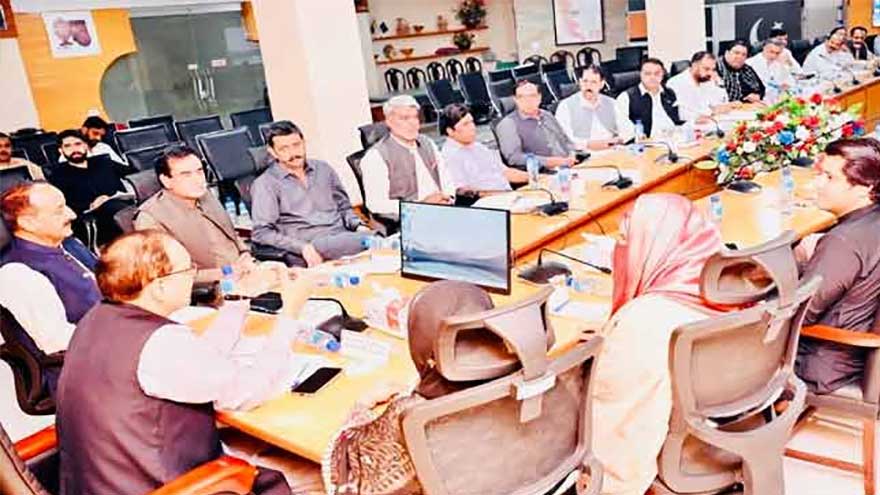
The decision was discussed at a meeting chaired by Local Government and Rural Development Secretary Irshad Ahmed Qureshi, where officials finalised key measures for implementing the programme.
The meeting was informed that advertisements seeking services from private waste management companies would be published in newspapers within a week.
Qureshi said solid waste management would be outsourced at the district level. Once contracts were awarded, the selected private operators would be responsible for providing the machinery, vehicles and workforce required for cleaning operations.
The AJK government has also decided to introduce uniform standards for sanitation operations across the territory, including a common design for machinery and uniforms for sanitation workers.
A comprehensive system will be developed for collection, transportation and proper disposal of waste.
Officials said the initiative would not be restricted to major cities. Rural communities would also be brought under the programme as the government seeks to establish a wider waste collection network.
At village level, authorities plan to work with elected local government representatives, youth councillors and women councillors to facilitate door-to-door waste collection.
The Suthra Kashmir initiative forms part of the new government's broader 100-day reform programme.
Other proposed measures include establishing green areas, purchasing new operational vehicles for waste management, developing model villages and undertaking beautification projects in urban areas.
Mayors and representatives of municipal corporations welcomed the initiative and expressed their willingness to work with private operators to improve sanitation services.
Representatives from district councils also welcomed the decision to include villages, noting that solid waste management had increasingly become a challenge not only for cities but also for rural communities.
Officials said ward councillors, youth representatives, women councillors and other elected representatives would be involved in cleanliness campaigns to strengthen community participation.
The meeting was attended by Director General Local Government and Rural Development Tahir Ashraf, Local Government Board Secretary Ashfaq Ahmed Noor and other officials.
Participants were briefed on waste management and the proposed model village programme.
Deputy Director Babar Minhas also presented an overview of the existing solid waste management situation in AJK, its environmental impact, the Suthra Punjab model and waste management systems operating through private-sector partnerships elsewhere in South Asia.