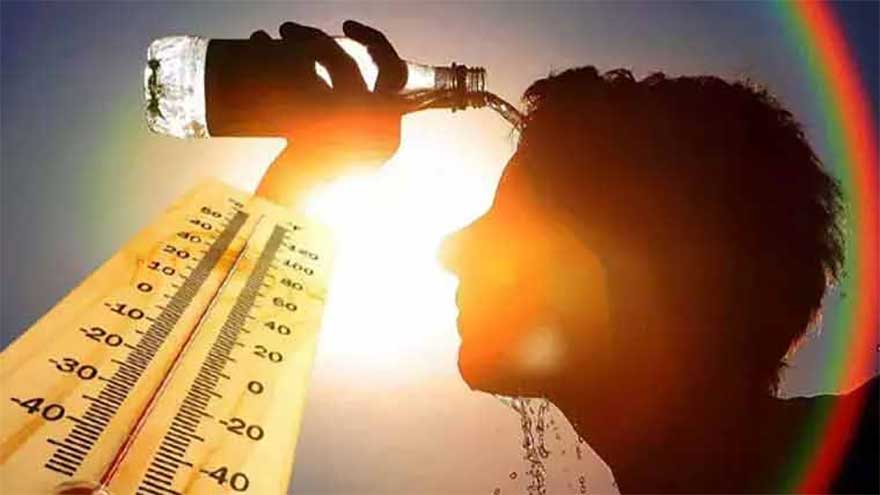
Summary Pakistan continues to experience an intense heatwave, with the heat index reaching dangerous levels in several cities due to high temperatures and humidity.
ISLAMABAD (Dunya News) – A severe heatwave continued to grip large parts of Pakistan on Wednesday, with the heat index reaching dangerous levels in several cities due to a combination of high temperatures, humidity and weak winds.
According to the Pakistan Meteorological Department (PMD), residents in Sibi, Bahawalpur, Dera Ismail Khan, Dadu, Sargodha, Hyderabad, Sukkur, Sheikhupura, Faisalabad, Peshawar, Sialkot, Islamabad, Lahore and Karachi experienced extreme heat and oppressive humidity.
Sibi recorded an actual temperature of 42°C, but high humidity pushed the heat index, or "feels like" temperature, to 68.2°C, the highest recorded in the country.
Other cities also reported dangerously high heat index values. Bahawalnagar recorded a temperature of 42°C with a perceived temperature of 56.7°C, while Dera Ismail Khan reached 41°C with a heat index of 55.8°C. In Dadu, the temperature climbed to 43°C, with the heat index also reaching 55.8°C.
Sargodha registered 40°C with a heat index of 52.7°C, followed by Hyderabad at 39°C with a perceived temperature of 51.6°C and Sukkur at 40°C with 51.3°C. Sheikhupura recorded 37°C, but the heat index climbed to 50.8°C.
In Faisalabad, the temperature reached 40°C with a heat index of 49.5°C, while Peshawar recorded 40.5°C with a perceived temperature of 49°C. Bahawalpur registered 40°C with a heat index of 48.3°C.
Sialkot recorded 35.5°C, but humidity pushed the heat index to 45.6°C. In Islamabad, the temperature reached 36.5°C, with a "feels like" temperature of 44.4°C.
Lahore recorded 35.5°C, with the heat index rising to 41.9°C, while Karachi experienced 34°C, with a perceived temperature of 41.8°C.
Weather experts said elevated humidity and light winds are significantly increasing the heat index, making conditions feel much hotter than the actual air temperature and raising the risk of heat-related illnesses.
Authorities have advised the public to avoid unnecessary outdoor activities during peak daytime hours, stay well hydrated, wear loose-fitting and light-coloured clothing, and ensure that children, elderly people and those with underlying health conditions are protected from prolonged exposure to the heat.