Updated on
Summary Sherry Rehman said fundamental re-set of the US ties was needed for a number of reasons.
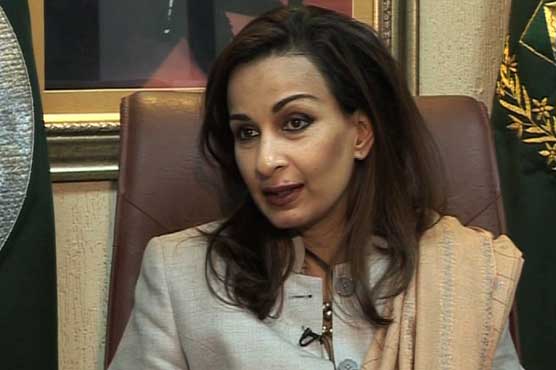
Pakistan’s ambassador to the United States Sherry Rehman has said here Wednesday that the tragedy of NATO attacks in Mohmand, killing 24 Pakistani soldiers, served as an end-line trigger that called for a fundamental re-set of relations with America.“The flag-draped bodies of 24 soldiers martyred at the hands of our allies and absence of an immediate apology did cause the Pakistani streets to erupt with questions about the egregious asymmetry in the calculus of comparative sacrifice between our two nations”, she pointed out.“To us, terrorists represent as much a breach of our sovereignty as state-sponsored unilateralism of any kind”, she said while calling for the need of a series of codified protocols to stay off the red line radius. The current rules of engagement, she believed, leave this vital relationship too vulnerable to the enemies of peace, as well as to the gaps in communication.In the relationship with the US, a re-set was needed for a number of reasons, she maintained adding that some of these were structural, while some of the famous ‘trust deficit’ gaps were informed by a profound cognitive, and even institutional, disconnect”.“Many of the gaps can be mitigated, if we step back, give pause and re-construct”, the ambassador said. “The marriage metaphor for instance, never seems to go away, with its implicit embrace of love and hate, life, death and in fact, divorce, which we seek to avoid”, she regretted.“The good news is that many of us on both sides think it is time that this relationship matured into a more consistent, stable and transparent equation, with weight given to mutual respect, but once again that would be the subject best reserved right now for our parliament to decide”, she asserted while referring to the ongoing review in Pakistani parliament.On the possible future of the Pak-US ties, she expressed her desire “to strengthen and broaden the bilateral relationship, help set it on a firmer, transparent, equitable footing, and educate the people of both countries to better understand each other”. “I hope to give particular attention to the large and robust American-Pakistani community in the USA, and to seek their support in advancing mutual goals”, she observed.She also called for the ties with the US to be shifted to trade instead of aid. While fighting a full-fledged war against the forces of terrorism and extremism, and coping with millions of dislocated persons, both from disasters as well as operations within Pakistan and from Afghanistan, “we have suffered losses worth 78 billion dollars (not to mention road infrastructure losses worth 122 billion dollars)”, she informed the audience.Responding to questions over Pakistani military’s commitment to the war in tribal areas, she said Pakistan was in full overstretch militarily in all the tribal areas on the western border. “With thin deployments from the Afghan side of the border, we face a substantial security threat from insurgents and militants in that area. It is impossible to open all fronts at one time, especially given the conflict in Afghanistan constantly spilling over into Pakistan”, she said.Ambassador Rehman, in her first address at a think tank, US Institute of Peace, which marked her maiden public appearance at any forum after arriving in Washington, DC for the challenging assignment, said that “Pakistan will support a peace process that is Afghan-led and Afghan owned, in real-time practice, not just as a policy platitude”.“We do not consider Afghanistan our strategic backyard, as many claim we do, but we do have the highest stakes in Afghan stability since we simply cannot afford the blowback from either a civil war there again, nor any other kind of surge into Pakistan, with its long, porous border”. “Our motives in the region are driven by a legitimate anxiety about the security transition in a post-US drawdown timeline in Afghanistan, certainly not ambition”, she added.Pakistan, she said, was firmly committed to playing a constructive role in promoting peace and stability in the region.“Pakistan is pursuing a non-intrusive peace offensive in the region. Broadening and strengthening our relationship with India, which is stepping up to our offers of multiple and sustained conversations. It is our intent to enhance our dialogue with India and to make it productive and result oriented, with the hope that the Kashmir dispute finds just and peaceful resolution”, she hoped.She termed the passing of the 20th amendment in Pakistani parliament as a historic milestone. Without mentioning the Supreme Court as such, she also suggested “all institutions of government are seeking a difficult but crucial equilibrium after long non-democratic interludes. We see this as a pivotal and often painful transition to sustainable democracy, where the civilian government stands committed to the rule of law and respect for the court”.“Pakistan today is not just about bombs and bullets”, she reminded and went on to add that “Pakistan story is also about its vast multiplicity of young musicians, resilience in the face of natural calamity, creativity in art, media, telecommunications, fashion weeks and literature festivals, but equally importantly, about the scale and complexity of ethnic, linguistic and religious diversity we negotiate every day”, the ambassador impressed upon the attentive audience.- Contributed by Awais Saleem, Dunya News correspondent in Washington, DC