Summary Justice Javed Iqbal Wains held that employees' right to regularization remains intact and cannot be extinguished by the repeal of a law under which those rights had already accrued.
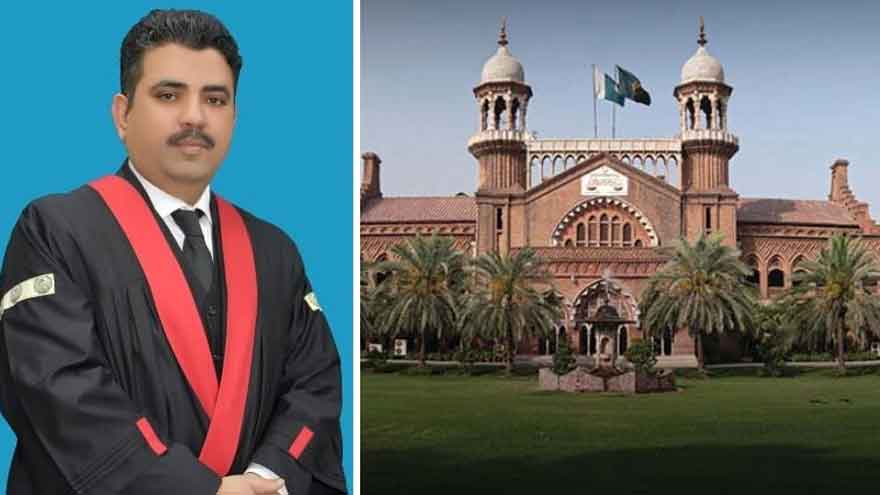
LAHORE (Muhammad Ashfaq) – In a significant ruling in favor of contract employees of the Population Welfare Department, the Lahore High Court (LHC) has accepted petitions seeking the regularization of Family Welfare Workers and other staff.
Justice Javed Iqbal Wains held that employees' right to regularization remains intact and cannot be extinguished by the repeal of a law under which those rights had already accrued.
The detailed 24-page judgment was issued on petitions filed by Farhat Parveen and other employees. The court declared the decision a judicial precedent and set aside the Scrutiny Committee’s minutes of meeting dated May 29, 2024, as well as the department’s December 28, 2024 order rejecting the employees’ regularization claims.
The court ruled that the petitioners were contract employees rather than project employees. It observed that after the project was shifted to the non-development side, the workers no longer retained the status of project employees. The judgment further noted that the creation of 3,000 new posts had altered the employees’ status and that they had been serving continuously for more than a decade.
Justice Wains stated that the employees’ right to regularization had already accrued before the repeal of the relevant law and could not be taken away retrospectively. The court noted that the petitioners had completed the required three years of service before October 31, 2025, and therefore their claims could not be rejected solely on the basis of the law’s repeal.
The judgment also emphasized that employees of the Population Welfare Department could not be subjected to discriminatory treatment, particularly when similarly placed employees in the Health Department had already been regularized. Treating employees differently under identical circumstances, the court said, would be contrary to the Constitution.
Expressing displeasure over the department’s failure to provide relief despite repeated court directions, the court observed that improper implementation of judicial orders had resulted in unnecessary litigation.
The Lahore High Court remanded the matter back to the Scrutiny Committee and directed that the employees’ cases be forwarded to the competent authority for consideration of regularization. The entire process must be completed within 90 days.
Until the implementation of the judgment, the court restrained the department from taking any adverse action against the employees and ordered the continuation of their services. All petitions seeking regularization were accordingly allowed.