Summary After suffering defeats on the battlefield, India is resorting to petty tactics in sports: Tarar
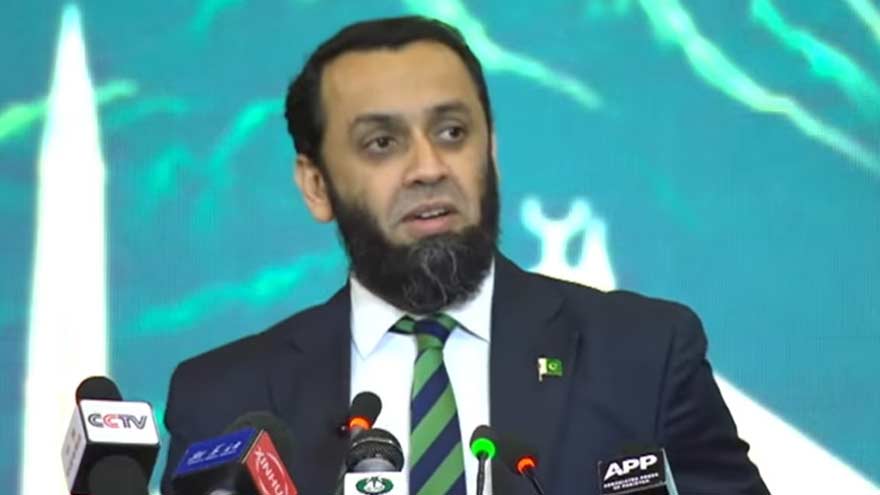
ISLAMABAD (Dunya News) – Federal Minister for Information and Broadcasting Atta Tarar has said that India’s irresponsible conduct has now extended to the sporting arena.
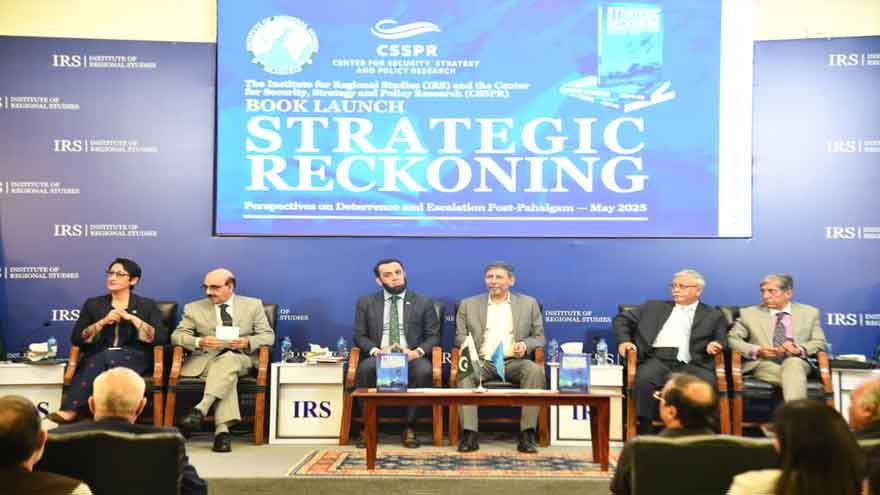
Information Minister Atta Tarar expressed these views during the launch of edited volume titled “Strategic Reckoning: Perspectives on Deterrence and Escalation Post-Pahalgam – May 2025” by the Institute of Regional Studies (IRS), Islamabad, in collaboration with the Center for Security Strategy and Policy Research (CSSPR).
Tarar said that after suffering defeats on the battlefield, India is resorting to petty tactics in sports.
He added that Pakistan has exposed India’s false propaganda and given a befitting response to its unprovoked aggression. He noted that Pakistan’s achievements during the four-day war forced India to seek a ceasefire.
The minister emphasized that Pakistan has always played a constructive role in ensuring sustainable peace in the region. He said the Modi government and the Hindutva ideology have faced a humiliating defeat, while India, despite being an aggressor, is trying to portray itself as a victim.
Tarar further said that the truth about incidents such as Pahalgam has been revealed before the world, and Pakistan had even offered independent investigations. “Our fight against terrorism is not only for ourselves but also to ensure global safety,” he added.
He underlined that a country violating international principles cannot feign victimhood. Pakistan, he said, strongly believes in peaceful coexistence and has played a crucial role in regional peace and stability.
Atta Tarar reaffirmed Pakistan’s unwavering political, moral, and diplomatic support for the people of Indian-occupied Kashmir, stressing that the Kashmir issue must be resolved in line with UN resolutions.
Ambassador Jauhar Saleem, President IRS, argued that India’s coercive policies towards its neighbors—including Nepal and Sri Lanka—fuel instability in South Asia and weaken regional institutions such as SAARC, which could have become a vehicle for fostering regional cooperation and prosperity, but for India’s hubris and hegemonic designs.
He cautioned that India’s quest for strategic dominance risks diplomatic isolation and long-term setbacks to its own interests.
Lt Gen. Khalid Ahmed Kidwai, Advisor, National Command Authority, emphasized Pakistan’s tri-services’ readiness, operational proficiency, and the establishment of the Army Rocket Force Command as evidence of a credible deterrence posture. He underscored India’s military shortcomings, Pakistan’s measured response, and the broader geopolitical implications, concluding that Pakistan had successfully restored deterrence and strategic equilibrium through coordinated tri-service operations.
Ambassador Masood Khan, former President of AJK, identified the Pahalgam attack as a critical flashpoint, highlighting the enduring centrality of the Kashmir dispute to regional instability. He warned that neglecting Kashmiri grievances would perpetuate recurring crises.
Dr Rabia Akhtar, the editor, characterized the May 2025 crisis as a perilous destabilization of deterrence, where India sought to impose a ‘new normal’ of pre-emptive strikes. She argued that this behavior must instead be recognized as a ‘new abnormal,’ deviating from established crisis management practices under nuclear conditions. She underscored Pakistan’s calibrated retaliation as an exemplar of responsible deterrence in contrast to India’s imprudent adventurism, cautioning against normalizing brinkmanship.
Khalid Banuri, former DG Arms Control and Disarmament, SPD, analyzed the Pakistan Air Force’s (PAF) performance, detailing its rapid mobilization, neutralization of Indian strikes, and demonstration of air superiority through precise counter-air operations. He stressed that PAF’s measured yet resolute actions undermined India’s coercive objectives, showcasing the high costs of escalation.
Dr Salma Malik, Associate Professor at QAU, highlighted the adverse spillover effects of such crises on regional actors beyond India and Pakistan, noting economic disruptions, refugee flows, and heightened security risks. She called for multilateral crisis management frameworks to give smaller regional states a voice and distribute the burden of maintaining peace.
Leading Defense Analyst Ejaz Haider examined the role of Indian media in shaping conflict narratives during the May 2025 crisis. He highlighted how sensationalism, misinformation, and triumphalist propaganda framed the conflict as spectacle, fueling domestic escalation pressures, distorting realities, and obstructing accountability. He warned that narrative warfare can exacerbate military crises.