
Updated on
Summary Supreme Court issued its verdict in NRO case on Tuesday and asked CJ to form larger bench.
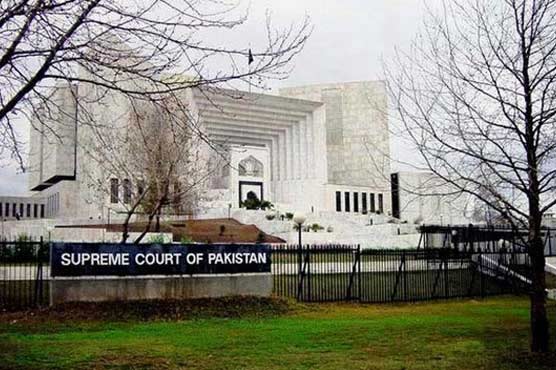
A five member bench of the Supreme Court has decided to refer the six options relating to the NRO implementation case to the Chief Justice for constitution of a larger bench for hearing of these options.The Supreme Court said in its order that the government has not implemented the verdict of apex court despite the lapse of two years and the responsible are being protected. “Apparently the prime minister is not an honest man and he violated his oath,” the apex court observedThe Supreme Court regretted the chairman NAB and attorney general’s statements during the hearing of the case. The bench has given six options to proceed with the case.1: Contempt proceedings against the Chief Executive and the Federal Secretary.2: To indict the prime minister under Article 63(1)(g) and declare disqualified to be elected as member of parliament.3: The court may form a commission to get the verdict implemented.4: To take action against the President for violating the constitution5: Contempt proceedings against Chairman NAB may be initiated on misconduct.6: The people of Pakistan may decide the matterThe court also recommended the case to the chief justice to form a larger bench to hear the case on January 16.Earlier, the case was heard by a five-judge bench of the apex court headed by Justice Asif Saeed Khosa. During the hearing, Justice Khosa said that the National Accountability Bureau (NAB) declared Ahmed Riaz Sheikh and Adnan Khwaja as innocent without conducting proper inquiries.Justice Khosa moreover inquired of NAB officials as to what became of action against former attorney-general Malik Qayyum.To that, NAB’s Prosecutor-General K K Agha said that Qayyum had been following court orders and that his actions were not illegal.He further said that no criminal intentions were involved in the appointment of Ahmed Riaz Sheikh.Agencies add:Supreme Court on Tuesday warned it could disqualify both the president and prime minister from office for disobeying its orders to re-open high profile corruption cases.The court gave the government a one-week deadline to move forward stalled corruption proceedings against President Asif Ali Zardari and others but made no ruling, only outlining options to be reviewed by a larger panel of judges.The top court has been locked in a standoff with the government since December 2009, when judges ruled to scrap an amnesty that had allowed Zardari and 8,000 other people to escape possible corruption charges.There are more than 30 politicians who had cases against them withdrawn under the amnesty, which was passed in October 2007 by then-president Pervez Musharraf.The amnesty covers 3,478 cases ranging from murder, embezzlement and abuse of power to write-offs of bank loans worth millions of dollars.The court has insisted that with no amnesty now in place, the government must proceed with all corruption cases, including a multi-million-dollar money laundering case against Zardari in Switzerland that remains on hold.But the government has so far stalled on the courts request to send a letter to Swiss authorities to reopen the case and to make progress on all other corruption cases.The Supreme Court said it was dismayed over the brazen and blatant failure of the government to implement court orders.Judge Asif Saeed Khan Khosa, presiding over a five-judge panel, said there was at least prima facie evidence that Prime Minister Yousuf Raza Gilani was not an honest person because he had violated his oath, and charged President Zardari of the same.Reading the order, Khosa said both Gilani and Zardari could be disqualified from parliament, effectively removing them from office, for violating their oaths of offices.The court listed six possible outcomes for the case, including the disqualification of the countrys two top civilian leaders.Other options included the initiation of contempt proceedings against top officials, the setting up of a commission to implement the courts order or to put the issue to a countrywide vote.


