Updated on
Summary The US is increasingly relying Central Asia to ship non-military supplies and fuel into Afghanistan.
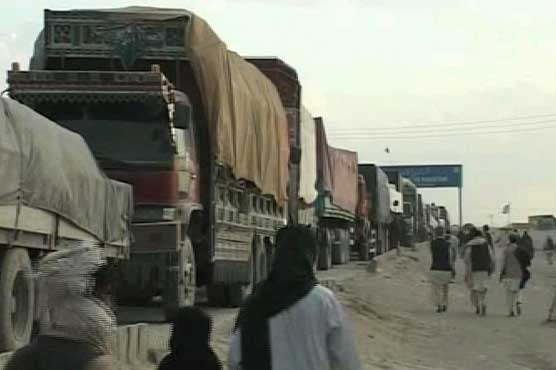
The United States is increasingly relying on three transit routes snaking through Central Asia, Russia and the Caucasus, to ship non-military supplies and fuel into Afghanistan as the deteriorating relationship between Washington and Pakistan closes off border crossings, according to a Senate report.Use of the Northern Distribution Network to supply US and coalition forces has been crucial in the ongoing war against terrorism.The study found that just three years ago, about 90 percent of non-military supplies to Afghanistan went through Karachi, Pakistan. Today, close to 75 percent of cargo is shipped through the northern network. Some 40 percent of cargo goes through the ground network, 31 percent is shipped by air and 29 percent heads through Pakistan, the study said, citing figures from the militarys US Transportation Command.A supply route other than through Pakistan has become an imperative for the US Pakistan closed its two Afghan crossings in Chaman and Torkham, in the northwest Khyber tribal area, almost immediately after NATO aircraft attacked two army posts along the border on Nov. 26. The strikes killed 24 Pakistani troops.Everybodys hopeful we can get something back on track with Pakistan, Senate Foreign Relations Committee Chairman John Kerry, a Democrat, said in an interview with with a foreign news agency. Pakistanis make money off that route. ...That may interest them at some point ... but on the other hand, we cant be prisoners of one relationship with something as vital to our national security interests.The 25-page report by the Democratic staff of the committee was to be released Monday. It follows a field visit by congressional aides to Kazakhstan, Kyrgyzstan, Tajikistan and Uzbekistan in October.While the United States has increased its reliance on the Northern Distribution Network, the report said it is not a perfect substitute for the current supply routes in Pakistan. For example, the NDN only allows for one-way transit of goods to Afghanistan, though discussions are reportedly under way to expand the NDN to support two-way transit of cargo leaving Afghanistan via the northern routes.The network is also costly an additional $10,000 per 20-foot container to ship through the network compared to going through Pakistan.Separate from the network, the United States relies on the Manas Transit Center in Kyrgyzstan to transport American and coalition forces. Manas also serves as an air refueling site for aircraft heading to Afghanistan.Afghanistans neighbors fear the 2014 security transition and withdrawal of coalition forces could mean abandonment, the report said.It said government officials told the Senate aides in meetings that they fear the transition will increase drug trafficking and create a security vacuum that extremist groups, such as the Islamic Movement of Uzbekistan and Islamic Jihad Union, would fill.Transitioning security and governance to the Afghans does not mean Americas departure, and I want Pakistan to hear that loud and clear, said Kerry, who has made several trips to Pakistan. And I want Afghans and the neighbors to hear that loud and clear. America is not retreating from its interests. We are really trying to be more effective about the way in which were going to support them.