Updated on
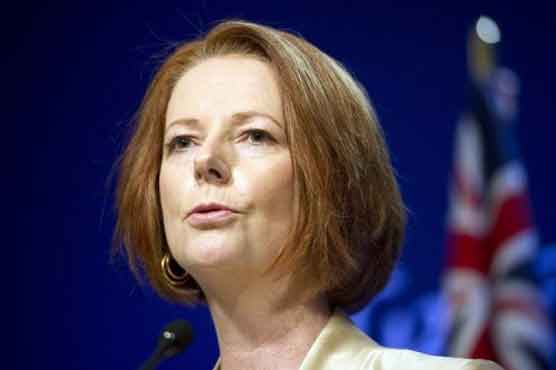
Summary Australian PM Julia Gillard said Australia may sell uranium to India instead of Pakistan and Israel.
Gillard said the policy shift would apply only to India and not open up potential sales to Israel or Pakistan, as only India had sought and received an exemption from the International Atomic Energy Agency and the Nuclear Suppliers Group.So that puts India in a class of its own, Gillard said.When you look at other nations, whether it be Pakistan or Israel, they are not in that same class.Australia has refused to sell nuclear material to India because it has not signed the Nuclear Non-Proliferation Treaty (NPT), but Gillards ruling Labor party will debate lifting the ban at its conference next month.I believe the time has come for the Labor party to change this position. Selling uranium to India will be good for the Australian economy and good for jobs, Gillard told reporters.This will be one way we can take another step forward in our relationship with India. We have a good relationship with India, it is the world largest democracy, a stable democracy.The move is set to spark heated debate at the partys December conference, but should easily pass with support from Labors dominant right faction. The policy does not need to go to parliament for approval, but the conservative opposition also supports uranium sales to India.Gillards policy shift comes on the eve of US. President Barack Obamas visit to Australia and would bring Australias uranium policy into line with the United States.Washington in 2008 signed a landmark civil nuclear agreement with India over the use of uranium for nuclear energy.Critics accused the United States of undermining the global non-proliferation regime, but the deal was seen by President George W. Bush as the centrepiece of a new strategic relationship with India, viewed in Washington as an increasingly important economic and geopolitical counterweight to China.Australia, one of the United States closest allies in the region, supported the U.S-India nuclear agreement as a member of the 46-member Nuclear Suppliers Group, but had continued to refuse to sell uranium to India.India has long complained about the ban as it seeks access to nuclear supplies for its power sector and growing economy.Australia has almost 40 percent of the worlds known uranium reserves, but supplies only 19 percent of the world market. It has no nuclear power stations.While a decision to lift the ban would be welcomed by Australias mining sector, it is strongly opposed by Labors political allies, the Greens, who said the move would encourage a nuclear arms race in Asia and make Australia less safe.Strict conditions are imposed on uranium exports to ensure it is used for power generation and not weapons. Nuclear-armed India has repeatedly clashed with neighbouring Pakistan, which also possesses nuclear weapons.India has refused to sign the nuclear NPT, arguing it is discriminatory and flawed in allowing only countries which had tested nuclear weapons before 1967 to legally possess them.Pakistan, Israel and North Korea are the only other non-signatories to the treaty.