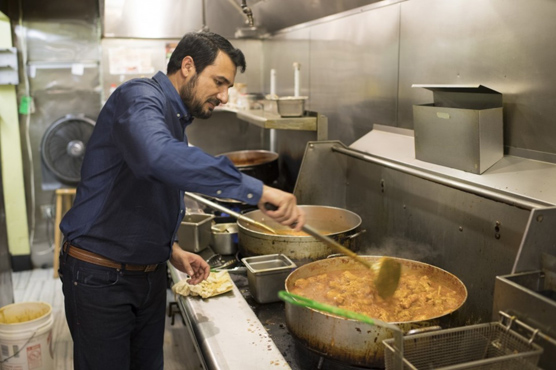
Summary “They said I was going to work like a donkey. I was grateful. I wanted to work" Kazi Mannan Photo:WP
(Web Desk) - The expression “American dream” is one of the reasons why many people migrate to the Land of Opportunities. Kazi Mannan, who belongs to Pakistan, is among many immigrants who move to the United States to earn more money in order to support their families back home.
He worked many jobs that most Americans would avoid, and during odd hours that most Americans would not.
“They said I was going to work like a donkey. I was grateful. I wanted to work,” he said in an interview with the Washington Post.
Mannan arrived in Washington in 1996 where he began working the very next day in a 15-hour graveyard shift. He also worked in a gas (petrol) station seven nights a week for $2.50 an hour.
Immigrants like Mannan comprise of 15.7 percent who work evenings, overnight shifts and over the weekends, accounting for a quarter of the immigrants in the labor force.
A new study has been conducted by “New American Economy,” which focuses on immigrants filling gaps in the labor market by working nontraditional hours. The study indicates that immigrants play a particularly large role filling odd hour jobs, in which 24.2 percent female immigrants are considered more likely to work unusual hours than American-born women. On the other hand, men are about 9.6 percent more likely than their U.S. born counterparts to work unusual hours.
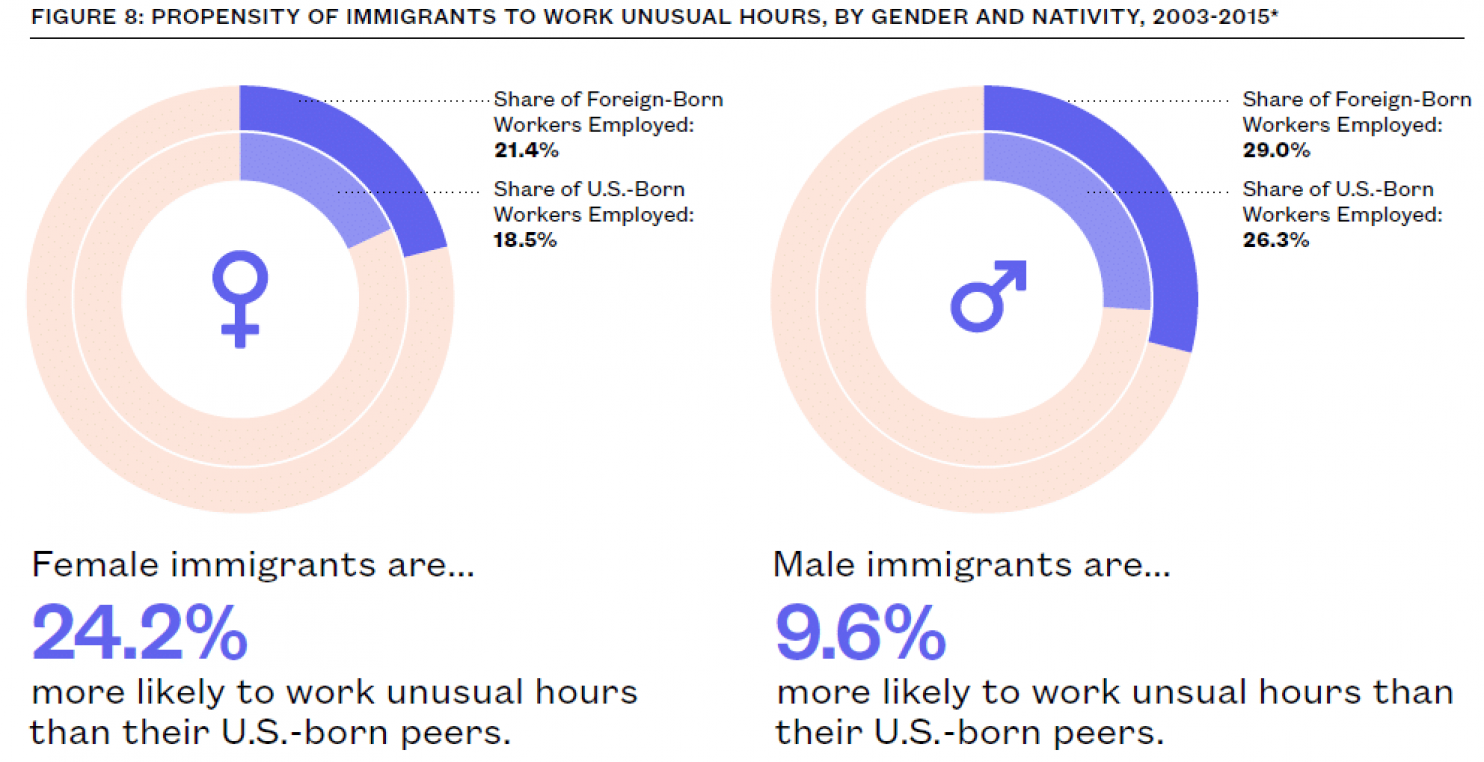
Graph from the New American Economy study
Before arriving to the United States, Mannan was selling vegetables in the streets of Pakistan, since the age of 12. His mother raised cattle and sold milk and his father was a construction worker who had gone to Libya in search of work.
Mannan was 26 when he arrived in the United States. After six months working as a cashier at a gas station, he was scheduled to work during the day but he continued working in his night shifts for extra pay. His employer sponsored his work visa within a year. He also started managing three gas stations and was trained as a mechanic.
After he received his green card, his employer sold the gas stations and moved overseas. Mannan mended together a living by working three different jobs – he was collecting urine specimens at a medical center, driving an airport shuttle and delivering car parts for Ford.
.jpg) Kazi Mannan working at his restaurant. (Photo credit: Washington Post)
Kazi Mannan working at his restaurant. (Photo credit: Washington Post)
In due course, he bought a Sedan and started earning $800 a day working as a driver for an executive car service. It was enough money that allowed him to quit his other jobs.
“I was sleeping in my car and washing up my face at McDonald’s, and just kept going,” he said.
He kept on working until he started his own car service and in 2013 he opened up a Pakistani-Indian restaurant in Washington, named after his mother Sakina Halal.
Mannan who is now a 47-year-old father of three sons, still works long hours, filling in different roles that needs to be filled as chef or waiter, if one of his employees quit, fall ill or are on vacations.
His success has enabled him to be more philanthropic. He has started a school for 200 orphans in Pakistan and provides more than 6,000 meals a year to the homeless in Washington, he says.
.jpg) Kazi Mannan serving food to the customers (Photo credit: Washington Post)
Kazi Mannan serving food to the customers (Photo credit: Washington Post)
In 2016 in an interview to international network of street papers (Street Sense), he said the experience of suffering from poverty in Pakistan has never left him, something he carries with him every day. “I experienced, even though I wasn’t homeless, the poverty, the lack of a lot of basic necessities.”
Mannan welcomes any hungry, homeless person to eat free at his restaurant.
“I believe strongly, through my faith, that I’m supposed to share with others, and I will not be poor because I share.”
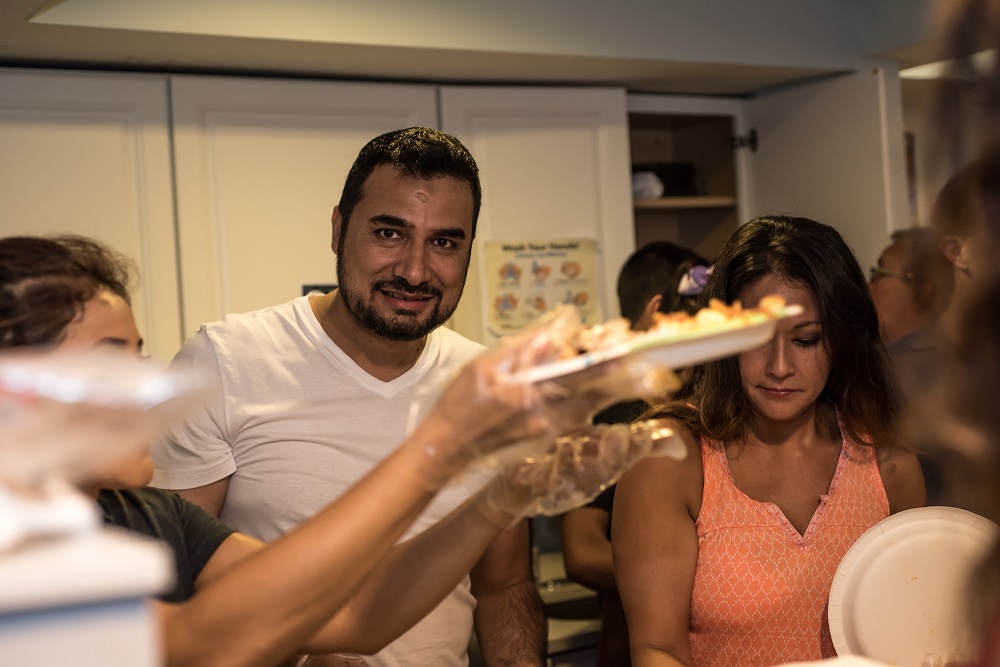 Resturant owner Kazi Mannan serving food at Georgetown Ministry Center. (Photo courtesy: street sense/insp.ngo)
“I’m very fortunate that I can offer this,” Mannan adds. “I’m not afraid of going broke or anything because I don’t give anything from myself. It comes from God. God provides me, and I’m just sharing it.”
“I am now part of this American society as an immigrant contributing to this country,” he said. “The majority of immigrants have the same goals – to work hard and bring prosperity to their families. Keep immigration if you want to keep America great.”