Summary Pakistan has raised the grave issue with 6 different international powers including the US.
LAHORE (Dunya News) – Dunya News program “Dunya Kamran Khan Kay Sath” Friday revealed that the Indian ‘spy’ Kulbhushan Yadav, arrested earlier from Balochistan, met twice with Indian Intelligence agency Research and Analysis Wing’s (RAW) head Rajinder Khanna in the past 6 months.
According to the details, the arrested Indian RAW agent used to run a secretive terrorist operation against Pakistan with millions of dollars, while sitting in a jewellery shop he had opened in Iranian city of Chabahar.
It was further revealed that Yadav was also in contact with Afghanistan’s Intelligence agency.
The RAW agent had also acquired Quranic education.
Pakistan has raised the issue with 6 different international powers including the US while orders have also been issued to all Pakistani Embassies.
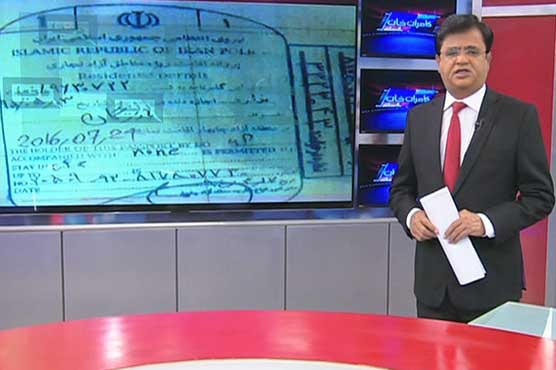
Dunya News’ senior anchor Kamran Khan has further revealed that the RAW agent hails from Mumbai and possesses a passport registered under the name Hussain Mubarak Patel. His passport number is L9630722 that bears Iranian visa with April 16, 1970 mentioned as the date of birth.
The Indian spy joined RAW in 2013 while served the Indian naval intelligence in the past with his number being 41558. He was earlier appointed at Iran’s port Chabahar. The spy used to live with his wife and two children.
Reportedly, the RAW officer sneaked into Balochistan through Iranian border.
Foreign ministry’s statement described the incident as the "illegal entry into Pakistan by a RAW officer and his involvement in subversive activities in Balochistan and Karachi".
Last year, Pakistan’s permanent representative at the United Nations (UN), Maleeha Lodhi had handed over evidences of Indian interference in Balochistan and other parts to UN Secretary General Ban Ki-moon.
Balochistan, Pakistan’s largest but least developed province, has been battling terrorism for past years while the army has repeatedly claimed that it is promoted by states hostile to Pakistan such as India.
On the other hand, Karachi, a city of 20 million and economic hub, is frequently hit by religious, political and ethnic violence.