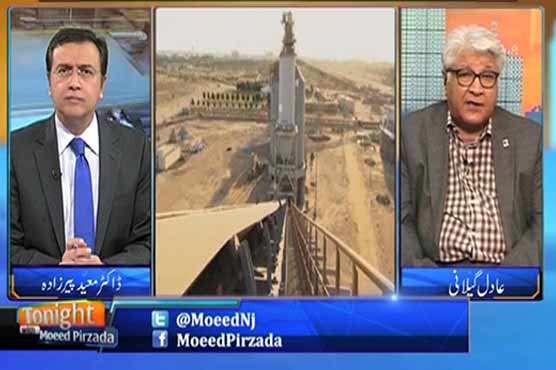
Summary The analysis was given in the program Tonight with Moeed Pirzada.
ISLAMABAD (Naeem Qurban) - In “Tonight with MoeedPirzada” (1st November, 2015) interesting contradictions were pointed out between the political rhetoric of Prime Minister Nawaz Sharif and the actual performance of his government regarding Foreign Direct Investment.
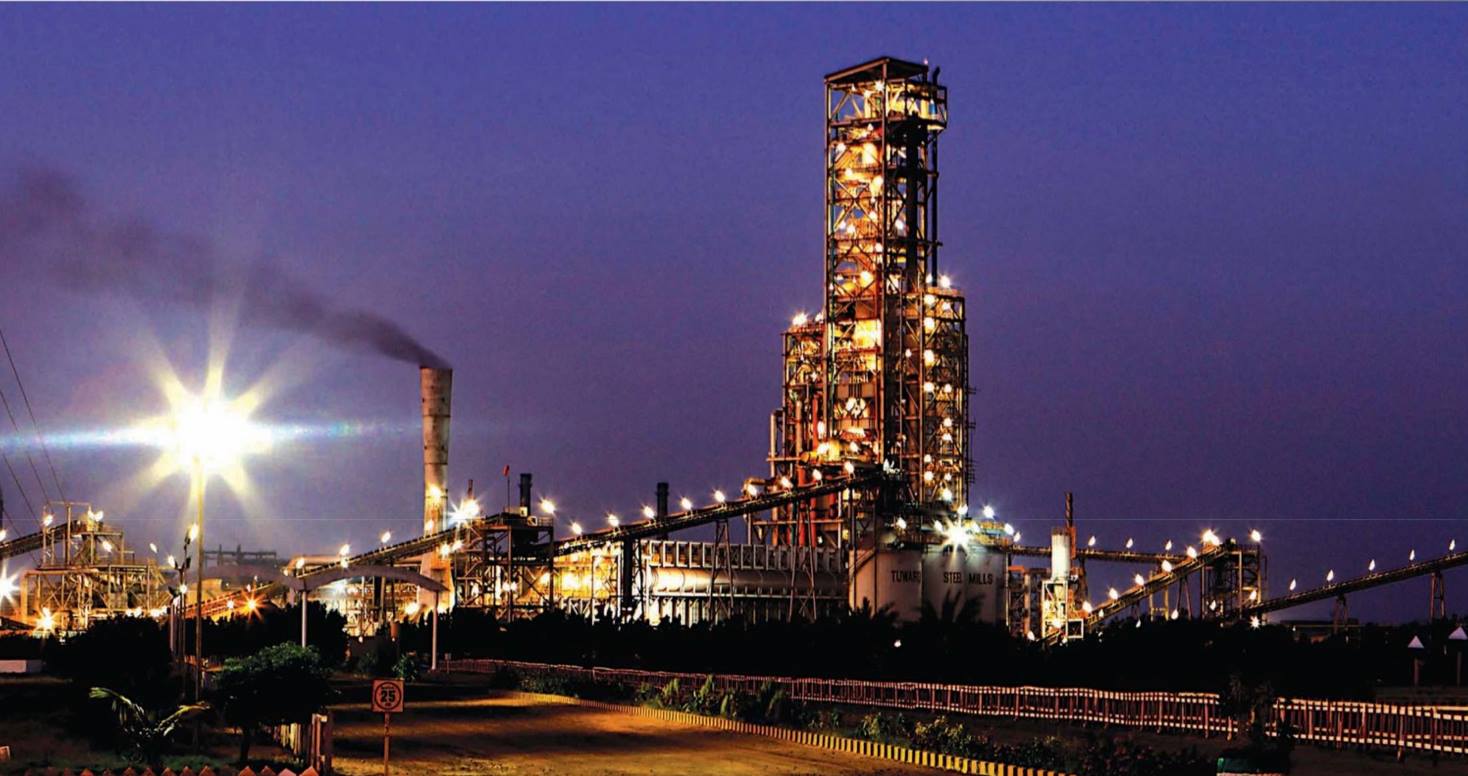
Prime Minister Nawaz Sharif during his recent visit to Washington, in October 2015, appealed to Pakistani American diaspora to invest in Pakistani industry. He extended personal guaranties and assurances to protect their investments. In his program Dr. Pirzada pointed out that such political rhetoric sounds good but the reality of the government policies are exactly opposite. He then presented the case of “Tuwairqi Steel Mills Limited” (TSML) that was jointly established by leading Saudi and South Korean steel manufacturing giants, in Port Qasim Export Processing Zone, under a MOU signed with the Government of Pakistan in 2004 but is now unfortunately in a process of being dismantled to be taken out of Pakistan.
.jpg)
Dr. Pirzada explained that TSML can produce 1.3 Million Metric Ton (MMT) of high grade steel annually and has the inbuilt capacity to expand to an annual production of 1.5 MMT. This project, a joint collaboration between Al-Tuwairqi Holdings (ATH)of Saudi Arabia and Pohang Iron and Steel Company of South Korea (POSCO) has already invested $340 Million in erecting the plant under the assurance given by the Government of Pakistan through the MOU of 2004 which was further strengthened by the Gas Sale Agreement (GSA) and the Implementation Agreement reached in 2006 and 2007 respectively. This project had to expand with forward and backward integration with an additional foreign capital investment of $900 million to achieve its maximum potential of 1.5 MMT per year. International feasibility of the project was prepared by prestigious British company McLellan on the basis of the assurances extended by the Government of Pakistan.
Plant successfully started to produce high grade steel in May 2013.However, it is now lying shut because Finance Minister Ishaq Dar, to this date, has not been able to decide a preferential rate for the supply of gas as a raw material for the plant. MOU of 2004 clearly envisaged that since the foreign investors TSML and POSCO were bringing the latest technology of producing steel by “Direct Reduction of Iron” (DRI) which consumes gas as a raw material – as is used in fertilizer industry. Therefore government will ensure a preferential rate to supply 40 million cubic feet of gas as a raw material; as done in case of fertilizer industry. It was decided that the price formula will be worked out on the basis of the average cost of gas supplied to similar plants in the region. Five countries of Middle East (KSA, UAE, Iran, Bahrain & Oman) were later selected for determining an average tariff rate for gas as raw material as they constituted the competing export market for the steel products of TSML from Port Qasim.
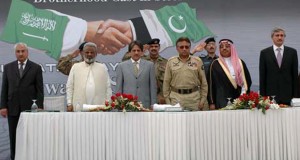
It was pointed out in the program that matter is shuttling between different Ministries and Departments without any decision. OGRA that was identified as the rate determiner in original MOU of 2004 recommended that since DRI represents a new technology to be used in Pakistan for the first time, therefore the federal government need to determine a preferential rate in view of its MOU in 2004 – and in view of similar concessional rate for fertilizer industry. After wider consultation with stake holders and the engineering and scientific community, Ministry of Industries(MOI) recommended to the Economic Coordination Committee of Cabinet (EEC) that a preferential rate similar to the one extended to the fertilizer industry be extended to the steel plant. It may be mentioned here that DRI, as a technology, has an efficiency of 86% in terms of gas utilization as a raw material compare to 75% for fertilizer industry. The Ministry of Industries also pointed out the TSML, in view of the requests by the government, is prepared to extend an equity of up to 15% to the Government of Pakistan without any cost to the government. Third such summary, sent by the Ministry of Industries in November 2014 is still pending without any decision by the EEC of the cabinet. Meanwhile the international investors have lost all hopes and have invited interested parties to bid for the steel plant. Such bidders from Iran have already inspected the plant on 30th Oct; more such parties are about to follow. There is now a real risk that a steel plant that represents an international investment of $340 million on the ground, that is guaranteed to receive another $900 million within the next 5 years and that represents a significant transfer of modern technology into Pakistan’s decadent steel industry will be dismantled and taken away to some foreign country.
Dr. Pirzada pointed out that he, and his team, have examined all government documents and records and in view of the MOU, Implementation Agreement and EPZA Rules there appears to be no convincing reason for the government not to decide a preferential rate for this important steel plant – especially since government extends similar facility to the fertilizer industry which uses gas as a raw material. He however, pointed out the certain sources that spoke to the program believe that some powerful influences within Pakistan are not letting the government to take up this case on merit.
He appealed to the Prime Minister of Pakistan and to the Supreme Court to take immediate notice so that the strategic interests of Pakistan, in a very important industry, can be safe guarded. A steel plant bigger and modern than Pakistan Steel, already functioning in Pakistan, to be dismantled and taken away to Iran will be a national tragedy.