Summary We have asked the prime minister to replace this committee with an effective forum, says Irfan.
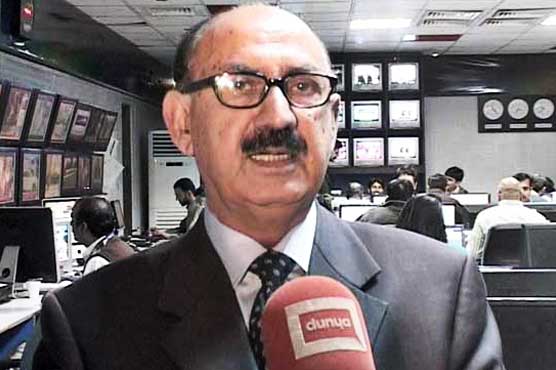
ISLAMABAD - Coordinator of the government committee Irfan Siddiqui has said that initial phase of contacts between Taliban and the government has been completed and now both the sides will hold direct talks to curb terrorism.
Talking to media in Islamabad on Thursday‚ he said the government committee has proposed the Prime Minister to devise a new mechanism to hold direct talks with the Taliban.
Irfan Siddiqui said the Prime minister has agreed to facilitate the Taliban committee to go to Waziristan for talks with Taliban and a member of government committee will also accompany the Taliban committee in this visit.
He said there should be no terrorist attacks after ceasefire as these can disrupt the dialogue process.
Maulana Samiul Haq told media that the meeting with Prime Minister was positive. He stressed the need for unmasking the elements behind the violent acts aimed at sabotaging the dialogue process.
Peace negotiators representing the Pakistani government and Taliban insurgents called on Thursday for higher-level talks between the two sides, following a breakfast meeting hosted by Prime Minister Nawaz Sharif.
Talks aimed at ending the seven-year insurgency that has claimed thousands of lives resumed on Wednesday, following a two-week suspension after militants killed 23 kidnapped soldiers.
The military retaliated with a series of air strikes that it said killed more than 100 militants, and the Taliban last weekend announced a month-long ceasefire.
But negotiations have so far been conducted through teams of go-betweens, which has hampered their effectiveness according to some observers.
"We have asked the prime minister to replace this committee with an effective forum," said government chief negotiator Irfan Siddiqui after Thursday s meeting.
"We believe that in the next phase, sensitive issues and demands will come up and we need to have a mechanism for direct contacts."
Rahimullah Yusufzai, another government negotiator, told AFP: "We have proposed that those who have authority to make decisions should be part of this committee. There should be representatives from the government and the military in the committee."
On the Taliban side, chief negotiator Maulana Sami-ul-Haq said his team was "satisfied with the round of talks this morning with Prime Minister Nawaz Sharif".
"It was decided in the meeting that now the time has come to strengthen the committees and empower them more," he added.
Haq said his team might have to return to the Taliban s base in the tribal areas of northwest Pakistan in a day or two to report back to their leadership.
A statement issued by Sharif s office said he was committed to peace.
"As prime minister it is my constitutional, religious, national, moral and human duty to stop the continuation of fire and blood and give peace to the country and citizens," it said.
The peace talks, which began in February, were a key campaign pledge for Sharif before he was elected to office for a third time last year.
But many analysts are skeptical about their chances for success. Many regional deals between the military and the Taliban have failed in the past.