Summary The PM says the government is focusing on a long term strategy to resolve the power crisis.
GUANGZHOU (Dunya News) - Prime Minister Nawaz Sharif along with his delegation has arrived in Guangzhou where he is to visit China Southern Power Grid Company.
He will be briefed about the power distribution and supply of the company.
Mian Nawaz Sharif will also meet with the Governor of the Guangzhou province.
Earlier, Prime Minister Muhammad Nawaz Sharif expressed the resolve to eliminate all bottlenecks leading to investment in energy.
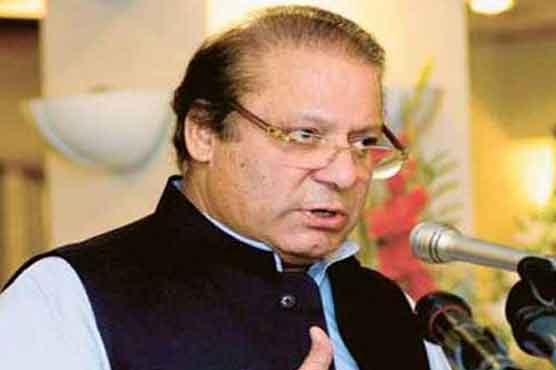
Addressing Pak-China Energy Forum in Shanghai on Saturday‚ he said resolution of energy issues is the top priority of his government.
He said his government will welcome foreign investment particularly from China in energy sector. The prime minister said his government has adopted pro-business and pro-investment friendly policies.
He hoped that persisting power crisis in Pakistan will be overcome with the cooperation of China. He said the solution to energy crisis is part of PML-N agenda and we will streamline the electricity system in the country.
Nawaz Sharif said Pakistan and China have agreed to establish economic corridor to boost trade and business activities in the region.
Nawaz Sharif said the government has been implementing energy roadmap. Although the short term policies will provide temporary relief but we are focusing primarily on long term strategies.
He reiterated that the government will provide uninterrupted power to industries to give a spur to business activities.
The prime minister said that under Pak-China Trade Cooperation Pact‚ both the countries are cooperating in thirty-six projects in different sectors. He said Pak-China friendship has been steady and strong despite political changes in the two countries. Truly we are Iron Brothers as Premier Li Keqiang had remarked during his recent visit to Islamabad.
The Prime Minister said that Chinese financial institutions are also investing in Pakistan. They have recently agreed upon currency swap programme. He also stressed more free trade through sustained institutional mechanism to stimulate growth‚ development and enhanced connectivity.