Summary If appeal rejected, Pervez Musharraf is likely to hold a press conference at 5:00pm today.
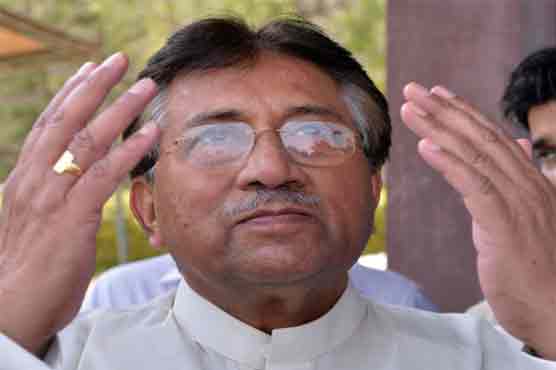
ISLAMABAD (Web Desk) – Former president Pervez Musharraf on Thursday decided to move to Supreme Court against Islamabad High Court’s decision.
Police guarded the main gate of the luxury property and blocked off access to Musharraf s street in the upmarket suburb of Chak Shahzad but did not push back a huge bevvy of TV trucks and other media camped outside the gate.
Dr Amjad, a senior official of the All Pakistan Muslim League (APML), said that Musharraf would appeal against the arrest order in the Supreme Court, but if the order is upheld, then he expected the authorities to put him under house arrest.
"Musharraf is composed and confident. We will go for an appeal in the Supreme Court today. If the court rejects our appeal, we will present ourselves to the law," APML spokesman Muhammad Amjad said.
"I think if an arrest is necessary, the authorities will declare the farmhouse a sub-jail," he added.
The Supreme Court is already hearing a separate petition from lawyers, demanding that Musharraf go on trial for treason for subverting the constitution by imposing emergency law in November 2007, a move which hastened his downfall.
His detractors have called for him to face the death penalty.
A senior police official said on condition of anonymity that normal procedure would have been an immediate arrest at the court, but as no effort appeared to have been made to detain him there, house arrest was the most likely scenario.
"Since he left the court and nobody arrested him there his house will now most likely be declared as sub-jail and he will be put under house-arrest," he said.
The case is one of three against Musharraf in the Pakistani courts. He is also accused of conspiracy to murder opposition leader Benazir Bhutto in 2007 and over the death of a Baloch leader Nawab Akbar Bugti during a military operation in 2006.
The retired general seized power in a bloodless coup in 1999 which was widely welcomed at the time in Pakistan. He ruled until August 2008 but has had a rude awakening since returning home after four years of self-imposed exile on March 24.
He secured pre-arrest bail in connection with all three cases before leaving Dubai, but his welcome has been dismal ahead of the May 11 election.
On Tuesday, he was disqualified from running for parliament, ending his ambitions of a political comeback built on the promise that he alone could "save" the country from poverty and insecurity.
A day earlier, he told journalists that he was prepared to go to jail, if ordered by the courts, at a press conference meant to unveil his party manifesto but overshadowed by a barrage of questions about the cases against him.
The US-based watchdog Human Rights Watch called on the military authorities overseeing Musharraf s protection to ensure that he presents himself for arrest.
"General Musharraf s act today underscores his disregard for due legal process and indicates his assumption that as a former army chief and military dictator he can evade accountability for abuses," said Pakistan director, Ali Dayan Hasan.
"Continued military protection for General Musharraf will make a mockery of claims that Pakistan s armed forces support the rule of law and bring the military further disrepute that it can ill afford," he added.
On Wednesday, a court in Rawalpindi also extended his bail until April 24 over Bhutto s killing. The former prime minister died in a gun and suicide attack at the end of an election rally in the garrison city on December 27, 2007.
In 2010 a UN report said Bhutto s death could have been prevented and accused Musharraf s government of failing to give her adequate protection.
Bhutto s son, Bilawal Bhutto Zardari, who is chairman of the outgoing Pakistan People s Party, has accused Musharraf of her murder.