Summary President Zardari on Wednesday visited Tehran to discuss the gas pipeline project.
(Web Desk) – The Pak-Iran gas pipeline project has run into repeated problems, including Pakistan s difficulty in finding funds and opposition to the project from Washington, which has slapped Iran with a raft of sanctions over its nuclear activities.
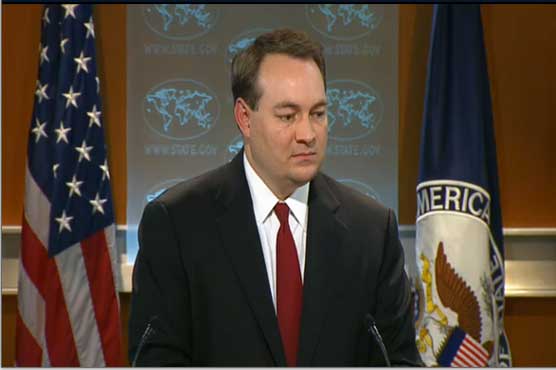
The US State Department on Wednesday said it was providing Pakistan with alternatives that would avoid any sanctions violation.
"We recognise that Pakistan has significant energy requirements but we really think there are other long-term solutions to Pakistan s energy needs," said deputy acting spokesman Patrick Ventrell.
"And so we ve been assisting as a government to contribute to the alleviation of the energy crisis in Pakistan," he said.
"It s in their best interests to avoid any sanctionable activity, and we think that we provide and are providing ... a better way to meet their energy needs in some of the assistance we re providing."
In 2010, Iran and Pakistan agreed that Tehran would supply between 750 million cubic feet (21 million cubic metres) and one billion cubic feet per day of natural gas by mid-2015.
Islamabad has said it will pursue the project regardless of US pressure, saying the gas is needed to help Pakistan overcome its energy crisis that has led to debilitating blackouts and suffocated industry.
Iran has almost completed the pipeline work in its territory, but Pakistan has not yet started construction of 780 kilometers (490 miles) of the pipeline on its side, which is said to cost some $1.5 billion.
Sanctions-hit Iran finally agreed to finance one third of the costs of laying the pipeline through Pakistani territory to Nawabshah, north of Karachi, with the work to be carried out by an Iranian company.
Pakistani officials in mid-December said Iran had promised a $500 million loan and that Islamabad would meet the rest of the cost.
Tehran has been strangled by a Western oil embargo that has seen its crude exports halve in the past year, while Pakistan has an acute need for energy and plans to produce 20 percent of its electricity from Iranian gas.
Iran has the second largest world gas reserves after Russia and currently produces some 600 million cubic metres a day, almost all of which is consumed domestically due to lack of exports means.
The only foreign client is Turkey, which buys about 30 million cubic metres of gas a day.
Tehran also plans to sell its gas to two other neighbours, Iraq and Syria. The three countries agreed in 2011 to build a pipeline, with the work already started on the Iranian side.