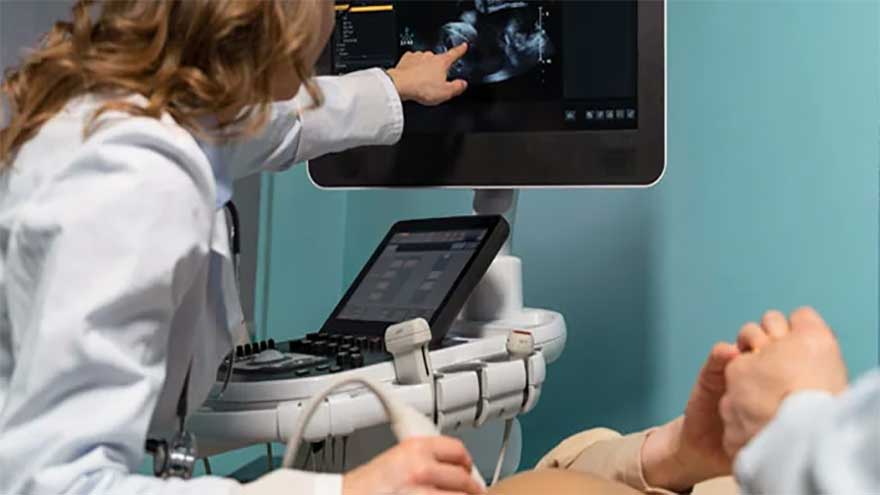
Summary Pregnant women across the UK are typically offered two ultrasound scans, one between 11 and 14 weeks and another between 18 and 21 weeks.
(Web Desk) - Experts say delays in ultrasound scans are putting pregnant women and cancer patients at risk. The delays are due to a shortage in staff.
NHS sonographers, who carry out scans during pregnancy and play a key role in detecting cancers, report that one in four roles in England remain unfilled.
Shortages are even more severe in regions such as the North West and South East.
The Society of Radiographers, which represents sonographers, said demand for ultrasound services has risen sharply across healthcare. However, training pipelines have not kept pace with the increase in demand.
Pregnant women across the UK are typically offered two ultrasound scans, one between 11 and 14 weeks and another between 18 and 21 weeks.
These scans are used to estimate delivery dates, monitor fetal growth and identify potential health conditions affecting organs such as the brain, heart and spine.
Some women require additional scans depending on their medical needs, placing further strain on already stretched services.
Katie Thompson, president of the Society of Radiographers and a practising sonographer, said a lack of staff is particularly affecting urgent, short-notice appointments:
“If somebody’s coming in with concerns about their pregnancy, about their baby, they would like to be scanned that day, if possible.”
But that level of responsiveness is no longer achievable in many hospitals, leading to delays in identifying potential complications.
Reports suggest some departments are struggling to accommodate emergency cases.
In some instances, sonographers are being reassigned from other services to maintain antenatal care, creating knock-on delays elsewhere in the system.
Ultrasound scans are also essential for diagnosing cancers and assessing organs including the liver, kidneys and spleen.
Sonographers say delays in these areas could carry serious consequences for patients.
They warn that waiting longer for scans could be “really dangerous for the patient”.
Dr Jenny Barber, consultant obstetrician and vice president for clinical quality at the Royal College of Obstetricians and Gynaecologists, described the high vacancy rate as “very concerning”.
She added that demand is increasing as clinicians see more women with complex pregnancies, placing further strain on services.
Dr Barber said “meaningful investment in the maternity workforce” is urgently needed to address the issue.