Updated on
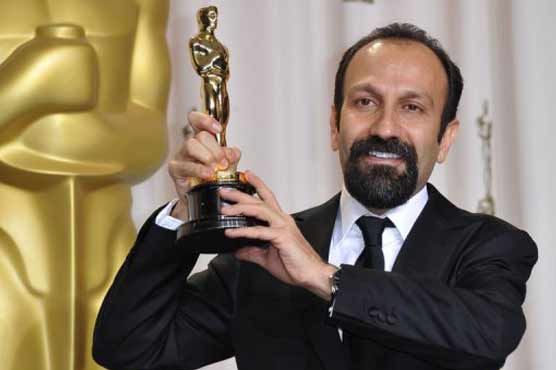
Summary The United States has also praised Iranian film director Asghar Farhadi for his Oscar win.
Iran has hailed the countrys first Oscar-winning film as a triumph over arch-foe Israel after an Academy Award race with its own subplots: Iranian officials giving a grudging nod to cinema and Israeli audiences flocking to see a made-in-Tehran drama.On Monday, Irans state-spun praise for A Separation, which beat out an Israeli film and three others in the foreign language category, was mostly wrapped in patriotic boasting as a conquest for Iranian culture and a blow for Israels perceived outsized influence in America.Yet the high-profile attention by the Islamic leadership also represented a rare stamp of approval for Irans movie industry.Iranian filmmakers have collected awards and accolades worldwide for decades, but Iranian hard-liners often denounce domestic cinema as dominated by Western-tainted liberals and political dissenters. Some directors and actors have faced arrest or fled the country. In January, a well-known independent film group in Tehran, the House of Cinema, was ordered closed.Iranian hard-liners had already taken pot shots at director Asghar Farhadis film even as it racked up international prizes and pre-Oscar buzz. The film explores troubles in Iranian society through the story of a collapsing marriage. Iranian conservatives were upset with the themes of domestic turmoil, gender inequality and the desire by many Iranians to leave the country.The divide touches on much deeper fissures in Iran.Irans young and highly educated population nearly half born after the 1979 Islamic Revolution feel increasingly estranged from a theocracy that allows no room for political opposition, has tried to muzzle the Internet and is growing more isolated by its defiant nuclear policies.Farhadi, in his acceptance speech Sunday in Los Angeles, said he hoped the Oscar would raise awareness of Irans sizable artistic achievements and rich culture that has been hidden under the heavy dust of politics.That has been the case in of all places, Israel, which feels its very existence threatened by Iran.The Iranian film has drawn tens of thousands of Israeli movie-goers since it opened in mid-February. Some came to see the Oscar competition for Israeli director Joseph Cedars Footnote, the saga of a Talmudic scholar. But many were drawn by a chance to glimpse inside Iranian society.Its very well acted, exceptionally well written and very moving, said Israeli film critic Yair Raveh. Ultimately you dont think about nuclear bombs or dictators threatening world peace. You see them driving cars and going to movies and they look exactly like us.After a Sunday screening in Jerusalem, 70-year-old Rina Brick said she was surprised by the humanity of the Iranian bureaucrats portrayed in the film.Our image of how Iran works is less democratic than we see here, she said. The judge, the police, everyone behaves as if they are in a Western country.Still, Irans nuclear program was on the minds of some. Israel has not ruled out military strikes against Irans nuclear facilities, which the West fears could be used to develop weapons. Tehran insists they are for peaceful purposes like energy production.Moshe Amirav, a political science professor at Hebrew University in Jerusalem, said he didnt stop thinking about the bomb the whole time he was watching A Separation.I said, what a contrast that we see this Iranian film with such admiration, and then when we leave we think about how they want to kill us, Amirav said.Iranian cinema has reaped praise and prizes at top festivals for decades. But while the government often highlights sporting achievements and technological leaps as a source of national pride, it is typically dismissive of international cultural and entertainment awards.However, taking the Oscar over an Israeli rival was too powerful for state image builders to ignore.A state TV broadcast said the award succeeded in leaving behind a film from Israel. Javad Shamaghdari, head of the state Cinematic Agency, portrayed the Oscar win as the beginning of the collapse of Israeli influence that beats the drum of war in the U.S. and elsewhere.Still, Iranian artists and many fans did not try to score any propaganda points and were simply delighted by the countrys first Oscar.Tahmineh Milani, director of the acclaimed 2005 film Unwanted Woman, said the Oscar was a source of national pride that revived hope in the hearts of all Iranians.I feel fresh air in my lungs, said Erfan Khazaei, an art student at Azad University, who watched the Oscar ceremony on satellite TV with four friends. Now we are more hopeful about the future.The Academy Awards were not broadcast live on Iranian TV, and many Iranians watched via satellite dishes, which are illegal but widely used. Clips of Farhadis acceptance speech were later aired on state TV.A Separation, tells the story of a couple heading for divorce and dealing with domestic troubles, including a young child and an aging parent. It portrays a husband who is protective of his father, who is suffering from Alzheimers. He is in conflict with his wife, who wishes to emigrate. Their daughter is torn between them.While its themes are not overtly political, ultra-conservatives denigrated the film as an indirect slap at the country.Prominent hard-line sociologist Ebrahim Fayyaz called it a black realistic film that portrays the country as an old man, a symbol of tradition and the past who is afflicted with a mind-crippling disease.He said the movie suggests emigrating to the West as a solution. The West awards movies that are in the direction of their policies, he told the Nasim news agency.Iranian authorities have long had an uneasy relationship with the countrys filmmakers. The leadership gives latitude to explore many social topics, but draws a sharp line on works with clearly anti-establishment overtones.In January, the regime ordered the closure of the House of Cinema, an independent film group that had operated for 20 years and counted Irans top filmmakers, including Farhadi, among its members.Officials said it lacked the proper permits, but artists and others contend it was a political decision because the group often took liberal stands contrary to the governments cultural policies. Last month, Farhadi proposed that Iranian authorities allow a vote among artists about its fate.Iranian cinema has for years been one of the nations main cultural exports, but also the target of political crackdowns.Last year, film director Jafar Panahi, who won awards at Cannes, Venice and other major film festivals, was sentenced to a six-year house arrest and a 20-year ban on filmmaking after being convicted of making propaganda against Irans ruling system.In 2007, the Cannes jury prize went to the animated film Persepolis based on Marjane Satrapis graphic novels about growing up during the 1979 Islamic Revolution. She now lives in self-exile in Paris, fearing possible arrest if she returns to Iran.