Summary All political parties Tuesday agreed to increase the education budget by 5-7% in next five years.
ISLAMABAD:-All of them stressed that uniform education should be introduced in the country for rule of law and uplift of democratic culture.
The following political representatives made it to the forum: Syed Bilal from Jamaat e Islami, Jalil Jan from JUI, Salahuddin Sheikh from MQM, Fauzia Naz from PML_Q, Shehla Raza from PPP and Hina Manzoor from PTI.
They also were unanimous in their view that capacity building of teachers was must for improving education system in Pakistan as one of key party agenda during and after elections.
The civil society gave slogan of ‘Vote for Education” during the roundtable discussion with political parties organized by Pakistan Coalition for Education and Oxfam GB.
In an unfortunate circumstance, ANP were not able to participate and PML-N despite several entreaties and a letter requesting Nawaz Sharif to send representatives, regret to participate in the dialogue.
Talking to policy dialogue Ms. Zehra Arshad National Coordinator from PCE said that as per article 25 A of the Constitution of Pakistan, the state is responsible for provision of free and compulsory education to all children of the age of five to Sixteen years. Keeping this in view, the state is mainly responsible to ensure the provision of basic facilities more specifically education to the citizens.
Unfortunately, Education is never the priority of any government, evidences reflect that official literacy is still 56% with wide gender and rural-urban disparities, high dropout rates across the country, 30% of children receive secondary education and most importantly, the lowest budget (less than 2% of GDP) among all the South-Asian countries are some of the examples of deteriorating status of education in Pakistan.
Harris Khalique said that all parties should focus on uniform education system, medium of instruction, availability trained human resource and teachers, effective utilization of allocated budget and increase in GDP and appointment of female teachers at primary level .
Shehla Raza Deputy Speaker Sindh Assembly said that education is like a backbone of the economy in each country. There are high drop outs from class1-2 and then class 5-6 due to poverty. They have no access to school due as there are one third of middle schools as compare to primary, among dropout majority of them girls. She stressed the need of collaboration between executive, CSO and political representatives to deal with issues related to education.
Bilal from Jamat-i-Islami stressed the need of one strong education policy according to constitution which cannot be upheld during any political government’s regime, he said that if JI comes to power, it will work to bring 100% literacy during five years. He said that these dialogues help to multiply effort of all stakeholders who are working for the public policy domain.
JUI Abdul Khalil Jan and Ms Banori stressed upon uniform education system in Pakistan. They also suggests that and madrassa education should also be included in the minimum common agenda for education.
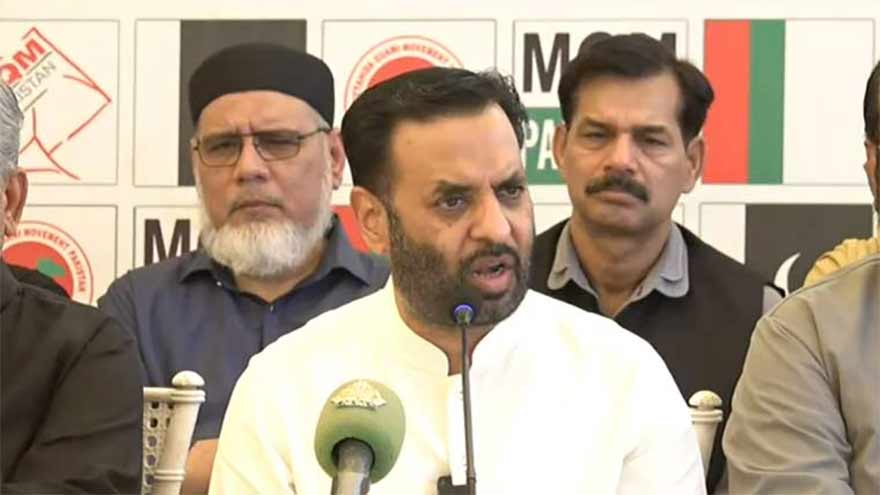
Salahuddin Shiekh from MQM said that there should be one school in the community 5000 population. He said that MQM will also work to raise education budget upto 5% of GDP. He also stressed that these dialogues should be on regular basis and MQM acknowledge PCE initiatives in this regards.
Fozia from PMLQ said that her party was pondering over increasing number of trained teachers.
PTI Hina Manzoor said that there should be no political interference in transfers, appointment and other related issues to education. She said her party had drafted a comprehensive paper to improve the status of education and it would be introduced if her party comes to power.