Updated on
Summary The ADP says increase in school distance will decrease girls' enrolment by 20 per cent.
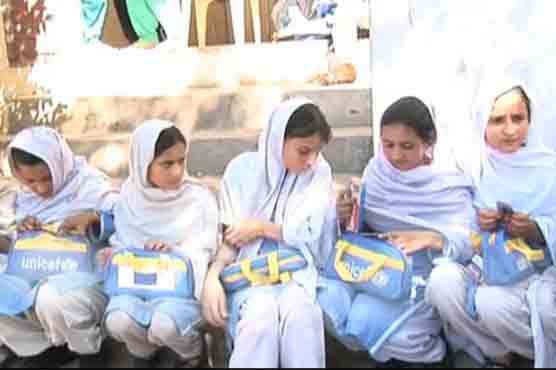
The Asian Development Bank (ADB) has said that in Pakistan a half kilometer increase in the distance to school will decrease girls enrolment by 20 per cent.The Asian Development Bank in its latest report issued on Tuesday said that in South Asia, more women die in childbirth – 500 for every 100,000 live births – than in any other part of the world except Sub-Saharan Africa. The proportion of deliveries attended by skilled birth attendants is as low as 18 per cent in Bangladesh, 19 per cent in Nepal, and 20 per cent in the Lao PDR.The report said many Asian women report experiencing physical violence from their intimate partners – 30 per cent of women in Viet Nam; more than 40 per cent in Bangladesh, Samoa, and Timor-Leste; and more than 60 per cent in Kiribati, Solomon Islands, and Vanuatu. An extra year of primary school encourages girls to marry later in life and have fewer children. It also makes them less likely to experience violence and increases their eventual wages by 10-20 percent.It said in Afghanistan, Indonesia and several other countries, building local schools in rural communities has led to increases in girls enrolment rates. Only 30 per cent of women in Asia and the Pacific are in non-agriculture wage employment, with only 20 per cent in South Asia—the lowest among the worlds regions.The report further said nearly 50 per cent of women in South Asia and over 60 per cent in the Pacific Islands are still concentrated in agriculture. Unpaid work on family agricultural enterprises accounts for 34 per cent of informal employment for women in India. Gender inequality in wage differentials remains entrenched, with women typically earning 70 per cent–90 per cent less of the male wage (50 per cent in Bangladesh and 80 per cent in Mongolia).“In the East Asia and Pacific region, output per worker could be 7-18 per cent higher if female entrepreneurs and workers were in the same sectors, types of jobs and activities as men, and had the same access to productive resources,” the report added.