
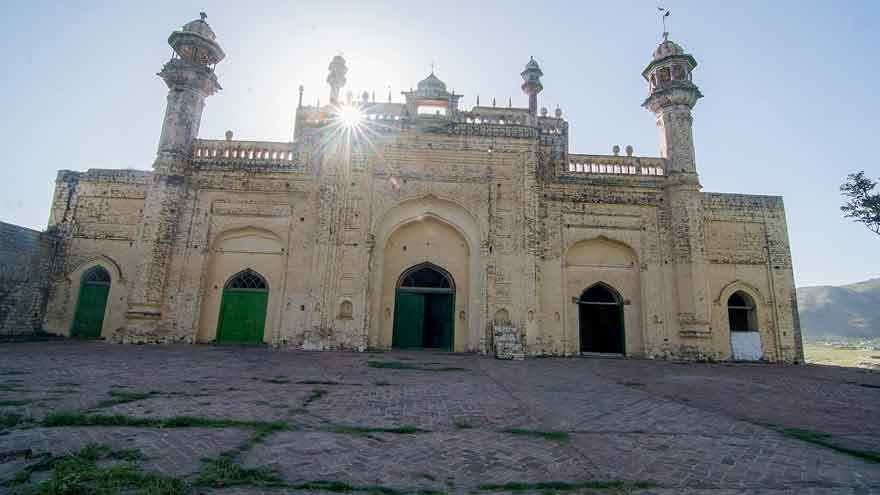
Summary Built in 1872, the 153-year-old mosque, commonly known as Rajon ki Masjid, once stood at the heart of the old town of Khanpur
(Web Desk) - Hidden beneath the waters of Khanpur Dam for most of the year, Masjid Rajgan emerges each summer as receding water levels reveal one of Pakistan's most remarkable historical landmarks.
Built in 1872, the 153-year-old mosque, commonly known as Rajon ki Masjid (Mosque of the Rajas), once stood at the heart of the old town of Khanpur. The construction of Khanpur Dam in the late 1970s submerged the town, forcing residents to relocate and leaving behind the mosque along with the nearby royal palace.
The palace had been commissioned by Raja Jehandad Khan, grandfather of former NWFP chief minister Raja Sikandar Zaman Khan, and was once regarded as one of the region's finest residences.
For many former residents, the mosque remains a powerful symbol of their roots and shared heritage.
"Our hearts are still there," recalls 82-year-old Haji Fazal Din, who grew up in the old town. "We spent our childhood listening to the call to prayer from Masjid Rajgan. Even today, visiting the site during Eid brings back memories and a deep sense of peace."
Designed by skilled craftsmen from Delhi, the mosque reflects classic Mughal architecture. It features two large and two smaller minarets, a central dome and grand arched entrances inspired by Delhi's Jama Masjid. Constructed from black stone and locally made bricks, the mosque once accommodated nearly 1,000 worshippers.
Today, however, the structure stands largely deserted and is used only for Eid prayers when access becomes possible. During the monsoon season, rising waters once again isolate the mosque, while prolonged exposure to the elements has weakened parts of the historic building. With no formal conservation efforts or permanent caretaker, sections of the mosque continue to deteriorate.
For locals, the site represents far more than an architectural monument.
Nearby lie the remains of Raja Jehandad Khan's palace, another casualty of the reservoir. Historical records indicate the palace took nearly a decade to complete and cost around Rs1.2 million, featuring imported Belgian glass and Italian tiles before it fell into ruin after the dam's construction.
Despite its historical, architectural and cultural significance, Masjid Rajgan has yet to receive official heritage protection. Conservationists and local residents have repeatedly called for preservation measures to safeguard the mosque from further deterioration.
"It is more than bricks and stone," says local elder Bashir Ahmed. "It represents our faith, our identity and our history. As long as it stands, a part of our community continues to live on."
Masjid Rajgan is among several historic sites that periodically emerge as reservoir water levels decline. In Pakistan, the Shah Daula Shrine occasionally resurfaces from Mangla Dam, while internationally, sites such as the submerged village of Aceredo in Spain, the ancient city of Heracleion in Egypt and archaeological ruins along Iraq's Tigris River have similarly reappeared during periods of drought or low water levels.
These resurfacing landmarks offer rare glimpses into the past, serving as enduring reminders of communities displaced by development projects and the resilience of cultural heritage preserved beneath the water.