Summary But the US official warned that there would be no deals, telling AFP: "We do not negotiate."
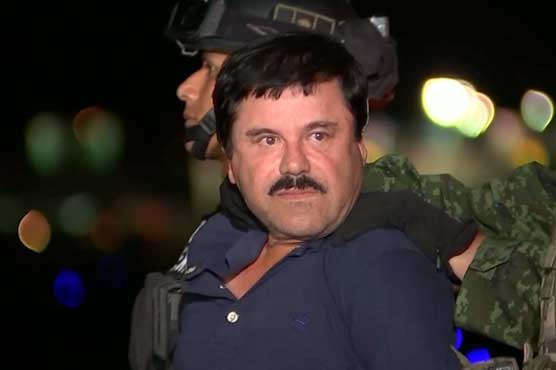
MEXICO CITY (AFP) - Mexican drug lord Joaquin "El Chapo" Guzman is expected to be extradited to the United States by the end of the year, a US official said Monday after a court approved the move.
A Mexico City judge ruled Friday that the extradition could go ahead based on cocaine trafficking charges lodged in a California federal court, judicial officials said.
But Mexico s foreign ministry, which said it received the ruling on Monday, now has 20 days to make a decision and Guzman s lawyers would subsequently have 30 days to appeal any extradition. If such an appeal is denied, another court would have to review the case.
"We re still months away," the US government official said on condition of anonymity, adding, however, that "we expect him to be extradited by the end of the year."
An extradition within the same year of Guzman s arrest would be relatively quick for Mexico s judicial system, the official said.
In a reversal, President Enrique Pena Nieto asked the attorney general s office to expedite the extradition process after he was detained in January.
Pena Nieto s government had previously balked at sending Guzman to the United States before the Sinaloa drug cartel kingpin escaped from prison in July last year.
Guzman s lawyer, Jose Refugio Rodriguez, told AFP that his client would fight the extradition unless he can negotiate the terms with US authorities.
Guzman, who was abruptly transferred to a new jail on Saturday, has hired a US lawyer and would be willing to plead guilty in return for good US prison conditions.
"If we have an agreement, (the extradition) will proceed," Refugio said. "Otherwise, we will fight extradition with everything we ve got."
But the US official warned that there would be no deals, telling AFP: "We do not negotiate."
- Prison transfer -
===================
Guzman was unexpectedly transferred on Saturday from the Altiplano maximum-security prison near Mexico City to another penitentiary in Ciudad Juarez, a city bordering Texas.
Mexican officials said the move had nothing to do with the extradition process and that Guzman was moved because of work being done to boost security at Altiplano, some 90 kilometers (55 miles) west of Mexico City.
Eduardo Guerrero, head of the national penitentiary system, defended the decision, saying the Ciudad Juarez prison was secure even though it was ranked last among the country s federal penitentiaries by the National Human Rights Commission in 2015.
"It s a prison that today fulfills all the necessary characteristics to hold high-profile inmates," Guerrero told Radio Formula.
Another Guzman lawyer, Andres Granados, said he was not allowed to see his client on Monday. A heavy police and military presence was seen on the outskirts of the prison.
- Extradition: A matter of when -
===================================
Analysts questioned Guzman s transfer, given that Ciudad Juarez is a bastion of the Sinaloa drug cartel.
The drug capo first broke out of a high-security prison in western Mexico in 2001 by hiding in a laundry cart. He was arrested in February 2014.
He escaped from the Altiplano prison in July 2015 through a 1.5-kilometer (one-mile) tunnel that led to his cell shower, but he was sent back there after being recaptured in January.
"It s not logical that they would move an individual with money, wealth and power like Guzman, who has already escaped from the two most maximum security prisons that Mexico has," said Mike Vigil, a retired chief of international operations at the US Drug Enforcement Administration.
Vigil said the Mexican government will likely extradite him to the United States and US authorities will never negotiate with the drug lord, adding that the DEA already rejected an attempt by Guzman to negotiate with the agency in the 1990s.
"It s too risky for the Mexican government to keep him in any penitentiary in Mexico," the former DEA official said. "He s going to be extradited. It s just a matter of when."