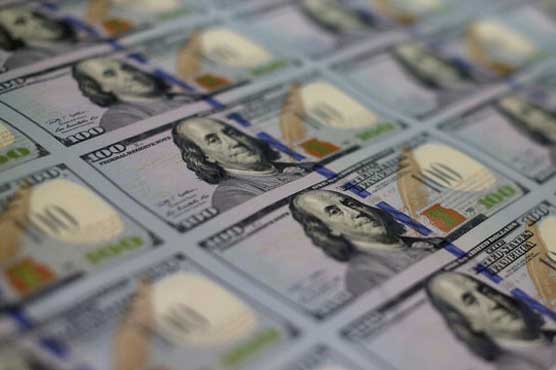
Summary Federal authorities have charged a man of shipping bogus bills to the United States.
PITTSBURGH: (AP) - Federal authorities have charged a man with leading an international counterfeit money operation based in the African nation of Uganda, and shipping bogus bills to the United States.
Ryan Andrew Gustafson, 27, has been charged with conspiracy to commit offenses against the United States and counterfeiting acts committed outside the U.S.
"In short, these bills were being bought and sold in cyberspace," U.S. Attorney David Hickton said Thursday.
Gustafson was arrested Dec. 11 in Uganda and investigators seized sophisticated printers and other equipment allegedly used to make the high-quality fake $20, $50 and $100 bills. Authorities claim he made more than $2 million in U.S. currency, most of it passed in Uganda, but about $270,000 of which was shipped to the United States.
Hickton said Gustafson will be returned to the U.S. after Ugandan officials prosecute him on counterfeiting charges. The complaint indicates Gustafson is also wanted by Kenyan authorities for unlawful possession of an unspecified gun and two electric stun guns. Ugandan and U.S. authorities also found counterfeit Euros, Indian rupees, and fake currency from Uganda, Congo and Ghana when Gustafson was arrested.
The alleged scheme unraveled when a fake $100 bill was passed at a Pittsburgh coffee shop last December. It was found to be fake by bank employees.
Hickton and Eric Zahren, the special agent-in-charge of Pittsburgh s U.S. Secret Service office, said investigators traced that bill to a Pittsburgh man, and further investigation determined Gustafson was shipping the bills to others in Florida, Minnesota, Texas and Washington. About $30,000 in counterfeit bills were passed in Pittsburgh area, they said.
Hickton and Zahren didn t say who in Pittsburgh received the money, but he s identified by the initials J.G. in the Gustafson complaint and as Joseph Graziano Jr., 29, in court documents relating to two pending fraud cases also being prosecuted by federal authorities in Pittsburgh.
The Gustafson complaint said he offered the counterfeit money for sale on encrypted Internet Web forums. In one transaction, Graziano allegedly sent Gustafson $1,500 in real currency in exchange for $4,000 worth of fake bills, court records show.
The money was glued inside charitable "Save the Children" pamphlets and, investigators contend, Gustafson used a pair of rubber gloves modeled after his own hands to prepare the packages so he would not leave fingerprints. Despite that, Zahren said, Gustafson was eventually tied to one of the packages by a fingerprint.
The investigation grew out of unrelated cases against Graziano.
Court documents in those cases allege Graziano received overseas packages from Uganda containing counterfeit money earlier this year. That happened while Graziano was free on bond awaiting trial in the other cases, which prompted federal authorities to revoke his bond and arrest him.
Graziano, a former trust administrator with Bank of New York Mellon, is charged with stealing more than $2.4 million from customer accounts. He s also charged with offering computers and other devices for sale on eBay and then mailing customers empty packages after receiving payment.
Graziano s attorney, Martin Dietz, declined to comment.
No attorney or address was listed for Gustafson.