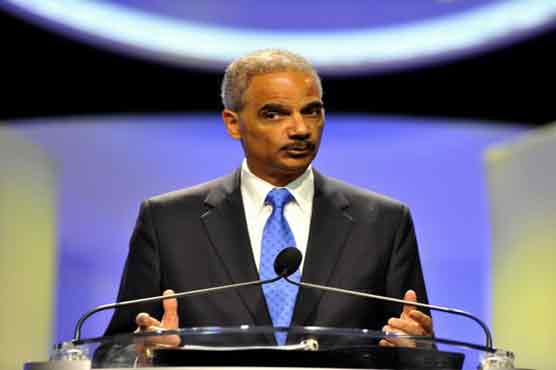
Summary Obama administration is calling for major changes to the nation's criminal justice system.
WASHINGTON (AP) The US faces massive overcrowding in its prisons, and the Obama administration is calling for major changes to the nation s criminal justice system that would cut back the use of harsh sentences for certain drug-related crimes.
In remarks prepared for delivery Monday to the American Bar Association, Attorney General Eric Holder also favors sending people convicted of low-level offenses to drug treatment and community service programs instead.
"We need to ensure that incarceration is used to punish, deter and rehabilitate not merely to convict, warehouse and forget," Holder says in the speech.
Critics of the justice system have long said drug sentencing laws have taken a toll on the country s black population.
The latest statistics from the Federal Bureau of Prisons say 47 percent of inmates are there for drug offenses. By race, 37 percent of all inmates are black, and by ethnicity, 34 percent are Hispanic.
The Census Bureau says 13 percent of Americans are black and 16 percent are Hispanic.
In one important change, low-level, non-violent drug offenders with no ties to large-scale organizations, gangs or cartels won t be charged with offenses that impose mandatory minimum prison sentences. Such sentences, a product of the government s war on drugs in the 1980s, limit the discretion of judges to impose shorter prison sentences.
African-Americans account for about 30 percent of federal drug convictions each year and Hispanics account for 40 percent, according to Marc Mauer, executive director of the nonprofit Sentencing Project.
Mauer said the impact of Holder s changes could be significant. He said about 45 percent of the 25,000 drug convictions in federal court each year are for lower-level offenses such as street level dealers and couriers and people who deliver drugs.
"We cannot simply prosecute or incarcerate our way to becoming a safer nation," Holder said. "Today, a vicious cycle of poverty, criminality and incarceration traps too many Americans and weakens too many communities. However, many aspects of our criminal justice system may actually exacerbate this problem, rather than alleviate it."
Federal prisons are operating at nearly 40 percent above capacity and hold more than 219,000 inmates with almost half serving time for drug-related crimes. Many of them have substance use disorders.
The attorney general said 17 states have directed money away from prison construction and toward programs and services such as treatment and supervision that are designed to reduce the problem of repeat offenders.
Holder also said the department is expanding a policy for considering compassionate release for inmates that would include elderly inmates who did not commit violent crimes and who have served significant portions of their sentences.