Summary The Pakistan Stock Exchange's KSE-100 Index fell 2,690 points, or 1.54%, to close at 171,739.44 as broad-based selling outweighed positive sentiment from Pakistan's credit rating upgrade.
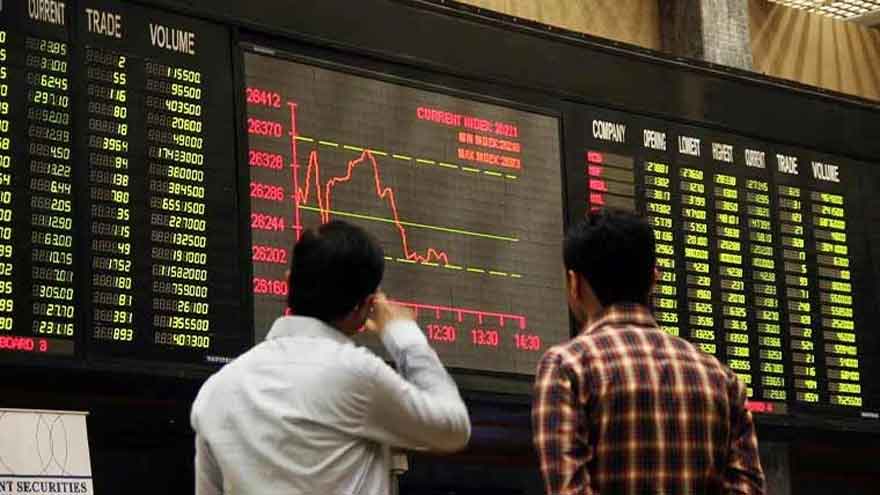
KARACHI (Dunya News) - The Pakistan Stock Exchange (PSX) witnessed a sharp sell-off on Thursday, with the benchmark KSE-100 Index plunging 2,690.48 points, or 1.54%, as investors continued to offload shares amid heightened market volatility and global uncertainty.
The benchmark index settled at 171,739.44 after fluctuating sharply during the session. It opened on a positive note and climbed to an intraday high of 175,237.59, but heavy selling across major sectors erased early gains and pushed the market to an intraday low of 171,655.09 before the close.
The decline came despite a positive development for Pakistan's economy after S&P Global upgraded the country's long-term sovereign credit rating from 'B-' to 'B', citing stronger institutional stability and continued implementation of reforms under the International Monetary Fund (IMF) programme.
S&P said its stable outlook reflected improved political and institutional conditions, with ongoing economic reforms expected to support sustainable growth and fiscal consolidation.
However, investor sentiment remained weak as geopolitical tensions in the Middle East continued to fuel concerns over higher global oil prices and inflation, prompting traders to reduce exposure to equities.
On Wednesday, the KSE-100 Index had already fallen 1,703.64 points, or 0.97%, to close at 174,429.93, extending the market's recent downward trend.
Global markets presented a mixed picture. Asian stocks gained after major US technology companies announced increased investment in artificial intelligence infrastructure, boosting chipmakers across the region. Meanwhile, Brent crude oil climbed towards $96 per barrel following renewed US strikes on Iran and attacks by Yemen's Houthis on oil tankers in the Red Sea, raising fears of prolonged supply disruptions.
Higher oil prices have also intensified inflation concerns, increasing expectations that the US Federal Reserve could maintain tighter monetary policy for longer.