Updated on
Summary Greek leaders did a last minute deal on austerity cuts on Thursday.
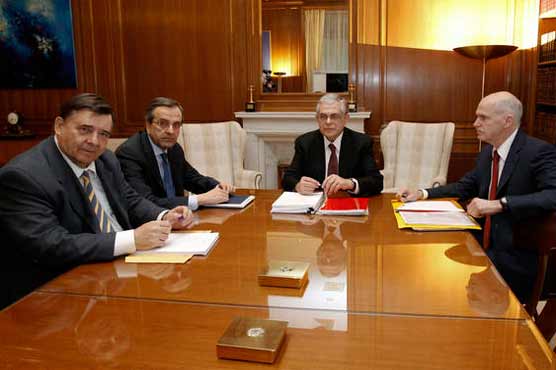
This cleared the way for the eurozone to decide on a bailout package, but unions called a new strike against the terms.A final agreement has been reached among Greek political leaders on additional austerity measures demanded by EU-IMF creditors in return for a loan bailout, a government source said on Thursday.There is a final agreement on the measures, the source told AFP hours before eurozone finance were set to decide on a new bailout worth 130 billion euros ($171 billion), averting a default and ending a chapter in the eurozone crisis.A deal by banks to write-down Greek debt was also at hand, an EU diplomat said.The Greek government coalition parties had balked overnight at cutting 650 million euros in supplementary pensions, and argued until almost the last minute on Thursday over finding savings in other areas of the budget.The message from Brussels meanwhile was that the shortfall in cuts, however small, had to be bridged, by whatever means.European Central Bank chief Mario Draghi told reporters in Frankfurt that he had received a phone call from Greek Prime Minister Lucas Papademos just minutes earlier and he told me that agreement has been reached and has been endorsed by major parties.An EU diplomat told AFP there is also consensus on the voluntary writedown by private creditors of their holdings of Greek bonds -- the biggest debt restructuring ever.Private creditors, who are negotiating an exchange of bonds that will save Greece at least 100 billion euros, are to meet on Thursday in Paris before the Europgroup meeting, according to a spokesman.Greece has run up total debt of about 350 billion euros, roughly 160 percent of its gross domestic product, and the IMF has insisted that level be brought down to a maximum of 120 percent of GDP in 2020 in order for a further bailout to go ahead.The deal would likely see the face value of the 200 billion euros in bonds that private creditors hold be cut in half, but their total losses may hit 70 percent given they will receive 30-year bonds at lower interest rates.The bond exchange will take several weeks to perform, raising concerns whether it can completed before Greece faces 14.5 billion euros in payments due on March 20 and defaults, which could spark a domino effect that undermines the entire euro common currency project.The main private and public-sector unions called a 48-hour general strike on Friday and Saturday to fight barbaric new wage and pension cuts.We categorically reject this framework to impoverish and bankrupt society and the economy, the leading union GSEE said.According to the Greek press, the measures under consideration included slashing the minimum wage by 22 percent, sweeping cuts to salaries and pensions and 15,000 public sector job losses.Anguish over the measures was exacerbated as official data showed the jobless rate exceeding a million people, or 20.9 percent of the workforce.If eurozone finance ministers approve the deal at a meeting due to begin at 1700 GMT the programme of reforms will be put before the Greek parliament on Friday, ahead of a vote on Sunday.In principle, the government coalition can rely on support from 255 of the 300 deputies, but the political stakes are high as the parties prepare for early legislative elections in April.Far-right leader Georgios Karatzaferis, the first to emerge from the coalition talks, denounced the troika for heaping unreasonable pressure on the Greek government to enact more painful cuts to public spending.I made clear my intentions right at the start of the meeting. I cannot in one hour sign up to a plan which will affect the country for 40 or 50 years with receiving (legal) assurances that the measures are going to get the country out of its impasse, he told reporters.--AFP