Updated on
Summary The Fed pushed back the date for any likely increase in its benchmark interest rate.
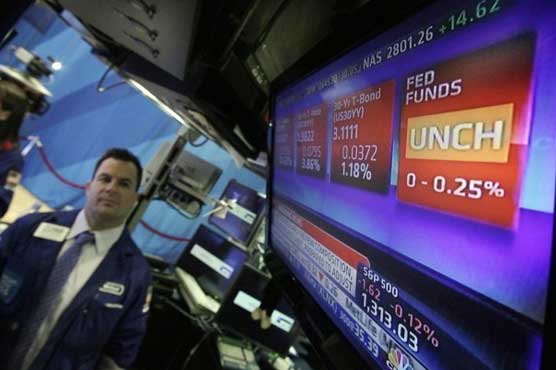
The Federal Reserve went further than ever Wednesday to assure U.S. consumers and businesses that theyll be able to borrow cheaply well into the future.The Fed pushed back the date for any likely increase in its benchmark interest rate by at least a year and a half, until late 2014 at the earliest. Its new timetable showed the Fed is concerned that the economys recovery remains stubbornly slow. But it also thinks inflation will stay tame enough for rates to remain at record lows without igniting price increases.Chairman Ben Bernanke cautioned that its late-2014 horizon for any rate increase is merely the Feds best guess. It has the flexibility to shift its timetable if the economic picture changes. But speaking at a news conference later Wednesday, Bernanke said:Unless there is a substantial strengthening of the economy in the near term, its a pretty good guess we will be keeping rates low for some time.Treasury yields fell after the Fed made its announcement around 12:30 p.m. (1730 GMT). But yields stopped falling after the Fed issued forecasts for the economy and interest rates. They showed that while some members foresee super-low rates beyond 2014, six of the 17 members forecast a rate increase this year or next.Lower yields could help further reduce mortgage rates and possibly boost stock prices as investors shift out of lower-yielding Treasurys.Stocks, which had traded lower all day, quickly recovered their losses. The Dow Jones industrial average, which had been down about 60 points before the announcement, was up 84 points in late afternoon.Though Bernanke stressed the Feds flexibility to adjust rates as its outlook shifts, some analysts expressed concern.Dana Saporta, an economist at Credit Suisse, said the Feds now-much-longer timetable for a likely rate increase could compromise its credibility if it must raise rates before late 2014. Unexpectedly strong growth and inflation could force such an increase.Its striking that the Fed would make an implicit commitment for almost three years, Saporta said. It seems like an awfully long time to make such a statement. Given that no one knows what will happen ... the (Fed) may eventually regret this.The Fed reduced its outlook for growth this year but is slightly more optimistic about the unemployment rate. It expects the economy to grow between 2.2 percent and 2.7 percent this year. Thats down from its Novembers forecast of between 2.5 percent and 2.9 percent. But it sees unemployment falling as low as 8.2 percent this year, better than its earlier forecast of 8.5 percent. Decembers rate was 8.5 percent.The Fed also offered a firmer target for inflation 2 percent in a statement of its long-term policy goals.The central bank said in a statement after a two-day policy meeting that the economy is growing moderately, despite some slowing in global growth. It held off on any further bond-buying programs to try to increase growth.The Fed announced no further bond buying efforts. But it held out the possibility of doing so later. It said it was prepared to adjust its holdings as appropriate to promote a stronger economic recovery in the context of price stability.Some economists say that means the Fed will take further action soon.Julie Coronado, an economist at BNP Paribas, said the Fed is signaling it will boost its purchases of bonds and other assets if growth fails to accelerate, even if the economy doesnt slow.