Updated on
Summary A Saudi official said whether Japan or other countries buy Iranian oil was an internal matter.
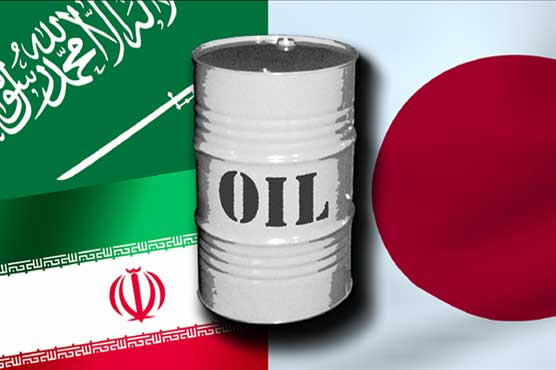
The comments by the Oil Ministry official were reported on Monday by the Saudi daily Al-Watan a day after Japanese Foreign Minister Koichiro Gemba met with senior Saudi officials in the kingdoms capital, Riyadh.The newspaper said that Japanese officials asked Saudi Arabia, the worlds largest oil exporter, to make up for the potential loss of Iranian oil for Japan. The Asian nation is now even more heavily dependent on oil and natural gas imports after last years tsunami forced the shutdown of nuclear reactors.The latest U.S. sanctions target Irans central bank and are aimed at hindering Tehrans ability to receive payment for its oil exports.Al-Watan quoted the senior Saudi official as saying that the issue of buying or not buying oil from Iran is an internal matter to be decided by these countries. The official was not identified.Still, Saudi officials have said that Gulf oil producers are ready to step in and offset any loss of Iranian oil in the market, though it remains unclear if the necessary pipelines that would reroute the oil away from the strait are all fully operational.One pipeline with a capacity of about 1.5 million barrels per day being built by the UAE has yet to be completed.China, a major Iran oil importer, has resisted the sanctions effort. The Asian powerhouses deputy foreign minister, Cui Tiankai, said Monday that Chinas trade relations with Iran have nothing to do with Tehrans nuclear program and that sanctions alone cannot resolve the dispute.The West maintains that Iran is enriching uranium with an eye on developing a weapon, an allegation Tehran denies. Iran says its program is for purely peaceful purposes.The official Saudi Press Agency said Gembas meeting with Saudi Oil Minister Ali Al-Naimi and other top officials dealt with the current situation in the international oil market and the importance of its stability.Iran has repeatedly raised the specter of closing the Strait of Hormuz, through which about a sixth of the worlds oil flows, if the U.S. and its allies impose measures targeting its oil exports.Many analysts and officials have played down the comments as bluster by the Islamic Republic, noting that such a move would hit Iran hard given that it receives over 80 percent of its government revenue from oil sales. But on Sunday, an Iranian newspaper quoted a senior Revolutionary Guard commander as saying that the countrys leadership had decided to close off the strait if its oil exports were targeted. The remark marked an escalation of earlier warnings that Tehran could easily close the waterway if it so desired.The threats have rattled global oil markets, with the U.S. benchmark crude futures contract for February delivery hovering at slightly under $102 per barrel in electronic trading in Asia while its North Sea counterpart, Brent, was trading at above $113 per barrel in London.Japan has been supportive of the U.S. and its allies efforts to pressure Iran over its controversial nuclear program. But Asian buyers of Iranian crude, in particular Japan and South Korea, are worried about the impact of the sanctions both on international crude prices and their economies.Gemba, who is on an eight-day Mideast tour that began Thursday, later traveled to Qatar where they discussed the effect of santions on the oil market. He is slated to travel to the United Arab Emirates for meetings there on Tuesday.