Updated on
Summary India must dismantle all Non-Tariff Barriers (NTBs) to get MFN status.
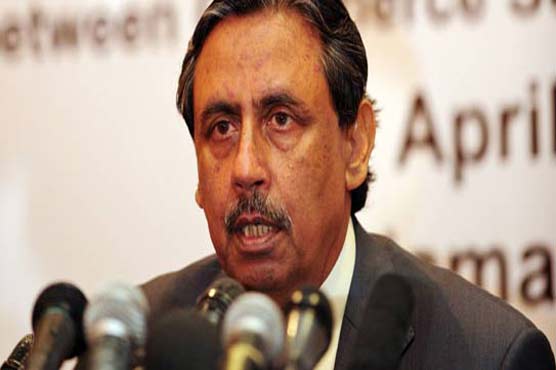
This has been said by Federal Secretary Commerce Zafar Mehmood. We have pleaded to our Indian counterparts to dismantle all NTBs first so that both the sides have a level playing field to do business with each other, he said.The Federal Secretary was speaking at the Lahore Chamber of Commerce and Industry on Thursday.LCCI President Irfan Qaiser Sheikh presented the address of welcome while Vice President Saeeda Nazar, former presidents Shahzada Alam Monoo, Mian Anjum Nisar, Mian Muzaffar Ali, Shahzad Ali Malik, former KCCI President Qaiser Ahmad Sheikh, former President Gujrat Chamber Mirza Imtiaz Ahmad, former Senior Vice President Sohail Lashari and former Vice President Aftab Ahmad Vohra also spoke on the occasion.The Federal Secretary, however, made it clear to the businessmen that MFN does not mean any sort of Preferential Arrangement rather it creates conducive environment for the trading partners so that they could be able to do business.Being a signatory of WTO, Pakistan is required to give same treatment to all WTO members which also include India, the Federal Secretary added.Talking about the Negative List, the Federal Secretary said that the government was ready to put more items on this list, provided they are forwarded to the Ministry with a proper reasoning for being on the Negative List. The Negative List with India is refreshed on a yearly basis in the month of June, the Secretary said.He said that Indian goods would not be allowed to reach Afghanistan even after granting MFN status to India. He said that all decisions would be made keeping in view the national interests and for the purpose the Ministry had already initiated consultation process with all the Chambers and trade bodies.Zafar Mehmood said that trade between Pakistan and India is not normal as the World Bank and other such global institutions have estimated that goods worth one billion to five billion dollars are being imported by Pakistan from India through third country.The Federal Secretary informed the business community that Pakistan would get GSP Plus status from the European Union on January 1, 2014 as India has withdrawn its opposition or objections. He said that GSP plus status would give considerable boost to Pakistans exports to European Union.In his Welcome Address, the LCCI President Irfan Qaiser Sheikh said that we are in favour of promotion of trade especially with our neighbouring countries because we believe that by enhancing the trade ties with our neighbours, we can succeed in bringing economic boost and reviving our industry. But we do not favour any agreement at the cost of industry which is currently making all out efforts to survive in the presence of acute energy crisis, rising inflation, widespread corruption and deteriorating law and order situation.The LCCI President made it clear to the visiting Federal Secretary that a hurried decision on MFN status to India will deal a fatal blow to pharmaceutical, automobile, motorcycle, petro-chemical, auto parts, sugar, textiles, cooking oil/ghee industries. He said that any forward step without addressing the concerns and fears of private sector with regard to awarding MFN status to India will only result in causing more problems to the domestic industry and economy overall.Irfan Qaiser Sheikh said that there are complex domestic, political and security compulsions on both sides which are bearing heavily on the existing framework for bilateral trade. He said that the business community strongly feels that despite having granted Pakistan MFN status, a great deal of non-tariff and para-tariff barriers are still in place while exporting to India.The LCCI President said that both Pakistan and India should harmonize their custom procedures for testing compliance of safety and quarantine standards. In this regard, special quarantine centers and labs for compliance with safety standards should be established at border crossings.Irfan Qaiser Sheikh urged the Federal Secretary to take up with India the various hurdles being faced by Pakistans business community. He said that lack of infrastructure to comply with food safety standards, acquisition of certificates from labs situated far away from border crossing points are also coming in the way of bilateral trade.