Summary Most Gulf markets end lower ahead of Eid break
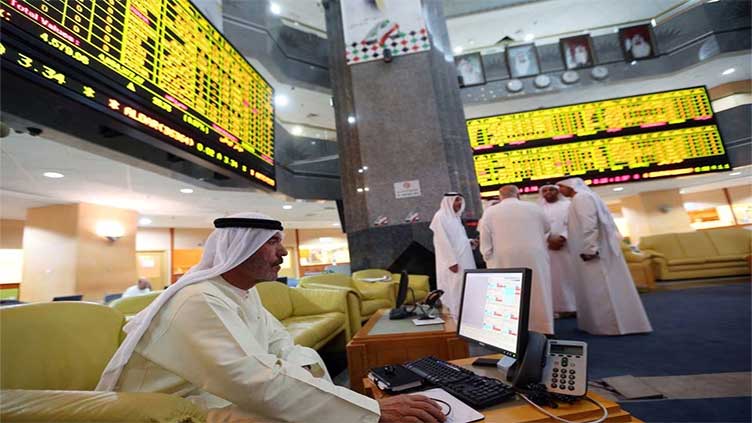
(Reuters) - Stock markets in the Gulf ended lower in thin trade on Tuesday, as long-term equity investors stayed on the sidelines ahead of the Eid al-Fitr holidays due this week, although the Kuwaiti index bucked the sombre trend to close the session higher.
Dubai's main share index (.DFMGI) eased 0.1%, with blue-chip developer Emaar Properties (EMAR.DU) slumping 1% to lead the losses.
In Abu Dhabi, the index (.FTFADGI) dipped 0.1% to snap a six-day winning streak, with the United Arab Emirates' biggest lender First Abu Dhabi Bank (FAB.AD) losing 0.3%.
The Abu Dhabi market saw downward pressure after more than a week of upbeat performances as traders try to secure their gains, said Daniel Takieddine, CEO MENA at BDSwiss.
"Oil prices' failure to pick up also weighed on the market."
Oil - a key catalyst for the Gulf's financial markets - fell for a second day as upbeat Chinese economic data failed to deflect the focus from a possible increase to U.S. interest rates and wider concern about the growth outlook.
Crude prices were also pressured by the Iraq federal government and Kurdistan Regional Government (KRG) taking a step towards a resumption in northern oil exports from the Turkish port of Ceyhan after they were halted last month.
The Qatari index (.QSI) dropped 0.5%, led by a 1.3% fall in shares of Qatar Islamic Bank (QISB.QA) and a 3.5% decline in Qatar International Islamic Bank (QIIB.QA).
Outside the Gulf, Egypt's blue-chip index (.EGX30), which traded after a two-session break, finished 0.8% lower, with Commercial International Bank (COMI.CA) tumbling 6.7%, while Telecom Egypt (ETEL.CA) slid 3.8% as the firm traded ex-dividend.
According to Takieddine, the Egyptian market saw strong price corrections after failing to rise above this year's peak.
"The main index was recording some selling pressures and low volumes from international investors while trading volumes accelerated among local investors."