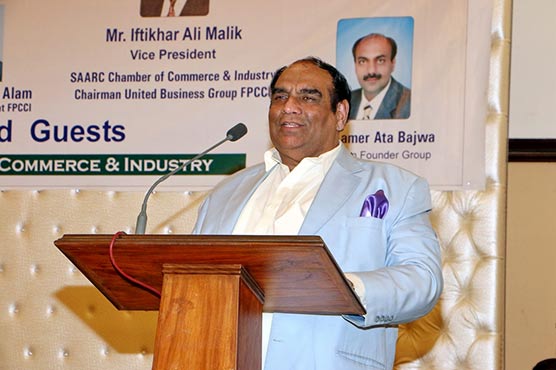
Summary SAARC CCI Senior Vice President Iftikhar Ali Malik on Friday expressed his views on the matter.
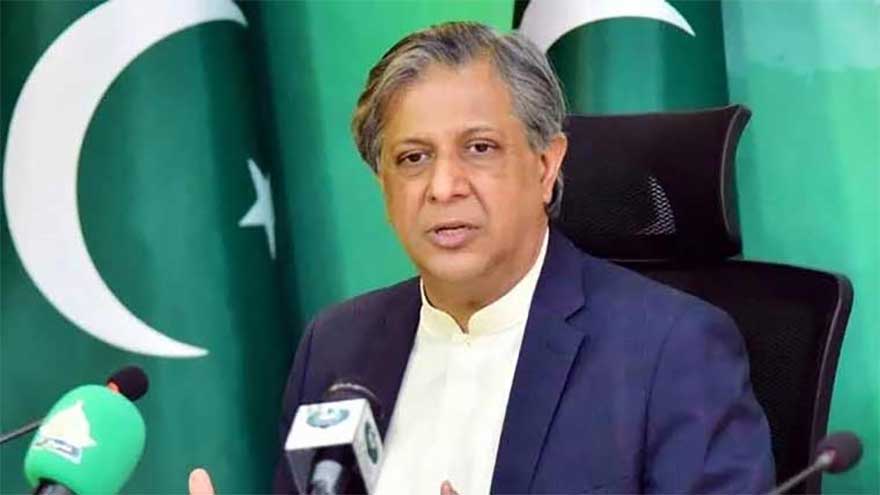
LAHORE (Online) – South Asian Association for Regional Cooperation (SAARC) CCI Senior Vice President Iftikhar Ali Malik on Friday termed upcoming visit of Saudi Crown Prince Muhammad bin Salman to Pakistan “a milestone” in the history of Pak-Saudi relations.
He asserted that it would open new vistas of opportunities to further cement bilateral relationship, especially in economic sector, and enhance the existing trade volume between both countries.
In a press statement released on Friday, Malik called Saudi Crown Prince Muhammad bin Salman “a great leader of Islamic world” and said that under his influence the economic reforms in Saudi Arabia have brought positive impact.
Furthermore, he expressed hope that Pakistan under the ‘dynamic’ leadership of Prime Minister (PM) Imran Khan has been adopting new economic and structural reforms for the revival of its economy.
“Pak-Saudi relations are historical and based on mutual interest and trust and the Saudi government has always extended its support for Pakistan in the time of need, whether it was a grant of US $10 million after the 2005 earthquake, $170 million after the 2010/11 floods, or the $1.5 billion grant when Pakistan faced economic crisis in 2014,” he remarked.
For this time, he said “Saudi Arabia is not giving loan but injecting investment of around $2 billion to $3 billion in order to stabilize Pakistan’s foreign reserves, currency and external balance sheet and about $9 billion into different projects.”
He added that it would be in the benefit of Pakistan if Saudi Arabia agreed to supply oil at concessionary rates which would mitigate pressure on the import bill to a large extent during the Crown Prince visit.
“During the last fiscal year, 2017-18, the country’s imports of petroleum stood at $13.27 billion, imported from different countries, including Saudi Arabia.
“If Pakistan gets the oil at a deferred payment or at relaxed conditions the issue of the country’s cash will be resolved,” he added.
Iftikhar Malik suggested exploring avenues for exports to Saudi Arabia by ending tariff and non-tariff barriers that have decreased the trade of goods and services.
“Despite holding great potential, bilateral trade between Pakistan and Saudi Arabia is only $3.4 billion and largely in favor of Saudi Arabia. Pakistan imported $3.1 billion worth of goods from the Kingdom during the fiscal year 2017-18, while exports stood at $316.7 million, data shared by the State Bank of Pakistan showed,” he pointed out.
He said at this juncture, we are able to build on the historic relationship by encouraging investors on both sides to make use of the business and cooperation opportunities.
He also proposed having a dialogue with the business community in both the countries and make room for having more agreements to launch new initiatives.
He said Pakistan should try to win Saudi contracts for IT services to earn foreign exchange and explore new potential in agriculture to seek Saudi investment through joint ventures.
“This area has potential to grow fast and create export surplus.
Saudis investors can be lured for modern corporate farming in Pakistan to earn substantial profits,” he added.
Iftikhar Malik said Saudi Arabia investment in the mega-project of the China-Pakistan Economic Corridor (CPEC) will be beneficial for both the countries.
He said it would connect those parts of the world which had been no or less connectivity.
“The economic corridor will not only provide China with cheaper access to Africa and the Middle East but will also earn Pakistan billions of dollars for providing transit facilities to the world’s second-largest economy,” he concluded.