Summary Fears of an exit sent the pound tumbling to $1.4192 from $1.4250
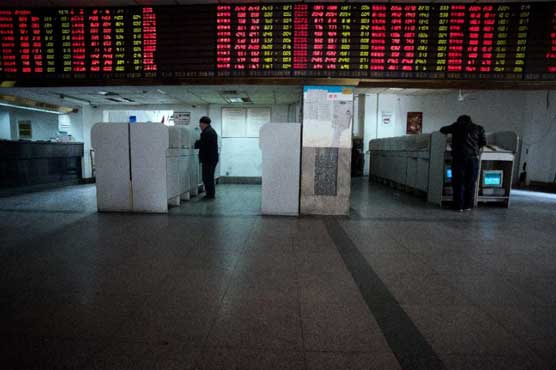
HONG KONG (AFP) - Japanese stocks led a plunge in Asian markets Monday, tracing a sell-off in the US and Europe, on renewed worries about the global economy and uncertainty over Britain s future in the European Union.
Investors extended the selling that saw shares tumble at the end of last week owing to concerns that central banks arsenals are running low in their battle to kickstart growth.
And with next week s referendum on whether Britain should stay in the EU on a knife-edge, analysts said traders were rushing to safe-haven investments such as the yen.
"The market hates uncertainty," Yoshinori Ogawa, a markets strategist at Okasan Securities Co. in Tokyo, told Bloomberg News.
"Most market participants think that the UK will probably remain, but we re seeing some poll results that show those who ll vote to leave outnumber the Remain camp, and this is making investors uncertain."
Tokyo s Nikkei took a hammering, sliding more than three percent at one point before ending the morning down 2.6 percent, with a stronger yen hitting exporters. The greenback fell to 106.19 yen Monday from 106.93 in New York and is down more than 13 percent so far this year.
Hong Kong lost 2.4 percent and Shanghai was off 0.7 percent while Seoul sank 1.5 percent and Singapore 1.6 percent. Taipei and Manila also gave up more than one percent. Sydney was closed for a public holiday.
Shares dived on Friday after European Central Bank boss Mario Draghi called for action to boost the eurozone economy, which was taken as a sign it is struggling in its battle against torpid growth.
- Pound in retreat -
====================
His comments follow an indication from the Federal Reserve that it will likely not lift interest rates until the fourth quarter, while other central banks have either announced or are contemplating cuts.
Attention is now on meetings of the Fed and Bank of Japan this week, with hopes for at least some guidance on their plans for monetary policy.
Nerves are also being frayed by a series of opinion polls indicating Britain could vote to leave the EU at its June 23 vote, which many fear could lead to a fresh wave of turmoil across global markets.
"The international focus on Brexit has stepped up," Cameron Bagrie, chief economist in Wellington at ANZ Bank New Zealand, said in a client note.
"Yay or nay is only part of the issue -- what we are seeing globally is more kickback from society toward integration and more anti-globalisation. The politics associated with close votes are not good for mandates and driving good macroeconomic policy."
Fears of an exit sent the pound tumbling to $1.4192 from $1.4250.
While the latest figures out of China pointed to much-needed stabilisation, there was very little euphoria, with officials warning the "international environment remains complicated" and that "the economy is still under downward pressure".