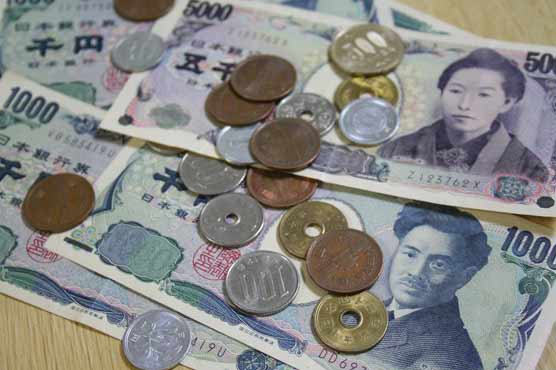
Summary The euro weakened to 140.18 yen from 140.51 yen in US trade.
TOKYO (AFP) - Currency traders moved into the yen in Asia on Thursday as weak data from the US, Japan and China dented investor confidence in the state of the global economy.
The dollar sank to 101.87 yen in Tokyo, from 102.31 yen on Wednesday in New York where it won support from minutes of the Federal Reserve s January meeting, which showed some policymakers pushed to raise interest rates.
The euro weakened to 140.18 yen from 140.51 yen in US trade, while it rose to $1.3780 from $1.3734.
"The market is generally in a risk-off mood," Minori Uchida, chief currency analyst at the Bank of Tokyo-Mitsubishi UFJ, told Dow Jones Newswires.
Investors tend to buy the yen, seen as a so-called safe haven currency, in times of uncertainty or turmoil.
On Wednesday, fresh US data showed that new home construction and building permits plunged more than expected in January amid severe winter weather in large parts of the country.
Then, on Thursday, Japan said it logged its worst-ever January trade deficit, while a key index of Chinese manufacturing contracted further in February to its lowest level in seven months, a worrying sign for the strength of the world s second-largest economy.
The gloomy data come as the International Monetary Fund called for the Group of 20, which meets in Sydney at the weekend, to boost growth as it warned of risks to the global economy, from deflation in Europe to high volatility in emerging economies.
Also Wednesday, minutes from the Fed s last meeting showed some policymakers sought an early hike in its benchmark interest rate amid growing confidence at home in the US economy, and boosting the likelihood that the central bank would continue pulling back on its stimulus drive.
The minutes "confirmed that the hurdle is very high for any slowdown in US tapering and if anything the minutes leaned on the hawkish side", Credit Agricole said, but it added that the Fed s stance was "increasing fears of capital outflows from (emerging markets)".
New Fed chief Janet Yellen was likely to face a grilling at the G20 meeting over the impact on emerging economies from the Fed s move to taper a massive stimulus effort known as quantitative easing.
The dollar rose against other Asia-Pacific currencies.
It edged higher to 44.70 Philippine pesos from 44.65 pesos the previous day, to 32.58 Thai baht from 32.56 baht, to Sg$1.2645 from Sg$1.2627, and to 1,072.30 South Korean won from 1,067.85 won.
The greenback also firmed to 62.29 Indian rupees from 62.22 rupees and to 11,790 Indonesian rupiah from 11,788 rupiah.
The Australian dollar weakened to 89.52 US cents from 90.10 cents, while the Chinese yuan fetched 16.72 yen against 16.80 yen.