Summary Latvia's neighbour Lithuania has targeted 2015 as a possible joining date.
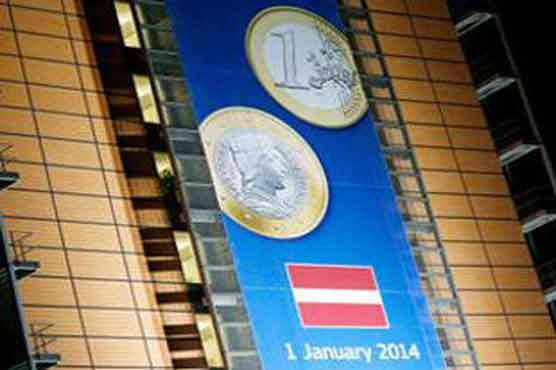
RIGA (AFP) - Just after the stroke of midnight, Latvia's prime minister will be one of the first to withdraw euros from a bank machine as fireworks explode overhead to celebrate the New Year and the country's entry into the troubled eurozone.
But while many will cheer the 18th addition to the bloc, Latvians remain concerned about joining a currency union that has seen five of its members forced into painful bailouts since a crippling crisis erupted in 2009.
According to a recent SKDS poll, half the nation expressed fear and annoyance at Latvia's third currency change in just over two decades, fearing price hikes and infuriated by the draconian austerity cuts made to get it into the club.
"Let's just get it over with. I'm tired of hearing about the euro 24 hours a day," said 24-year-old student Dace Jaunkalna.
Like the crisis-hit eurozone, which expects to limp back to growth some time in 2014, the ex-Soviet republic of two million people took a beating during the 2008-2009 financial crisis. It suffered the world's deepest recession when GDP shrank by nearly 25 percent over the two years.
Prime Minister Valdis Dombrovskis -- who has deftly steered Latvia towards the euro -- orchestrated a 7.5 billion-euro ($10.3-billion) international bailout to avert bankruptcy but at the price of deep austerity cuts.
Known as the "Baltic Tiger" for its explosive growth after winning independence, Latvia has bounced back well. It topped growth in the EU in both 2011 and 2012 and is set to expand four percent in 2013.
Latvia is "a role model as far as fiscal adjustment is concerned," European Central Bank chief Mario Draghi told AFP. And European Commission President Jose Manuel Barroso praised the country's "impressive efforts" and "unwavering determination", as he welcomed the newest member to the club.
The addition of Latvia to the bloc comes as the eurozone ends 2013 on a more positive note following years of lurching from crisis to crisis, enduring recession, unemployment and social unrest.
Earlier Tuesday, Spain officially exited its bank bailout programme, a day after Greece's prime minister announced it was ready to return to the markets.
Ireland has also put its bailout programme behind it and EU leaders stitched together an historic banking union deal in December they hope will end the excesses that brought the bloc to its knees.
'I'll really miss the lat'
However, despite some signs of light emerging in the eurozone, many in Latvia are wary of giving up their beloved lat, seen as a symbol of independence after nearly half a century of Soviet domination ended in 1990.
The vocal "No Euro" casts the European Union as a successor to the USSR, charges that joining the eurozone will "allow others to rule our economy" and attacks Riga for "lying about the benefits that the eurozone will bring."
"Everyone expects prices will go up in January," Leonora Timofejeva, a 56-year-old who earns the minimum wage of 200 lats (284 euros) per month tending graves in a village north of the capital Riga, told AFP.
But pensioner Maiga Majore felt joining the euro bloc "can only be a good thing".
"To be part of a huge European market is important. All this talk about price rises is just alarmist," she said.
Both lati and euros will be legal tender for the first 14 days of the new year before the lat disappears from Latvians' pockets and wallets for good, causing a pang of nostalgia for some.
"Overall it's probably a good thing but I must confess that I'll really miss the lat," designer Agra Apele, home in Riga for the holidays from euro-member Finland, told AFP.
Other countries currently inside the EU but outside the eurozone are biding their time.
Only Denmark and Britain have a formal opt-out from joining the euro. Sweden rejected it in a 2003 referendum and is unlikely to join soon.
Latvia's neighbour Lithuania has targeted 2015 as a possible joining date while larger economies Poland and the Czech Republic are still several years off meeting the strict membership criteria.
More recent recruits to the EU, Bulgaria, Croatia, Hungary and Romania are even less likely to join the common currency any time soon.