
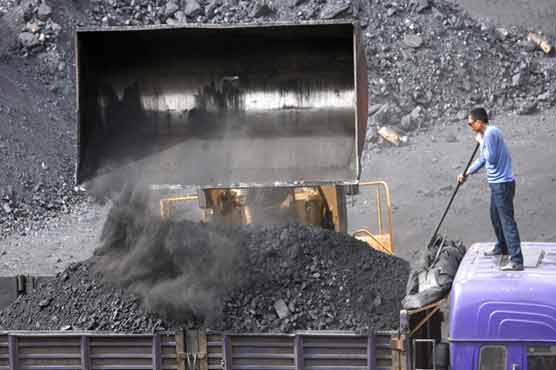
Summary Coal consumption grew to 7,697 million tonnes (Mt) in 2012, up 2.3 percent from the previous year.
PARIS (AFP) - The rise of demand for coal is expected to slow as China looks to cleaner energy sources, the United States turns to cheaper gas, and Europe sees the end of a temporary rebound, the IEA said on Monday.
Annual demand growth for coal will grow at 2.3 percent until 2018, down from 2.6 percent forecast previously, the International Energy Agency said.
"Despite the slightly slower pace of growth, however, coal will meet more of the increase in global primary energy than oil or gas -- continuing a trend that has been in place for more than a decade," it said.
Between 2007 and 2012, demand for coal grew at 3.4 percent a year.
Coal consumption grew to 7,697 million tonnes (Mt) in 2012, up 2.3 percent from the previous year, with China accounting for over half of the demand.
However, the growth of demand for coal in China slowed to the second-lowest rate in the last 10 years, slumping to 4.7 percent from 9.4 percent in 2011.
"While China will account for nearly 60 percent of new global demand over the next five years, government efforts to encourage energy efficiency and diversify electricity generation will dent that growth, slowing the global increase in demand," said the IEA.
The IEA also noted that China had approved a series of projects to produce liquid fuels and synthetic natural gas. The shift, if confirmed in coming years, "would mark not just an important development in coal markets but would also imply revisions to gas and oil forecasts," said IEA director of energy markets and security, Keisuke Sadamori.
For the rest of Asia, coal demand is forecast to stay buoyant through 2018.
"India and countries in Southeast Asia are increasing consumption, and India will rival China as the top importer in the next five years," the IEA said.
Indian consumption has grown an average 5.7 percent a year since 1995, from less than 300 Mt to an estimated 753 Mt in 2012, the second-largest volume increase after China for this period, said the agency.
In the United States meanwhile, total coal consumption slumped by 10.7 percent in 2012 from 2011 amid increasing shale gas production and sinking gas prices.
The IEA also said that environmental regulations in the United States "will hamper construction of new coal-fired plants and bring the closure of some older ones, while increasing shale gas production will continue to encourage coal-to-gas switching".
Although demand for coal grew in Europe in 2012, the appetite "will prove temporary, and European demand will fall more than 6 percent through 2018," the IEA said.