Summary The troika still expects the Cypriot economy to contract 7.7 percent this year.
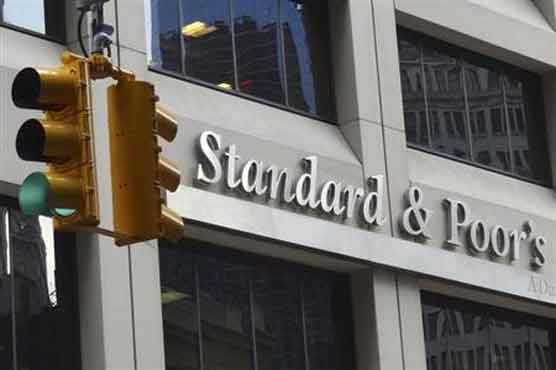
NICOSIA (AFP) - Global rating agency Standard & Poor s raised its sovereign debt rating for Cyprus to B- from CCC+ on Friday, saying that fears of the island reneging on bailout terms had receded.
The upgrade by the agency, which had given Cyprus selective default status in July when it swapped government bonds for new ones with longer maturities as part of the bailout deal, provided a welcome boost for a eurozone economy in deep recession.
It was swiftly welcomed by conservative President Nicos Anastasiades, who signed the painful March bailout deal with the troika of the European Central Bank, the European Commission and the International Monetary Fund to avoid imminent bankruptcy.
"The upgrade from one of the stricter rating agencies, Standard and Poor s -- the first after three years of continuous downgrades -- is the result of painful sacrifices of our people and also the consistent and firm policy the government and political forces have followed these past eight months," Anastasiades said.
"Messages, such as this one, foster the gradual restoration of confidence in the Cypriot economy, which is essential to achieve kick-starting the economy as soon as possible."
Standard & Poor s said its upgrade reflected the island s passing of two successive reviews by the troika of its compliance with the undertakings it gave in March in return for 10 billion euros ($13 billion) in emergency loans.
"In our view, the immediate risks to Cyprus s programme implementation, and, therefore, to full and timely payment of debt service, appear to have receded," the New York-based agency said.
"We anticipate that the Cypriot government -- having successfully completed the first two troika programme reviews -- will continue to timely comply with the programme recommendations it has agreed with the troika.
"Although the pace of contraction of the Cypriot economy (5.5 percent year-on-year in third-quarter 2013) has been the most rapid in the eurozone in 2013, it is now contracting less quickly than we forecast in July (when we thought it would shrink by 14 percent for the year)."
In return for the bailout, Cyprus agreed to a raft of painful reforms, including a massive downsizing of its once lucrative banking sector.
The troika still expects the Cypriot economy to contract 7.7 percent this year and 4.8 percent in 2014, but has voiced confidence that the island will meet the terms of the bailout deal.
S&P gave a similar assessment, albeit with slightly bleaker figures.
"Although the pace of contraction of the Cypriot economy (5.5 percent year-on-year in third-quarter 2013) has been the most rapid in the eurozone in 2013, it is now contracting less quickly than we forecast in July (when we thought it would shrink by 14 percent for the year)," the agency said.
"For this reason, we are revising our GDP forecasts for 2013 and 2014 to -8 percent and -6 percent, but we remain uncertain about these estimates.
"Factors preventing a more severe contraction -- savings have helped to support consumption and Cyprus tourism and business services sectors have proved resilient -- are, in part, temporary.
"The Cypriot population s ability to draw down deposits further to support consumption is limited, corporate indebtedness is high (about 160 percent of GDP), and unemployment continues to increase, even as real wages are cut."