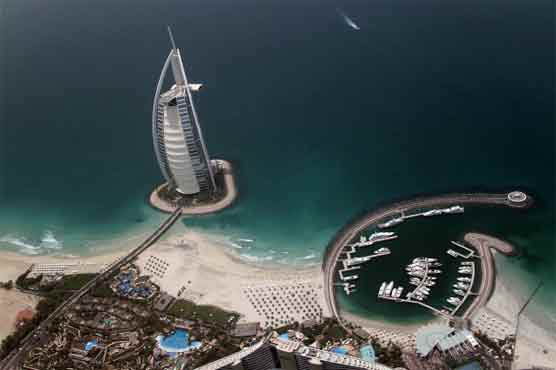
Summary The emirate is known as a freewheeling business centre which attracts money from all over the world.
DUBAI: When global banking giant HSBC said last week that it was closing the accounts of some Middle Eastern customers with links to nations targeted by sanctions, it underlined the growing weight of geopolitics on consumer banking in Dubai.
Deposits at banks in the United Arab Emirates jumped 11 percent from the end of 2011 to 1.18 trillion dirhams ($322 billion) last November; some of that increase was capital fleeing to Dubai from unrest elsewhere in the Arab world.
In theory, as long as money does not have criminal links or belong to people or companies directly targeted by international sanctions, banks should be able to accept it. But in practice, the costs of checking that rules are obeyed has become so high that banks are turning down some deposits in advance.
Not only customers from the Middle East but also some US citizens are being affected by this concern, because of Washington s campaign against tax evasion, bankers in Dubai said. They declined to be named because of the commercial and political sensitivity of the subject.
While banking centres around the world are grappling with increased regulation, Dubai is particularly sensitive to the issue because it is the Middle East s top banking centre and geographically close to major countries targeted by sanctions.
The costs of regulatory compliance could slow Dubai s banking growth and, in some cases, see money leave main street banks and flow through other financial firms such as small-scale money changers.
"Banks choose who they want to deal with and, for some nationalities, the cost is going up," said Khalid Howladar, vice president and senior credit officer for financial institutions at credit rating agency Moody s Investors Service.
"So some are doing a cost-benefit analysis about who they do business with?" Iranian citizens have been hit hardest by the more forbidding environment because of US financial sanctions over Iran s disputed nuclear programme.
The sanctions mean a wide range of banks around the world could be cut off from the U.S. financial system if they do business with Iran. Around the end of 2011, Washington used the threat to pressure Dubai-based Noor Islamic Bank, which it accused of being the conduit for the proceeds of Iranian oil sales, to cut its Iran ties.
The incident helped to explain why banks in the UAE have become reluctant to do any transaction involving Iran, even for legitimate trade allowed under the sanctions, or to open new accounts for Iranian citizens, bankers said.
This has been a major inconvenience to the UAE s Iranian community, which mostly lives in Dubai. It is one of the country s largest expatriate communities, accounting for an estimated 400,000 of the UAE s 8.3 million people.
Some Iranian money has gone into the informal financial system; a network of "hawala" currency traders, operating from offices in Dubai s old city, handles money transfers between the UAE and Iran after banks stopped doing so.
More recently, Syrian citizens have found it harder to open bank accounts in Dubai, bankers said. HSBC said Syria was on the list of countries for which it was closing some accounts; it stressed that the list did not include any country in which HSBC operated a branch network.
International financial sanctions against Syria over its civil war target only a small number of companies and individuals linked to the regime of President Bashar al-Assad.
But banks fear being caught up in lawsuits down the road if they misidentify their Syrian customers and inadvertently handle money that is later shown to be illicit.
Americans are in some cases also finding it harder to deal with UAE banks because of growing pressure from U.S. regulators to clamp down on tax evasion, bankers said.
Investigations into Americans using financial institutions to dodge US taxes led to probes of a number of Swiss banks, including Credit Suisse and Julius Baer.