Summary Overall, Jamaica's towering debt is over 140 percent of gross domestic product.
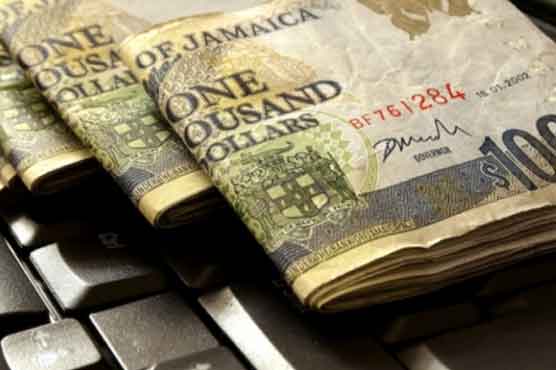
KINGSTON (AFP) - Jamaica`s leader announced late Monday that the struggling Caribbean island is launching a debt-swap program to try and halt a "serious economic crisis" and satisfy conditions to forge a new pact with the International Monetary Fund.
During a joint televised address with the country s finance minister, Prime Minister Portia Simpson Miller said a national debt exchange the second one offered by a Jamaican administration in the last three years
will be launched Tuesday.
"There can be no doubt at this time that we are in the throes of a serious economic crisis. It is going to take hard work, discipline and sacrifice to overcome," said Simpson Miller, adding that the People s National Party-led island must now confront the root causes of the country s long-standing economic woes.
Overall, Jamaica s towering debt is over 140 percent of gross domestic product, one of the highest debt-to-GDP ratios in the world.
"If this debt is not reduced Jamaica faces a dismal future," Simpson Miller said.
Roughly 55 percent of government spending currently goes to paying debt and an additional 25 percent goes to paying wages. That leaves just 20 percent for education, security, health and other functions. Meanwhile, unemployment is over 14 percent and the Jamaican dollar is steadily losing value.
Finance Minister Peter Phillips said the new debt exchange will be "painful and difficult but we have no option." The program launched Tuesday morning will exchange higher interest debt for lower cost debt and will involve "significant sacrifices" from financial institutions and domestic bond holders, he said.
The finance minister urged bondholders to accept the offer, saying it will allow the government to reduce its debt-to-GDP ratios by some 8.5 percent a year until 2020. He acknowledged that many bondholders will be disappointed, especially since they took a hit in 2010 when a Jamaica Labor Party-led government restructured domestic debt as part of a pact with the IMF.
The 2010 domestic debt-swap program lowered the government s interest payments in the short term but did little to solve the underlying debt problem, leaving the amount of capital owed essentially untouched. The island s previous pact with the IMF stalled in 2011.
The new debt reduction program was perhaps the most urgent of several conditions arising from the government s ongoing negotiations with the IMF for a new extended fund facility agreement, according to Phillips. He said this debt reduction program, unlike the one in 2010, is designed to secure major reforms up front as prior actions or as benchmarks for the first year. This "enhances the chances of success."
Over the last year, Jamaican negotiators have been trying to forge a new agreement with the international lending institution. A key sticking point between the IMF and the government led by Simpson Miller has apparently been the public sector wage bill.
In order to finalize a new agreement with the IMF, Phillips disclosed that the government will need to achieve a wage-to-GDP ratio of 9 percent by 2015. He also said various discretionary tax waivers will need to be eliminated, and vowed to provide Parliament with specifics later in the week.
Overall, Jamaica s objective will be to reduce Jamaica s debt ratio from over 140 percent of GDP to roughly 95 percent over the next seven years.
Simpson Miller has said that a new agreement with the IMF is critical to boosting investor confidence, making necessary reforms, and unlocking hundreds of millions of dollars from international organizations.