Updated on
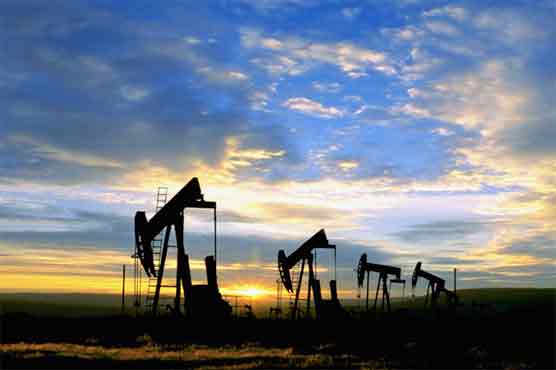
Summary Crude rebounded in Asia Thursday with traders on a bargain-hunting spree after prices plunged.
It occurred as the US fiscal cliff loomed and European fears resurfaced, analysts said.New Yorks main contract, light sweet crude for delivery in December, added 38 cents to $84.82 a barrel and Brent North Sea crude for December delivery gained 52 cents to $107.34.We had quite a large move down yesterday as the worries over the fiscal cliff and European woes started to more than usurp the euphoria over the Obama re-election, Jason Hughes, head of premium client management for IG Markets Singapore told AFP.Today in Asian trade prices have pushed back up... its probably people covering positions after a big move.Barack Obamas hard-fought victory, coupled with Republican control of the House of Representatives and the Democratic-majority Senate, worried traders, who fear more policy deadlock in the worlds biggest oil consumer.A combination of dramatic spending cuts and tax increases will take effect on January 1 without a deal on reducing the ballooning budget deficit, with Democrats and Republicans in Congress locked in a who-blinks-first stand-off.Elsewhere, European Central Bank President Mario Draghis gloomy words on the 17-nation eurozone reignited fears over the frailty of the region.Unemployment is deplorably high. Overall economic activity is weak and it is expected to remain weak in the near term, Draghi told a banking conference in Frankfurt on Wednesday.Freed from the constraints of a lengthy election campaign, US President Barack Obama now has another shot at pressing Iran through diplomacy to scale back its nuclear programme, analysts say.But despite Obamas increased leeway and tough sanctions against Iran, resolving the decade-old deadlock and silencing Israels drums of war remains a tall order indeed.A new round of talks between Iran and six world powers, the first since June, is expected by the end of the year, or at the latest in early 2013, analysts say. A rare bilateral US-Iran meeting might even happen.Its pretty clear that the United States and its European allies are gearing up to try again for diplomatic engagement, Mark Fitzpatrick, nuclear expert at the International Institute for Strategic Studies in London, told AFP.But the question is, what will be on the table? Iran wont be making concessions unless it gets some form of sanctions relief.The last offer from the P51 -- the US, China, Russia, Britain, France and Germany -- was made to Iran in May by the groups chief negotiator, EU foreign policy chief Catherine Ashton, in high-level talks in Baghdad.This Stop, Shut and Ship package called on Iran to cease enriching uranium to purities of 20 percent -- technically speaking not far short of the 90 percent needed for a nuclear weapon. It also told Iran to close its Fordo enrichment facility, and to export its existing stockpiles of 20-percent uranium.Iran, which insists its nuclear programme is peaceful, rejected the proposals as they failed to offer sufficient relief from sanctions that have begun to cause real problems for its economy, while insisting on a recognition of its right to enrich.Since another P51 meeting in Moscow in June, the process -- as well as parallel talks between Iran and the UN atomic agency, the IAEA -- has been on ice because of the US election campaign.The administration was in a very defensive position for the past six months, Mark Hibbs from the Carnegie Endowment for International Peace said. It was also difficult for Iran because they didnt want to negotiate with someone who might not be in office after November.NO PAIN NO GAINAccording to Siavush Randjbar-Daemi, a Middle East and Iran lecturer at Manchester University in England, Iran has been making smoke signals that it wants to talk.A major reason for this, he believes -- though other analysts are not so sure -- is that what Tehran calls the economic war waged against it by the West in the form of sanctions is making the regime more pliable.The sharp drop in oil revenues is not sustainable in the long run, Randjbar-Daemi told AFP. I dont think Iran realistically has any other option than seeking an understanding with the West.But in return the Iranian leadership wont want to lose face, meaning the P51 will have to sweeten their package of proposals.This means first and foremost swift sanctions relief, which is easier said than done, particularly for Obama.Obama may only have the authority to waive a very limited degree of sanctions, said Trita Parsi, the Iranian-born author of a book about Obamas diplomacy early in his first term when the president famously offered Iran an extended hand.Congress ultimately holds the power to lift sanctions, and there is a near consensus on Capitol Hill that it will not happen anytime soon.In any case, a vicious circle exists because the P51 will insist on confidence-building measures from Iran before promising any let-up in economic pressure.There is reason for some optimism, but it is guarded optimism because in the final analysis it depends on whether Iran will play, said Hibbs. If they wont, all bets are off.-- RED LINE --Parsi believes Obamas unique opportunity ... to make diplomatic headway will expire in mid-March, when campaigning starts for Irans presidential election in June.After that, Iran enters its own election season and the paralysis that comes with it. This may be his last best shot to resolve the US-Iran conflict peacefully.Time is also of the essence because every day Iran is enriching more uranium and expanding its nuclear facilities, as outlined in the IAEAs quarterly reports (the next is due this month).This fact is not lost on Israel, the Middle Easts sole if undeclared nuclear-weapon state, which sees its very existence threatened by a nuclear Iran, and which has made no secret that it may resort to military action.Prime Minister Benjamin Netanyahu, who also has an election to win in January, told the UN General Assembly in September that at most by next summer Iran would have enough 20-percent uranium to move on to the final stage.